Glamouria - Diaries Of We Design Beirut By Hayat Ammouri
Glamouria








A love letter to Beirut, told through design, memory, and human connection
The Call Back Home
I was very excited to know that We Design Beirut was back, and even more so knowing that I was invited!!!
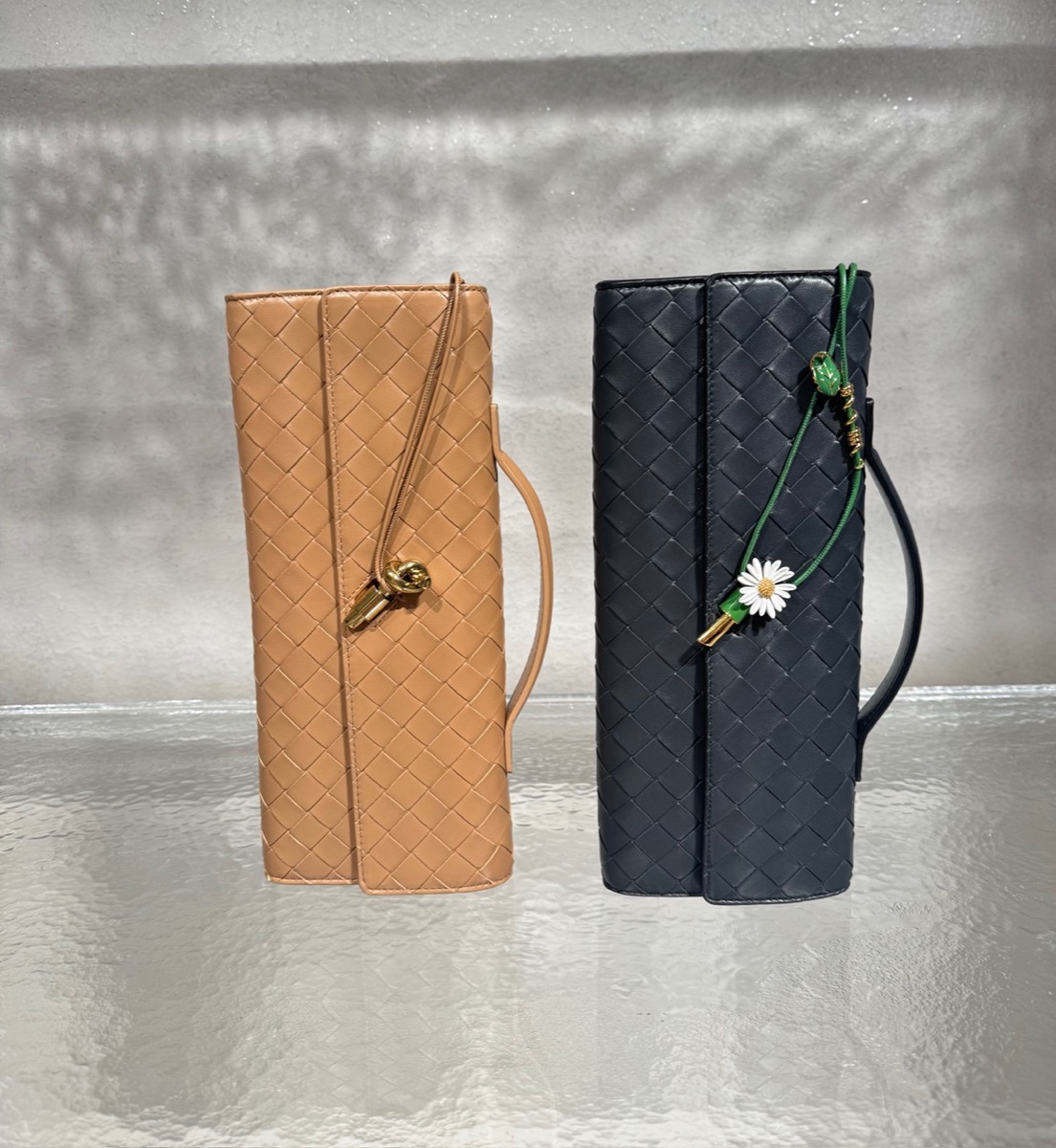
My flight was through Qatar Airlines, which yes is a long way, but for some reason, I love the layovers in Qatar. The airport is big, fun and clean, and their Bottega and Fendi stores have a really nice selection.
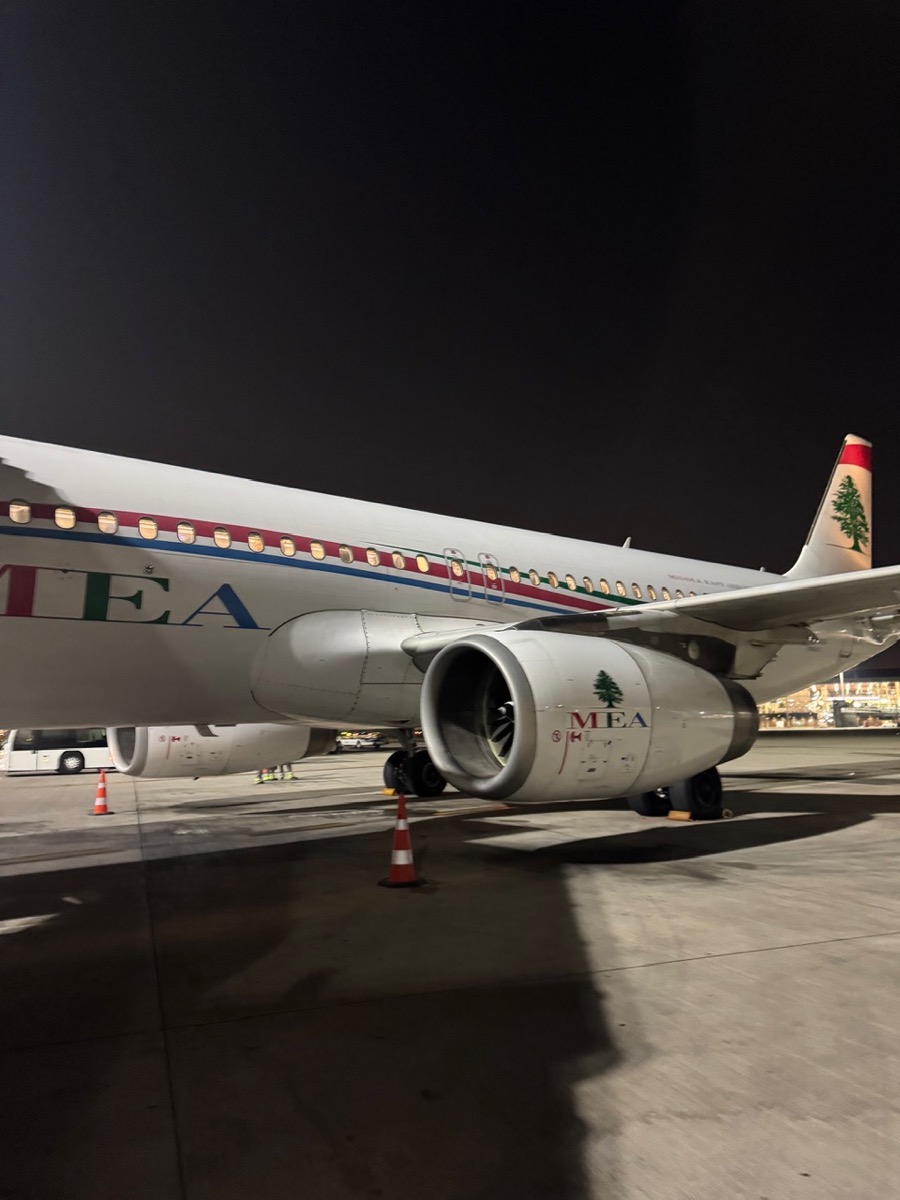
The plane finally landed in Beirut… It was late at night.. How come no one is clapping? This is what I always look forward to when on a flight to Beirut! A driver was waiting for me (…with a little attitude so I offered to push my bags myself??)…
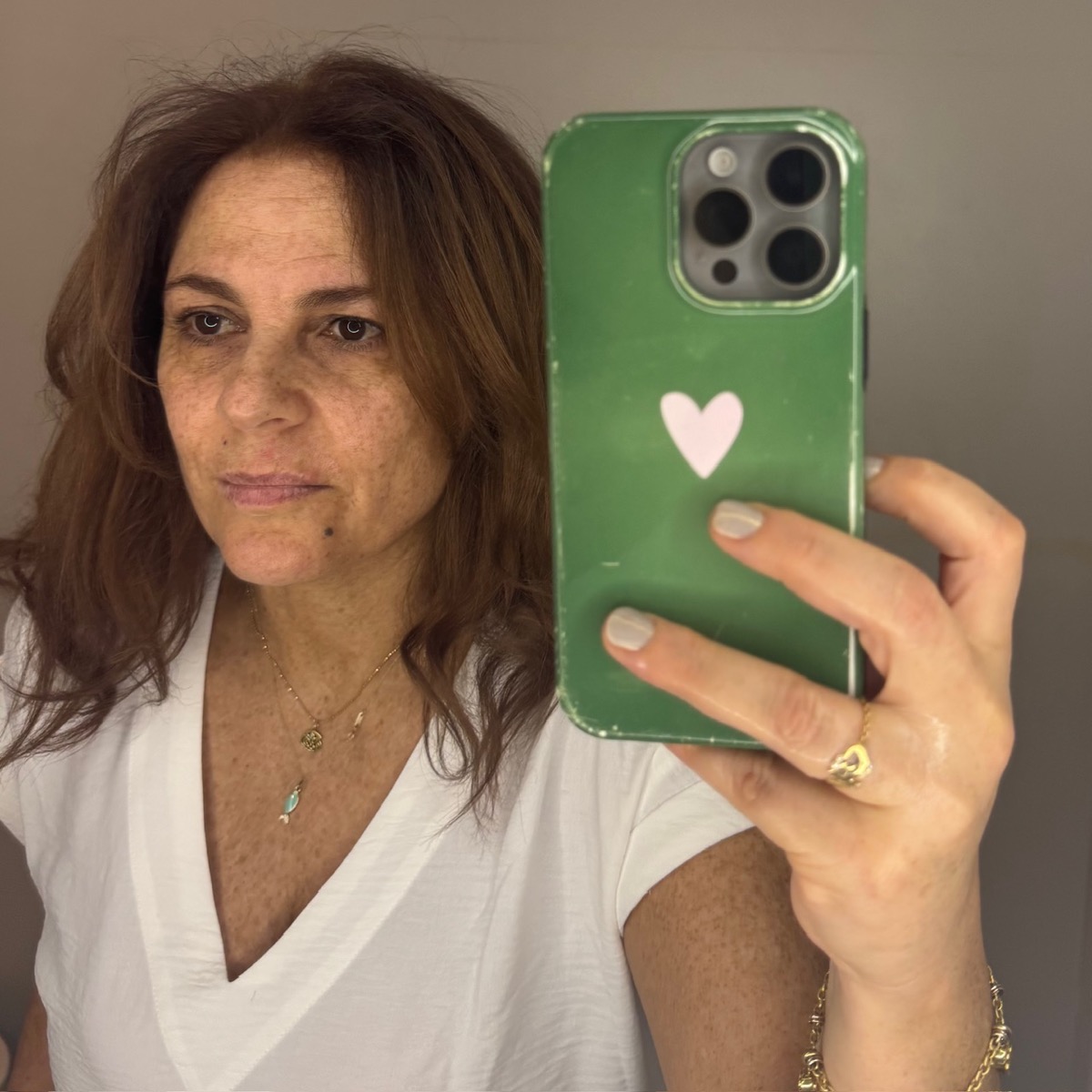
The event was starting in a couple of days, which gave me just the right amount to get over the jet-lag, and do my hair, of course- the ritual of every Lebanese woman coming back to the city!
Beirut Nights & First Hugs
We Design Beirut kicked off on October 21st, with a night out at Em Sherif Monot. I was excited to go to Em Sherif as I have heard a lot about it and her! The setting was elegant. I was looking forward to meet everyone again- it felt like a school reunion!
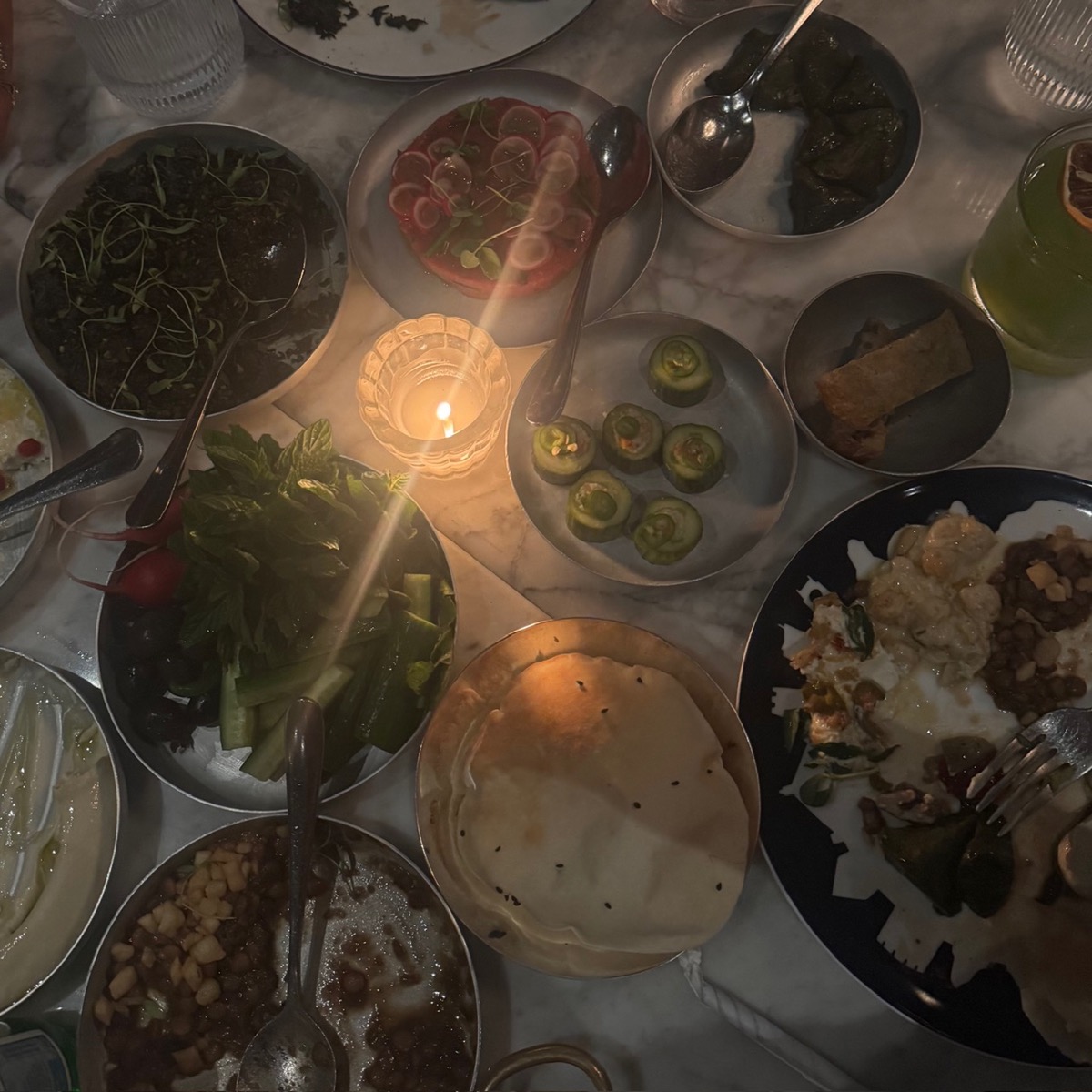
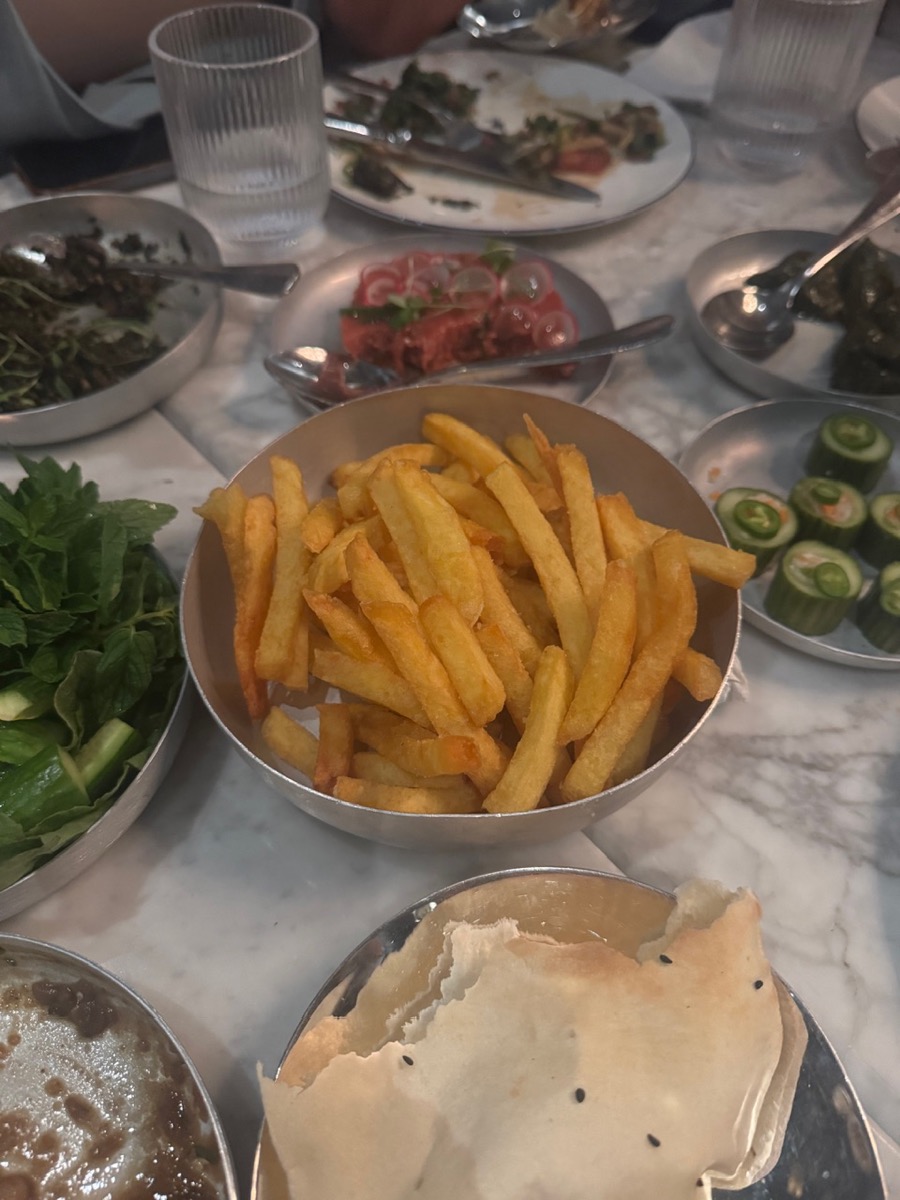
Everyone started getting there, we took our seats and the food started flowing. What can I tell you? Simple Lebanese dishes, but honestly, the best I have had- kind of ever! Then the french fries… How can even the french fries taste this good? I see a tall woman dressed in brown, checking on everything from afar, gazing at the tables… I think this is Em Sherif.. I ask the waiter, where is Em Sherif.. He looks her way.. Then she passes behind our table, and I tell her how amazing every single bite is. Her reaction? “Really, you love it? Are you sure? Everything is good?… Ahh God this is good to hear!”…. How is she saying that, very genuinely? And just like that I know what her secret is!!! (Needless to tell you that after the event I went every.single.day to Em Sherif Deli or Em Sherif Café, and begged them to open in Palm Beach or Miami!)
We had a great night with music. Everyone was singing, dancing, and very excited for what was to come and what this week was going to bring with it…
Day One – Craft, Memory & Emotion
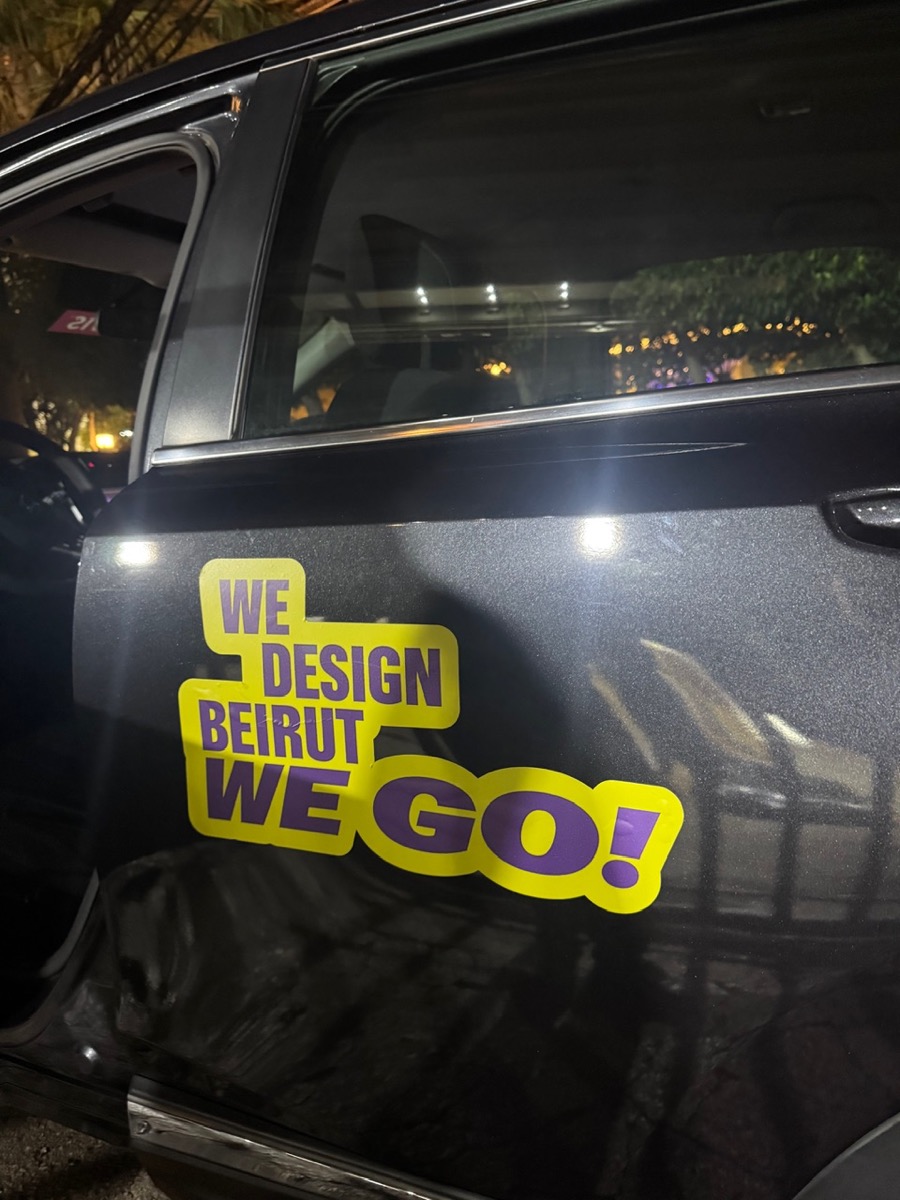
My amazing Alo Taxi driver (not the airport one) picked me up in the morning, then we got Cynthia (my week’s companion and now friend) and went straight to the Abroyan Factory for An Embroidered Dream - the opening performance by Lebanese designer Salim Azzam. We were welcomed by gifted women from Mount Lebanon, sitting in a circle, embroidering as part of the performance, accompanied by the soulful voice of Lynn Adib. Salim imagined a performance rooted in simplicity and culture. Lynn collected old Lebanese lullabies, and together with composer Wassim Bou Malham, transformed them into deeply emotional music.
Forty women working with Salim from their homes, spanning different generations (the eldest in her seventies)—paid tribute to women, daughters, and mothers who learned to show love through their hands.
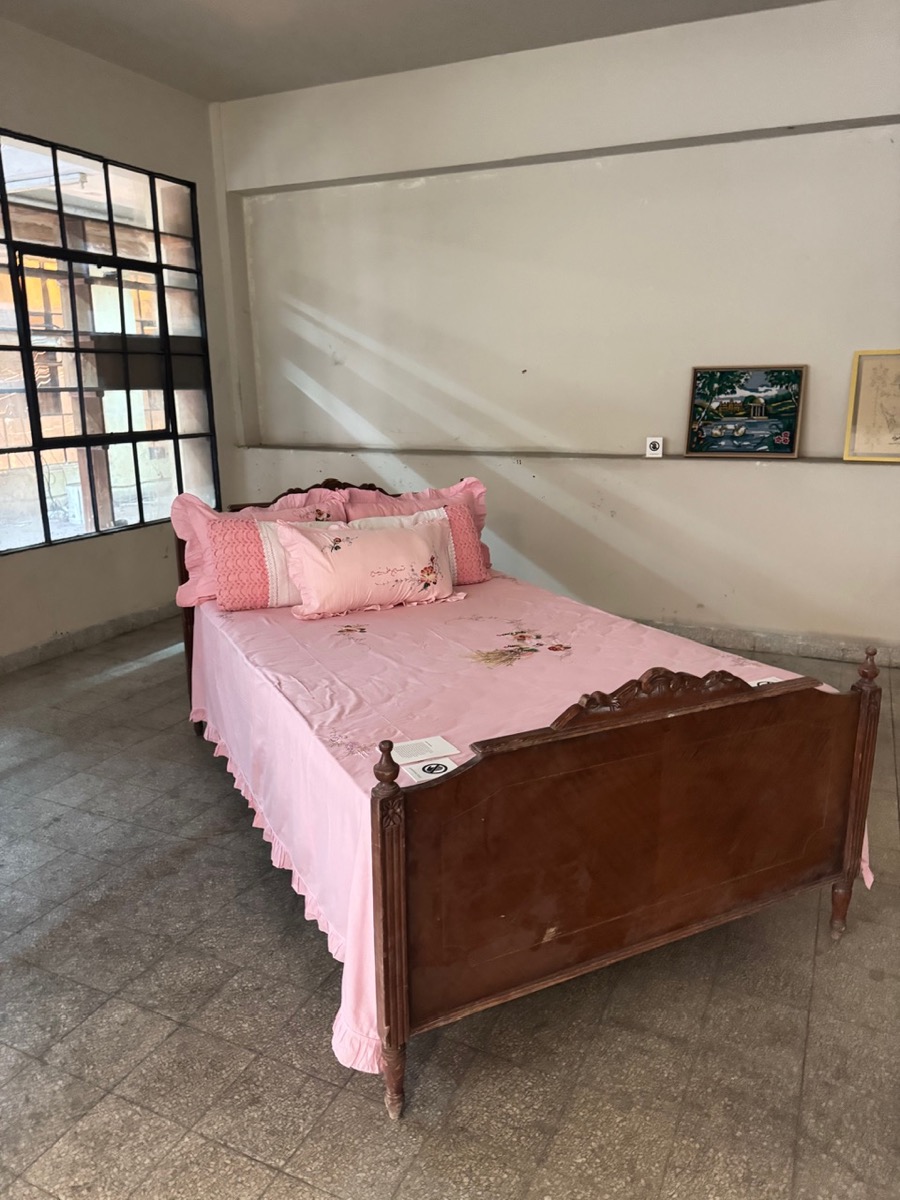
This was also deeply personal for Salim. His aunt, who is also his inspiration, passed away early in his creative journey. She used to sew his bedsheets, something he remembers as an act of care and devotion. Her daughters and nieces were present in the circle, alongside her sewing machine.
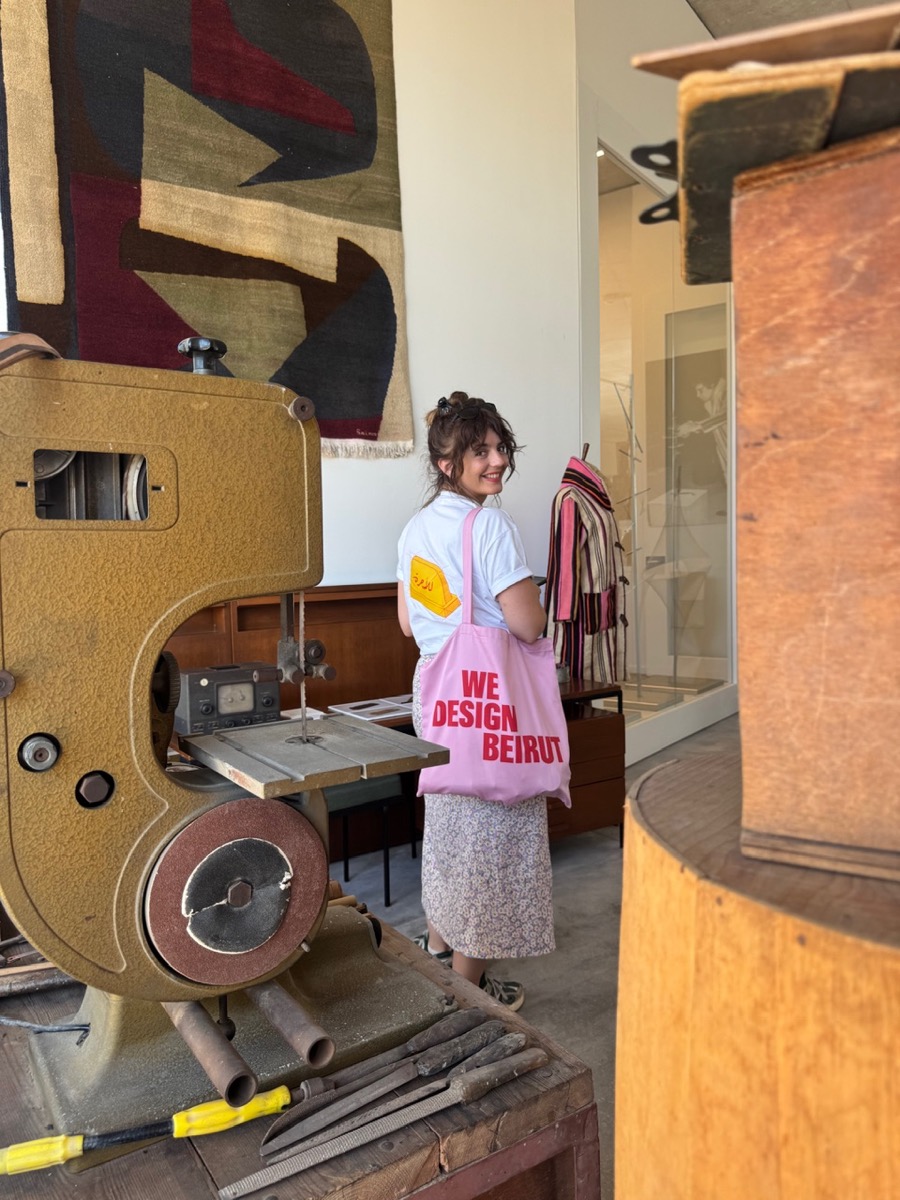
Following this moving performance, we toured the Abroyan Factory exhibitions: Threads of Life, Métiers d’Art, and Skin of a City.
A few hours at this place were honestly not enough! You want to stop at every artist, designer, craft station and listen to the stories and inspiration of every single exhibitor.
Exhibition Highlights
SARAH’S BAG
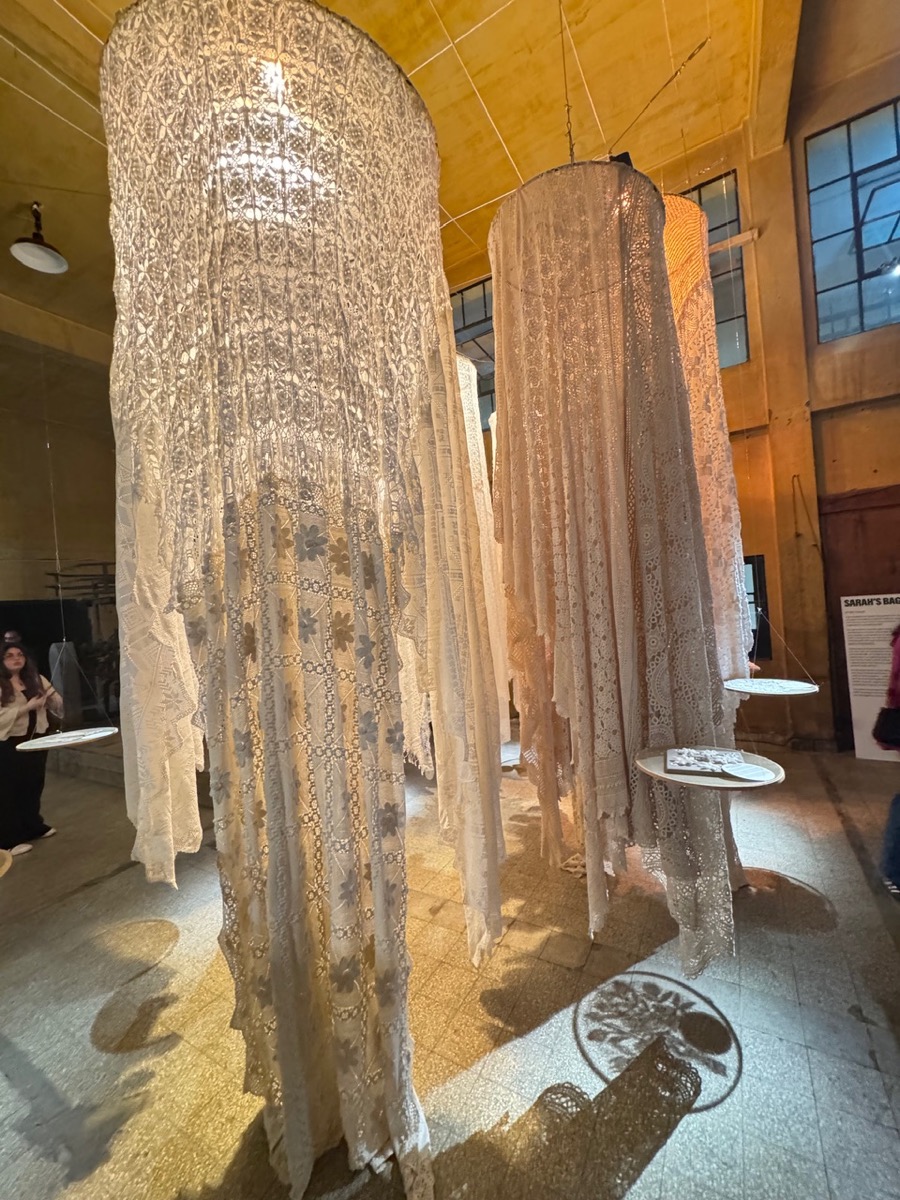
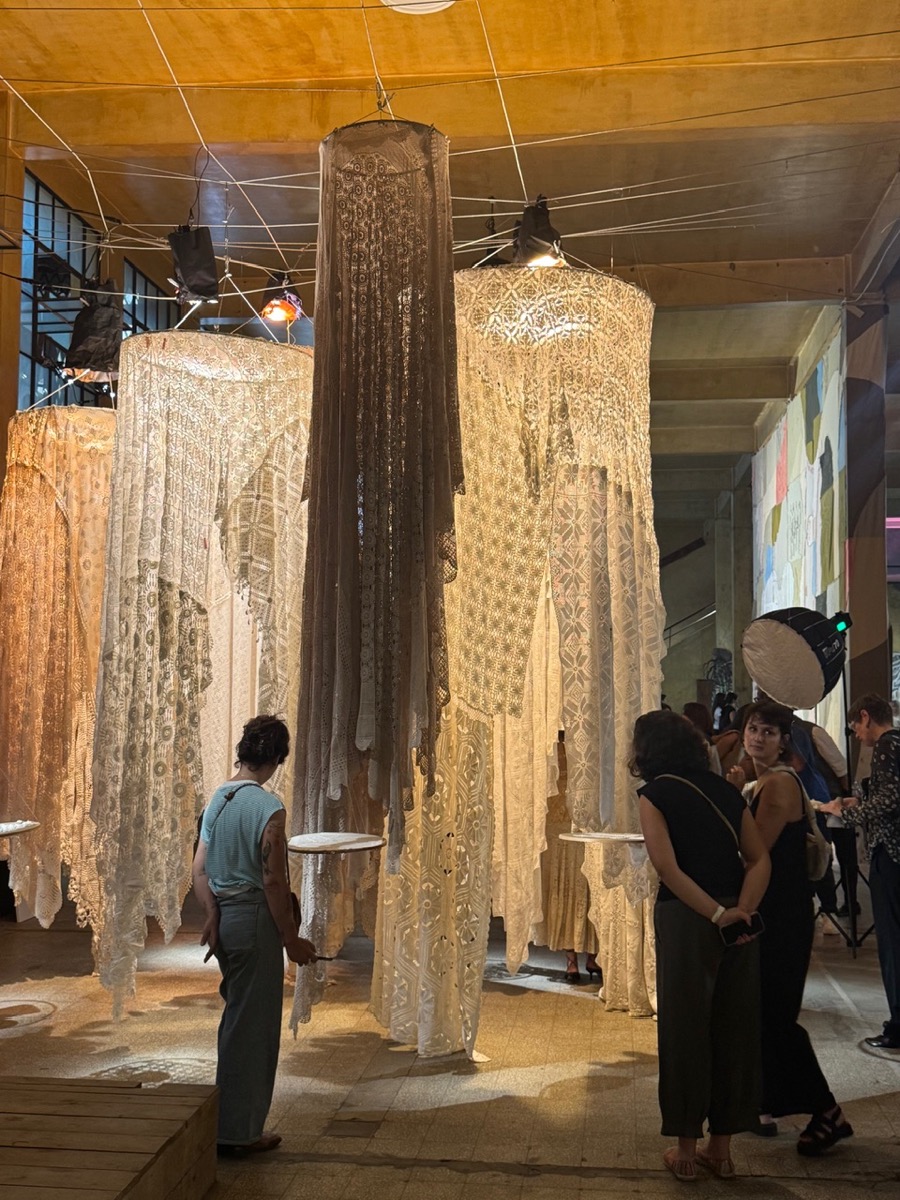
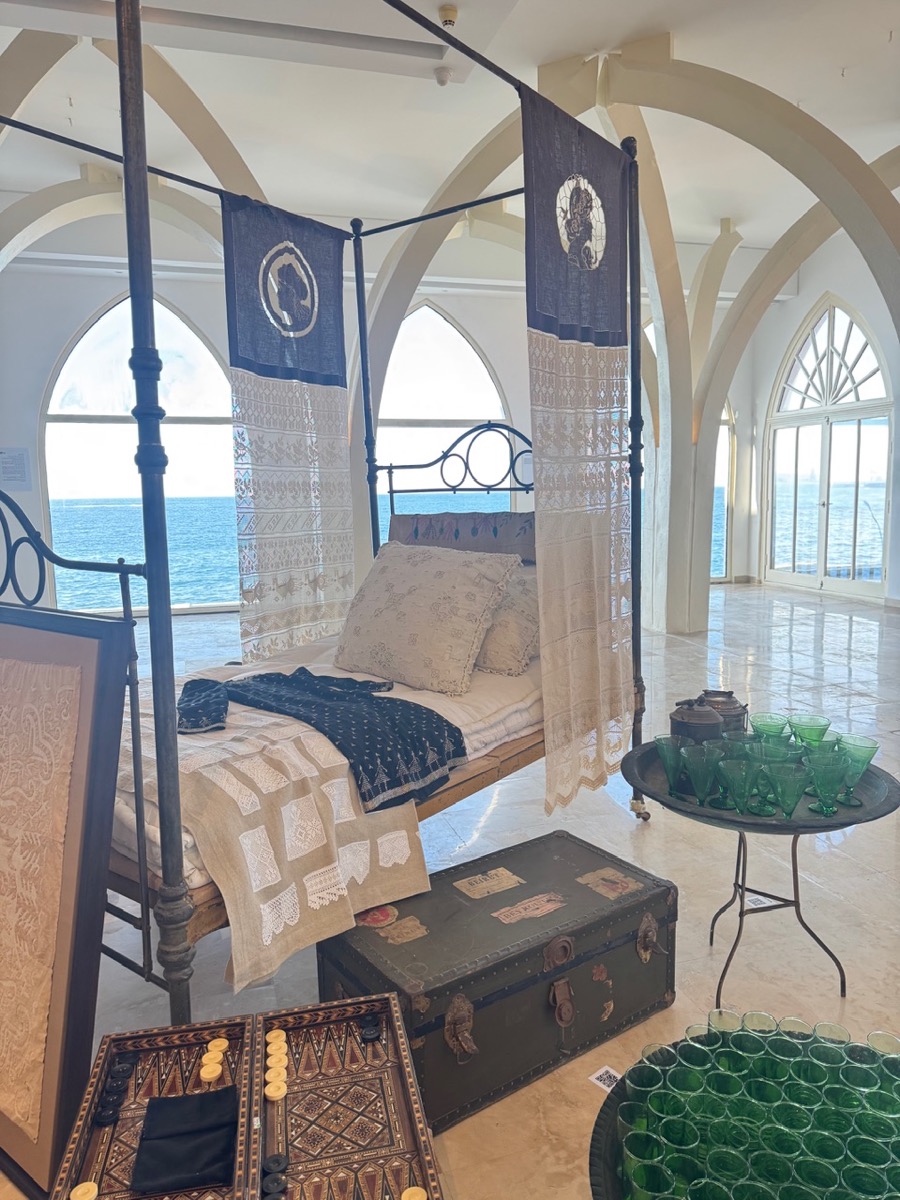
"In Her Hands”- This installation shows the intimate preparation of the bridal Jihaz- trousseau, preparing the bride to her new life. Women gathered to make marvellous creations, and the more intricate it was, the more valued was the bride by her future family. This is a vanishing craft in Lebanon.
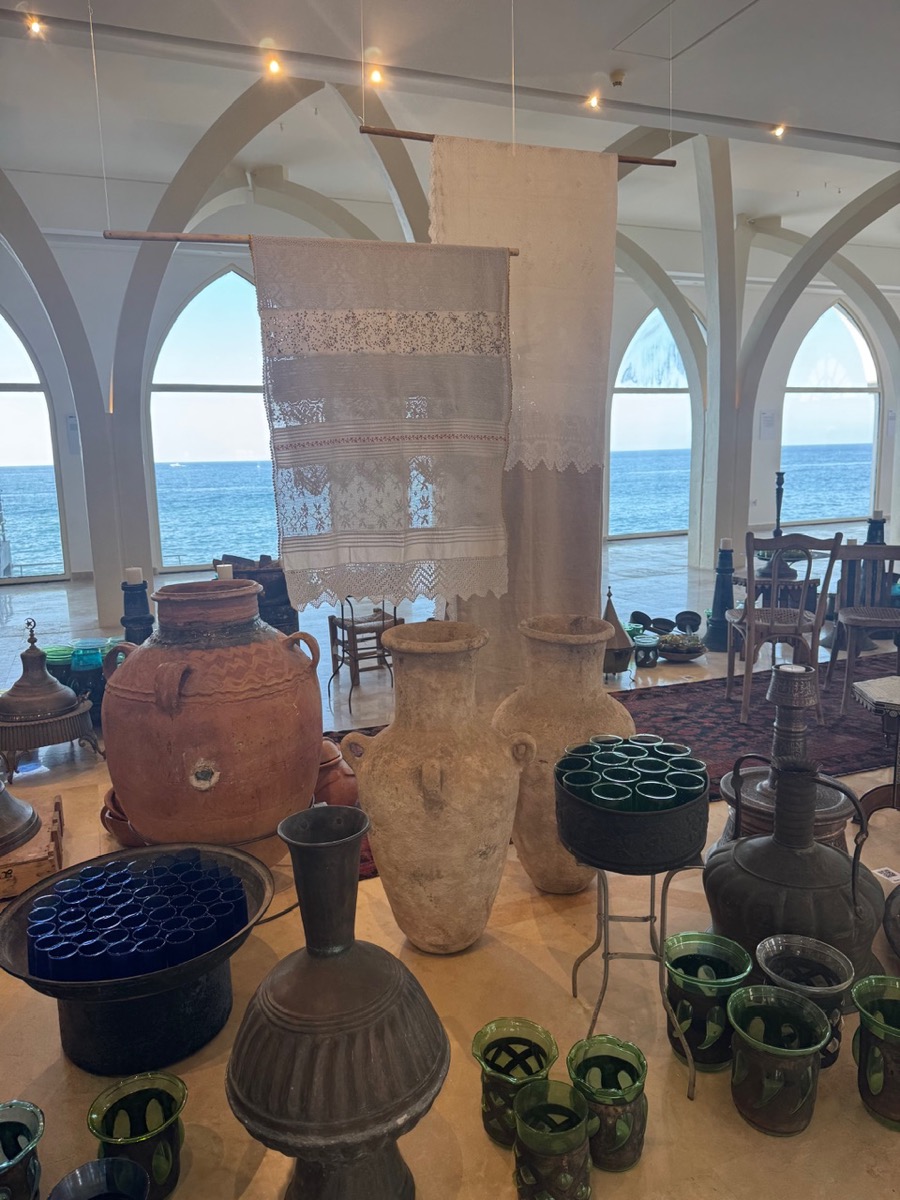
Sarah’s Bag showed collected items featuring crochet skills, lace techniques, broderie anglaise, metallic thread embroidery (by one of the seven Haydar sisters for their hand-made trousseaux), ajour, silkworm cocoon appliqué, Makkouk technique (tatting). The installation is in a shape of a circle, just as these women used to sit, and it consists of 50 crocheted bedspreads. The items collected carry stories of the women who made them, the women who gifted them, and the memories they hold. Along the process, Sarah was reminded that design isn’t about objects, but rather about stories, souls, and shared memories. Sarah did not only collect items (some of them dating back to the 1900)- but together with her team, they collected generations of feminine energy from all over the regions in Lebanon. In Her Hands is a tribute to these women, repositioning crafts as design heritage and a point of inspiration.
INAASH
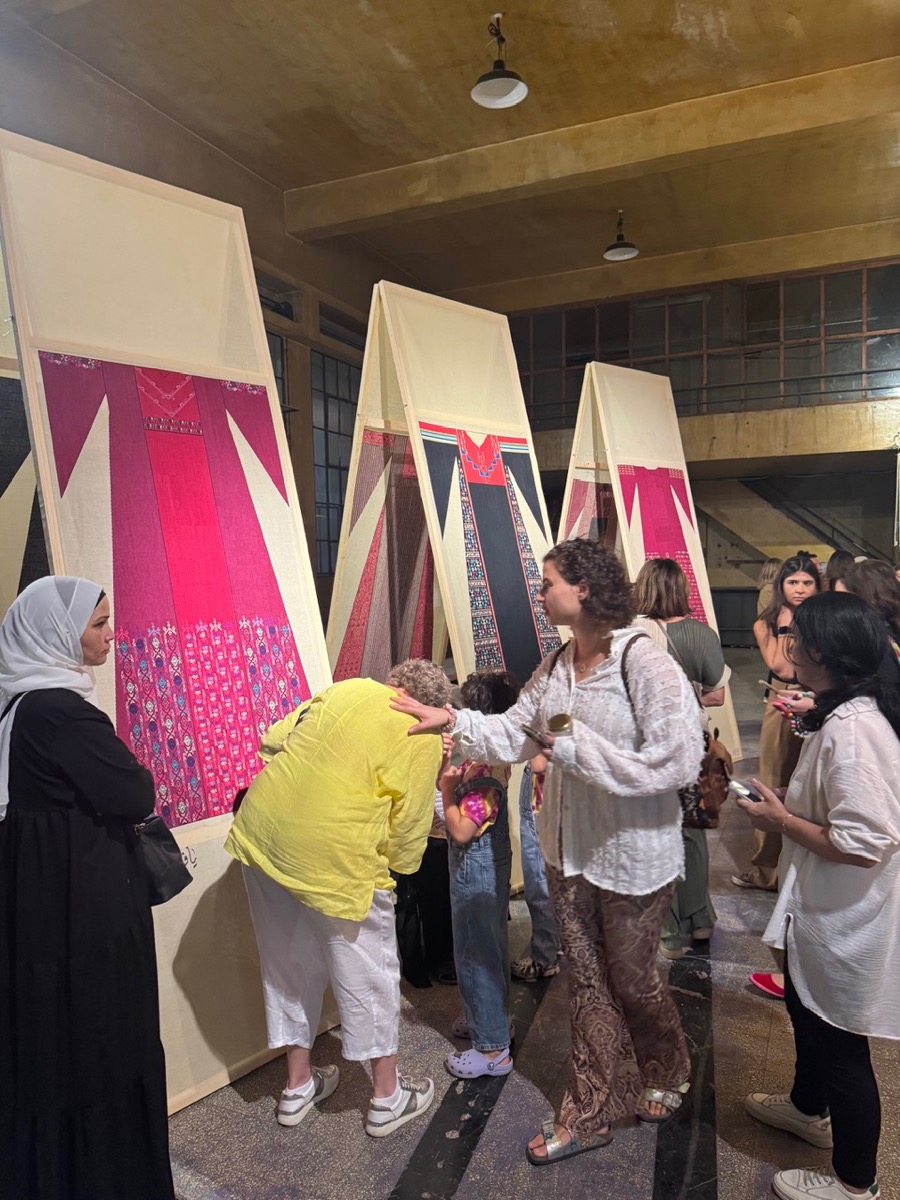
A Nation Stitches features six hand-embroidered thobes crafted over 8 months by Palestinian refugee women in Lebanon. Each dress paid homage to a specific city in Palestine, preserving centuries-old motifs through meticulous stitch work. “More than garments, they are living archives and acts of resistance, resilience, and cultural memory, sewn threads by thread into enduring symbols of identity and dignity”.
AJYALOUNA
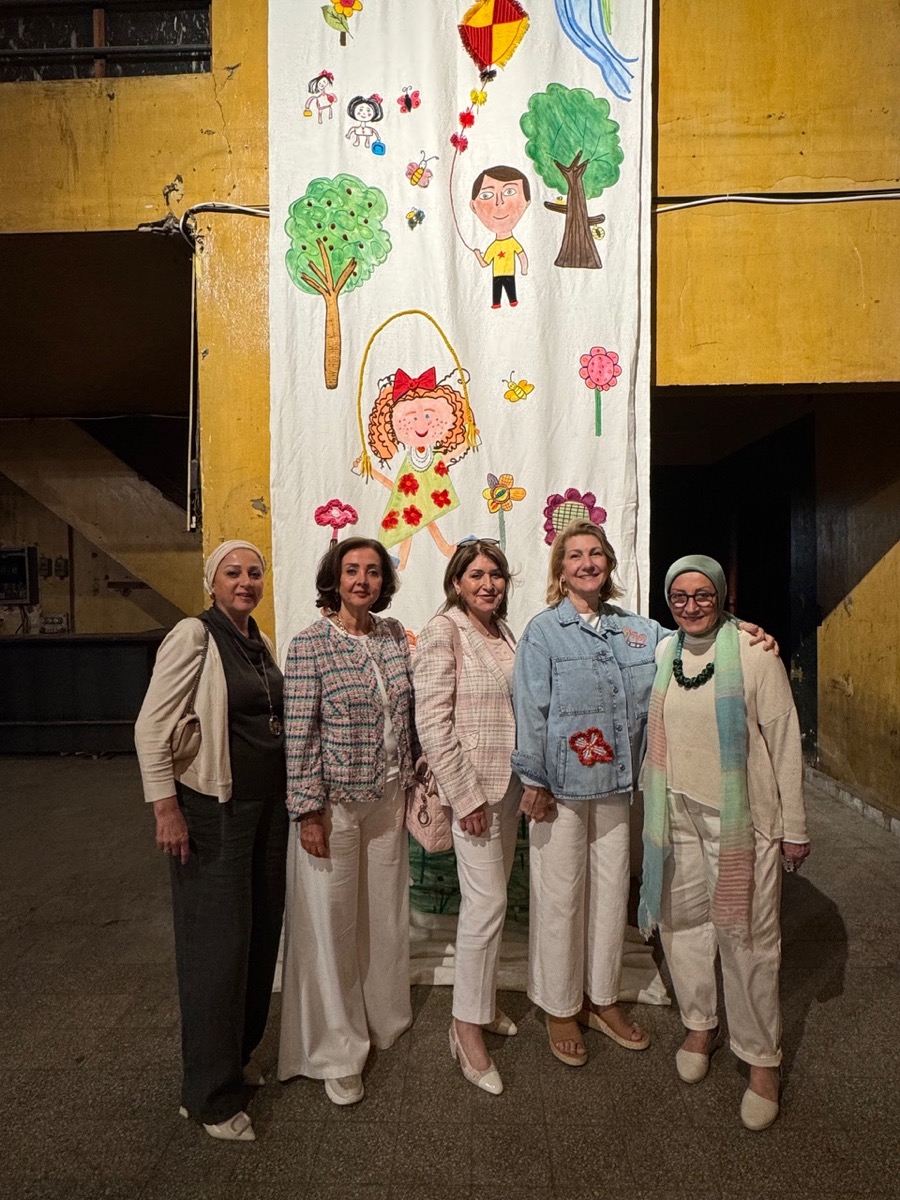
Generations Woven Together is a beautiful artwork representing joyful drawings by underprivileged children supported by Ajyalouna’s educational programs, to be then interpreted by women artisans in Ajyalouna’s atelier and transformed into textiles using embroidery, crochet, sewing and hand-stitching! The result was a magnificent piece of art that we all agreed has a joyful and peaceful aura, bringing generations together for celebration and empowerment- “beauty is born when creativity is shared across ages”.
HASSIDRISS
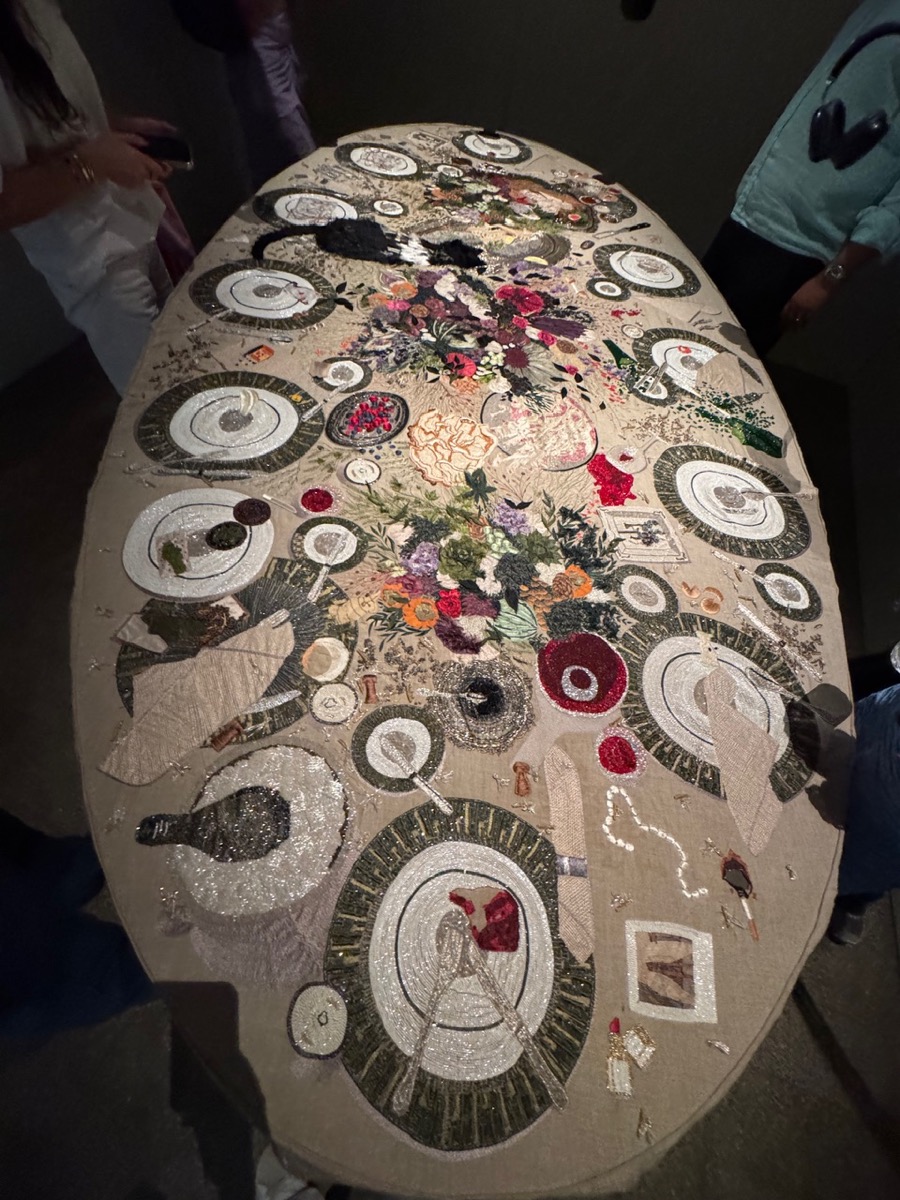
Supperclub- A curated piece of art that integrated scent, audio installation, with visual hand-beading, hand-threading, embroidery, padding, hand dyeing using cotton, linen, tulle, silk, glass beads, metal threads, hand-cut sequins.. An extravagant piece that took 2,305 hours to put together.
VANINA
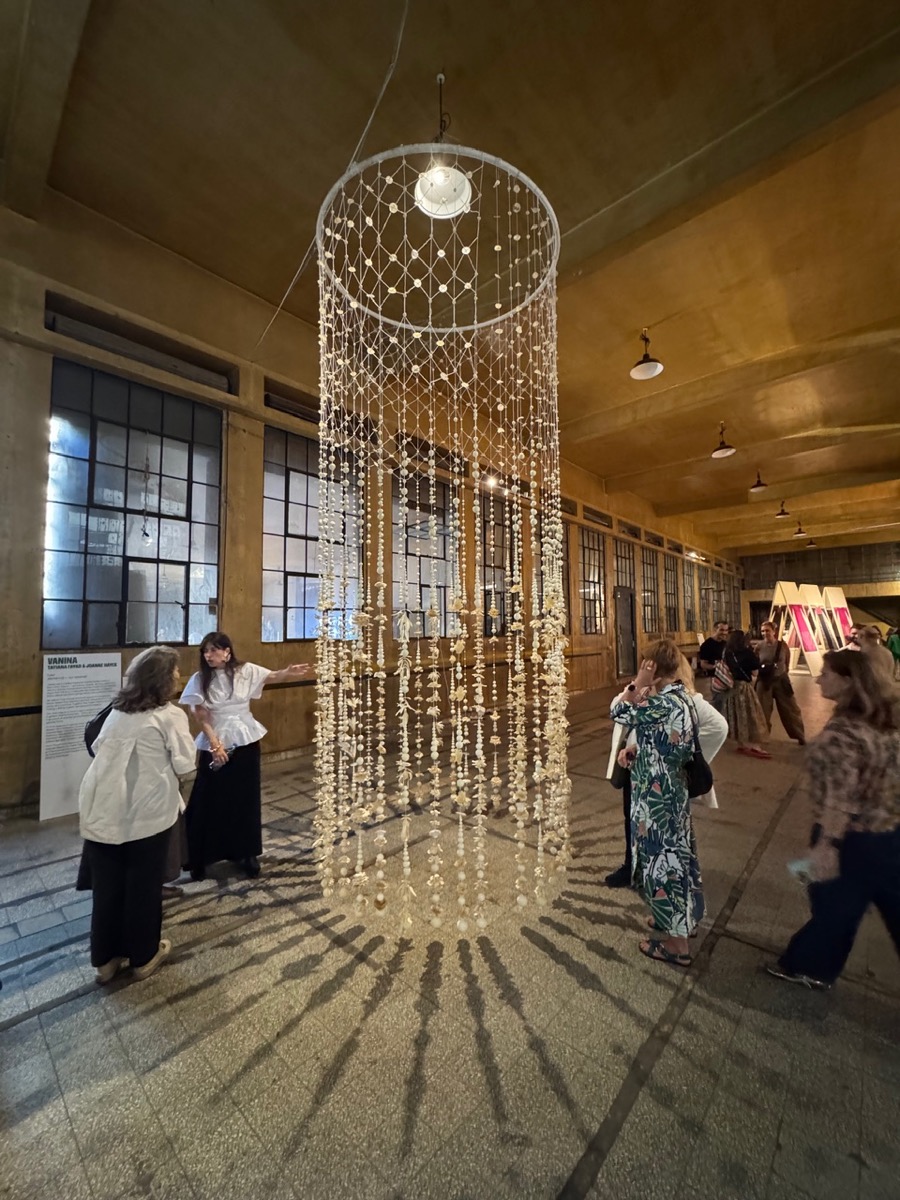
Jawharuna- Our Essence- A beautiful installation made out of natural mixtures shaped into matter that is then carved, molded, cast and hand formed into beads and forms. Each piece is carried by threads and woven together through macramé. These are all biodegradable and release fragrance of jasmine, orange blossom, zaatar, cedar, olive and more of Lebanon’s iconic scents. Jawharuna celebrates the multiplicity of Lebanon, where differences blend and are woven into common essence.
BOKJA
It’s A Matter of Perspective- A creative multi-piece installation was inviting us to shift our gaze and look at things in a new light, and look again and try to find symbols and meanings. It’s an invitation to listen to others, and agree to disagree.
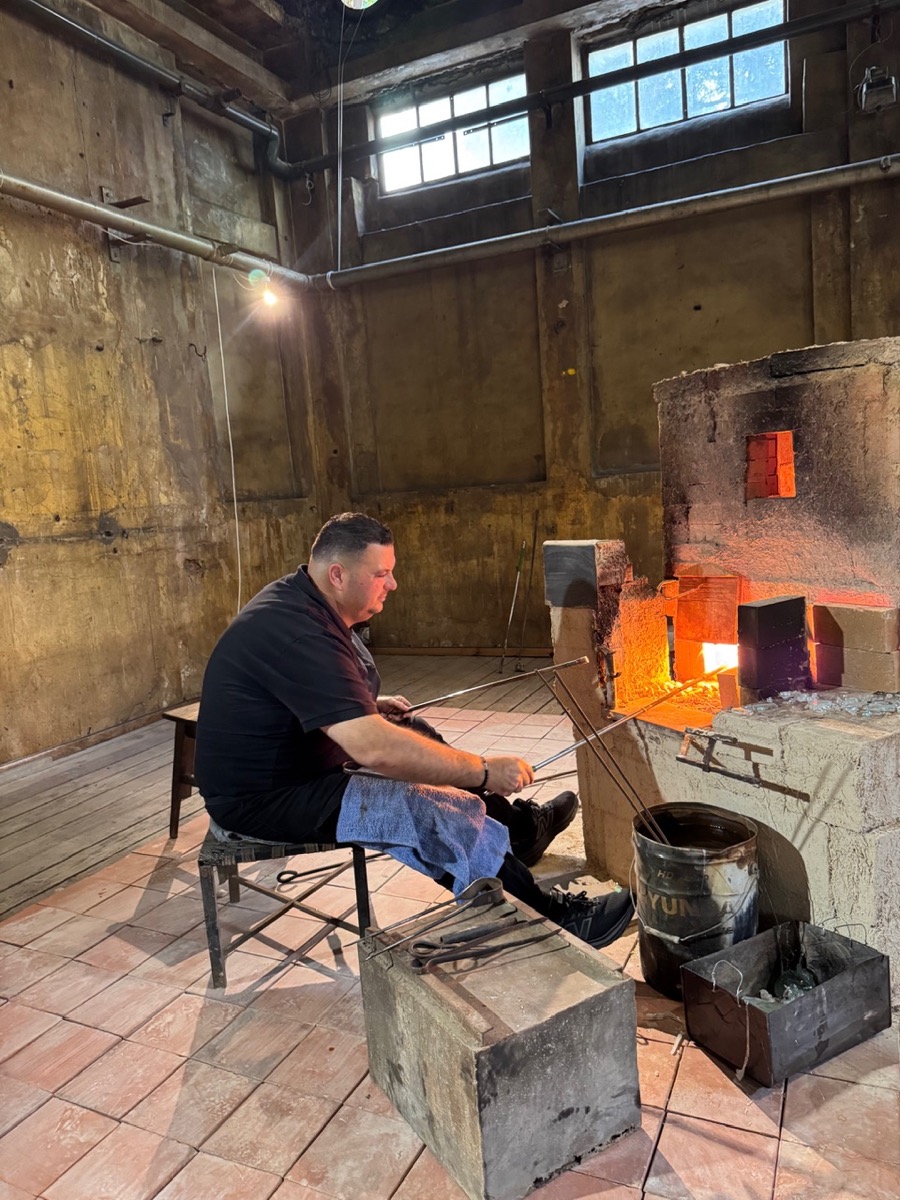
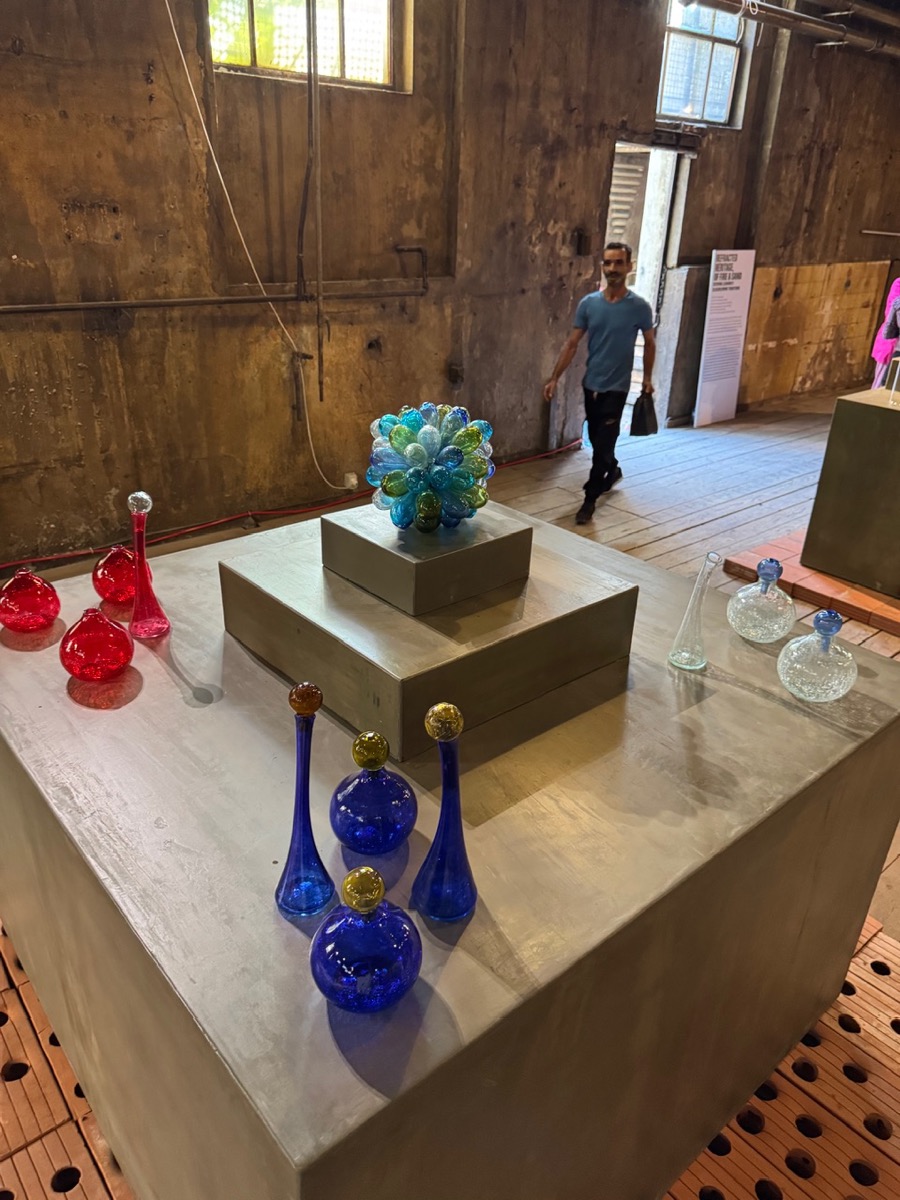
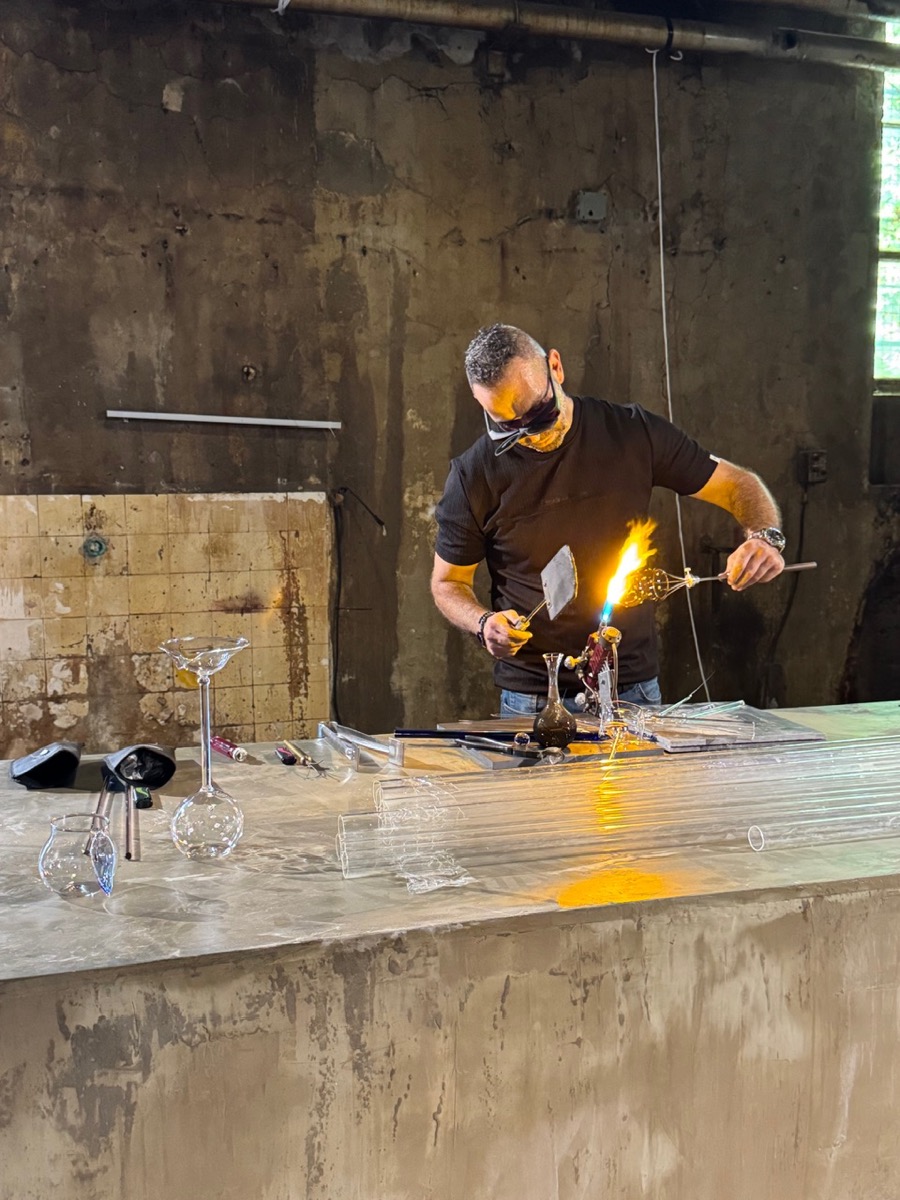
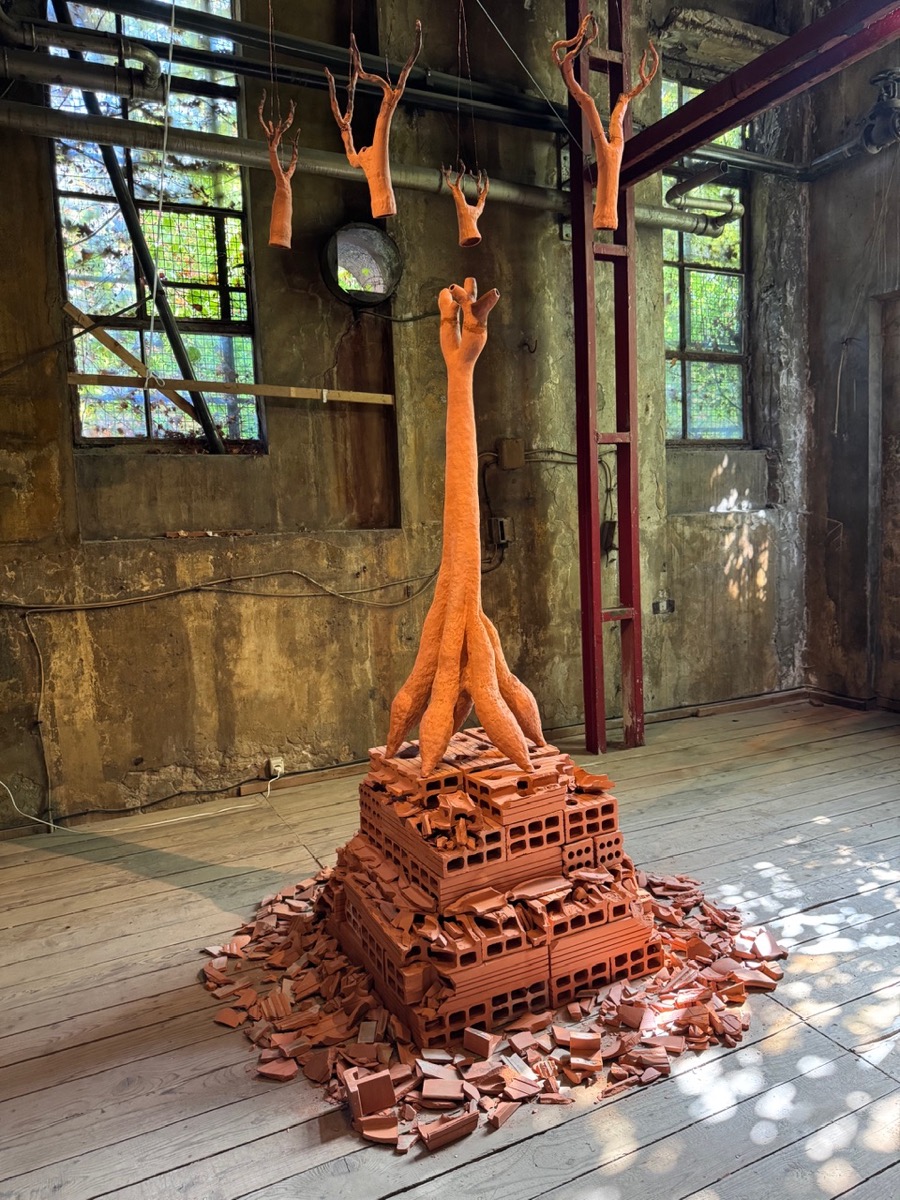
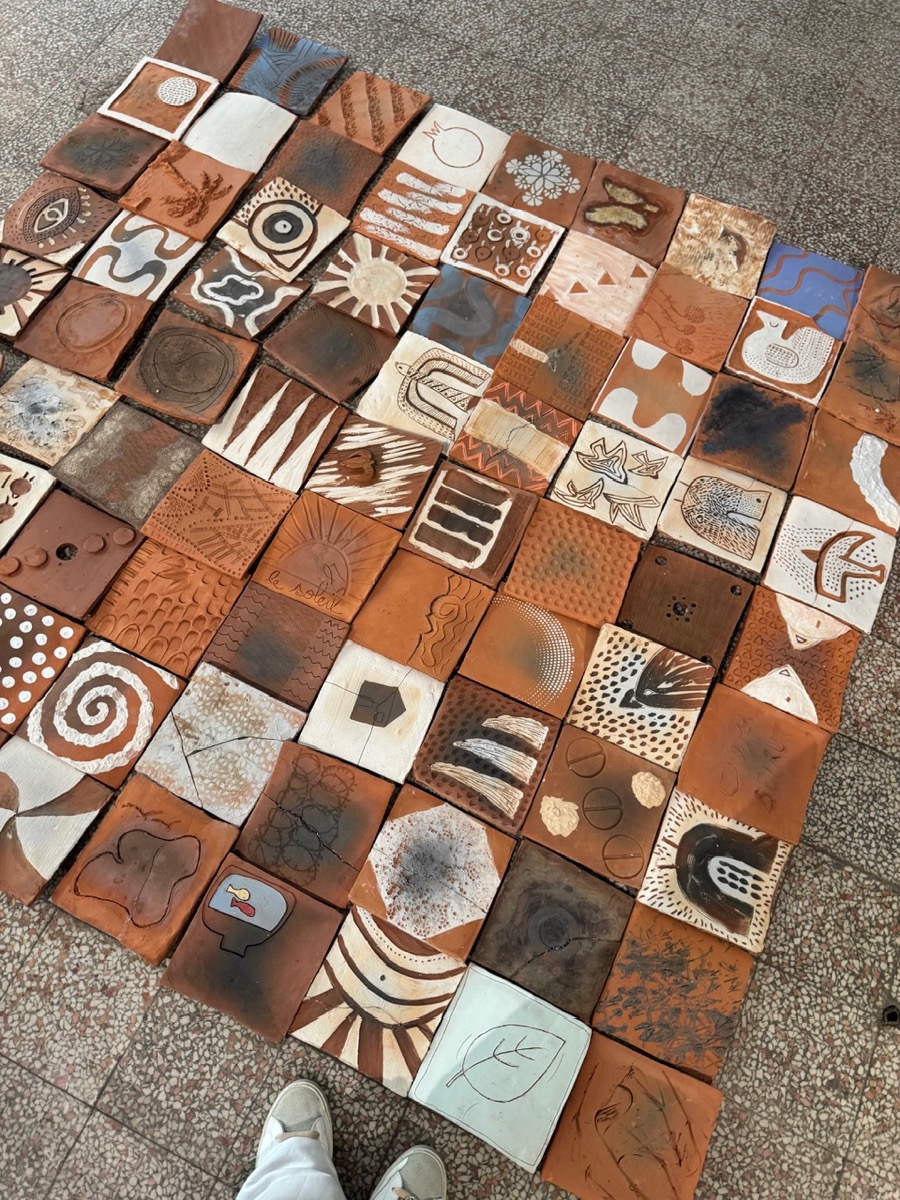
Glass blowing- who knew this is one of the historic crafts celebrated in Lebanon? Have you been to the Murano island in Venice? These skills are also available in Lebanon. It was crazy for me to see the set up with artisans creating their glass designs… alongside there was also terracotta, clay, and mud workshops where visitors could engage hands-on.Why are these crafts not spread widely in the country?
There were so many pieces, projects and designers, each one worth celebrating… You can check them all on Glamouria's and We Design Beirut's social pages and tags.
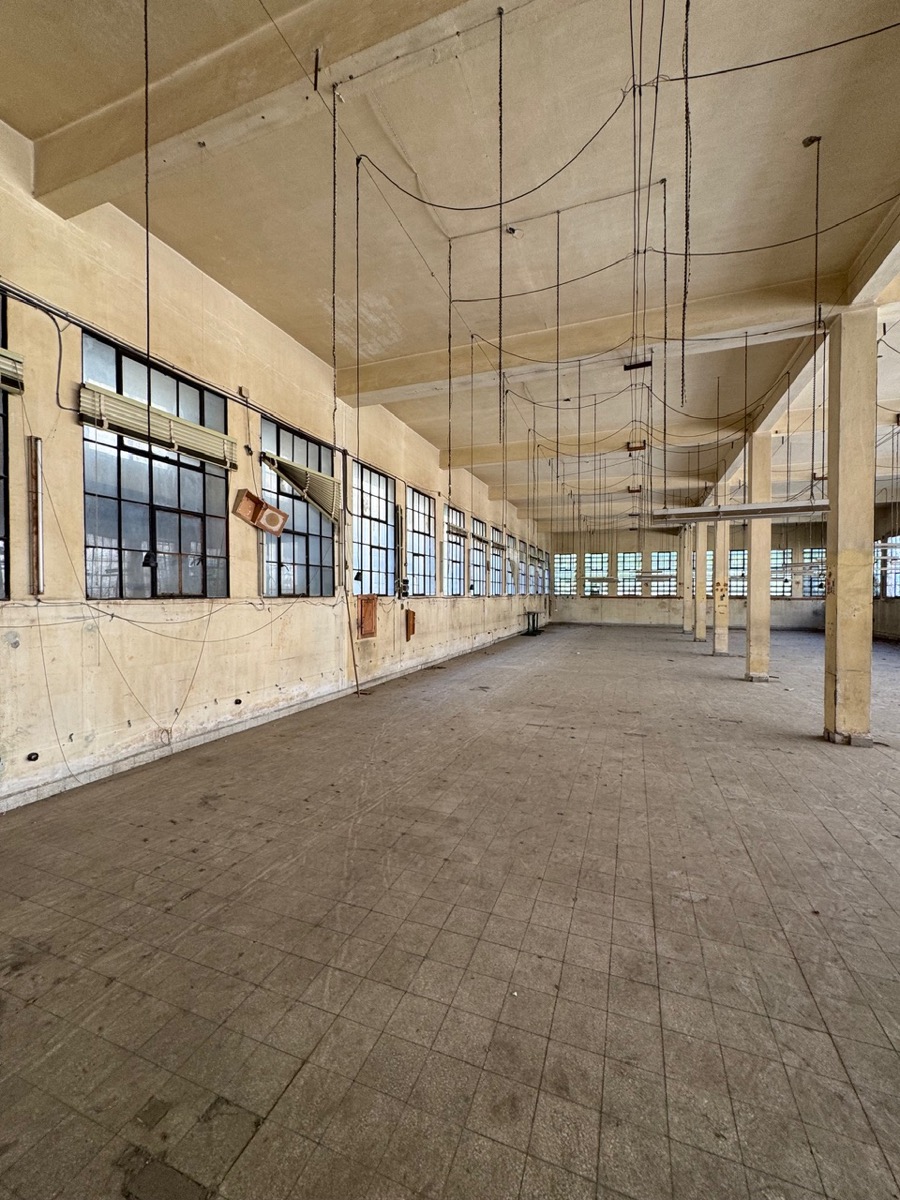
As for Skin of A City- which is a nude exhibition- I am going to admit that I went up to the designated floor and saw naked walls of the building… I thought they were playing on words.. I even took pictures of the nude walls and the nude space! I had not realised that the exhibition was in the next room! So I missed it….
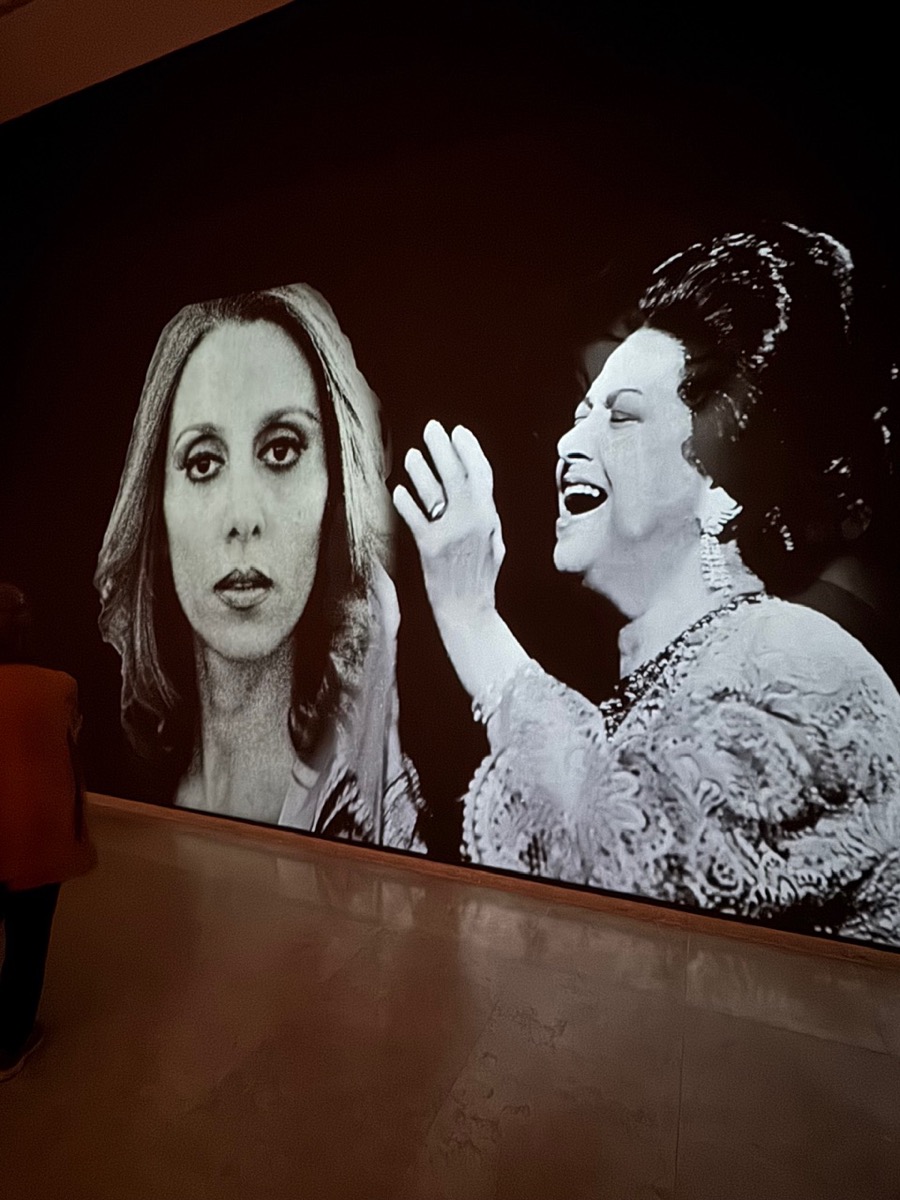
From Abroyan Factory to Em Sherif au Musée for a quick delicious lunch and coffee… Not on the schedule but my friend and I sneaked inside the museum for a special exhibition “Divas: From Ohm Koulthoum to Dalida”- featuring iconic female singers and timeless idols from the Arab world.
Roman Baths & Beyond
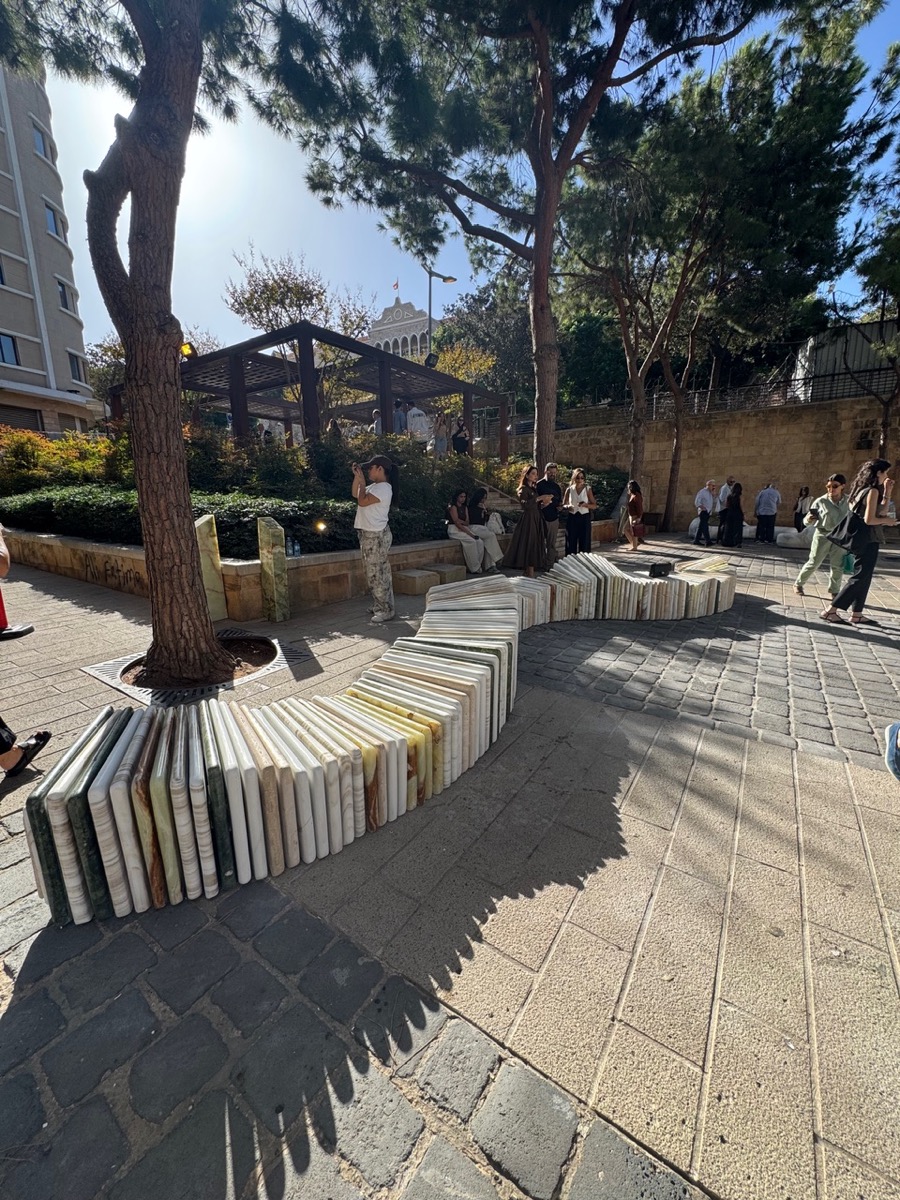
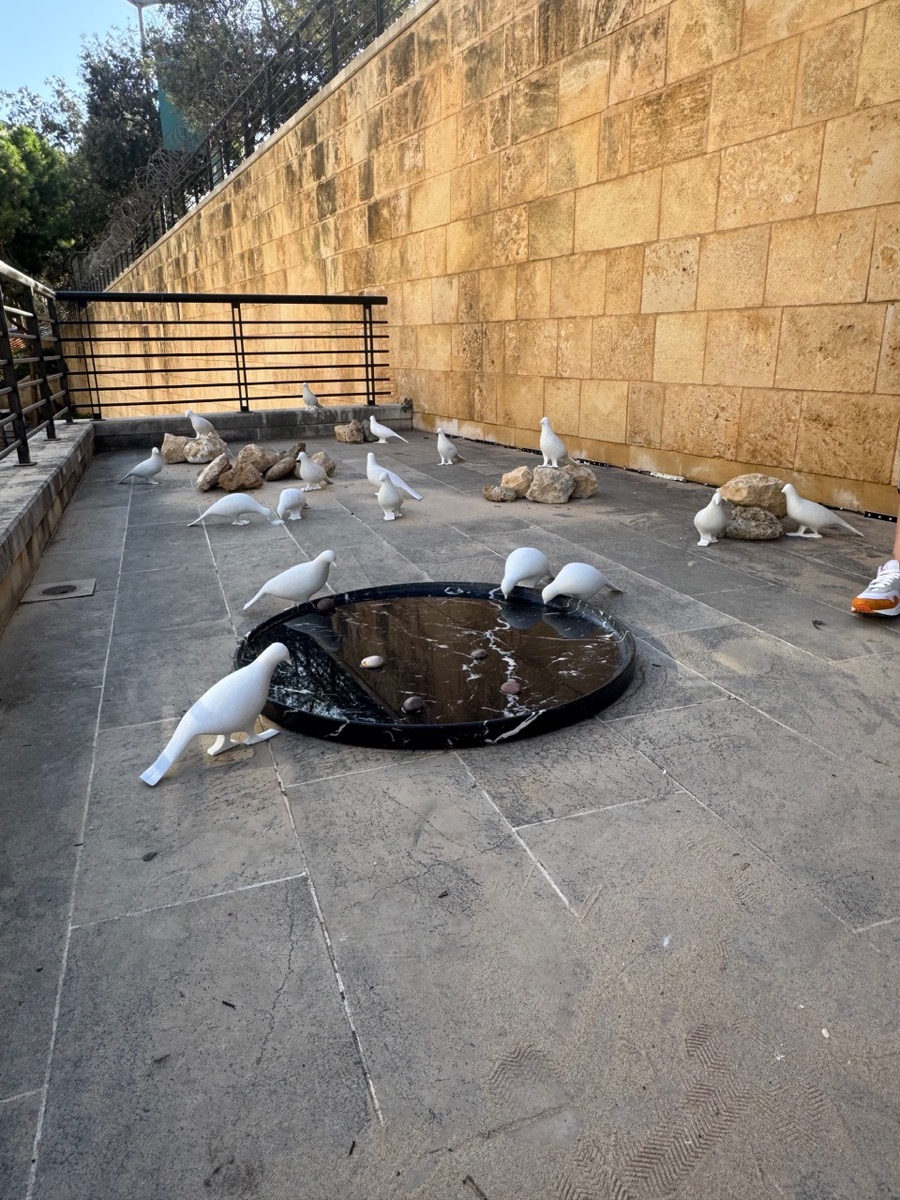
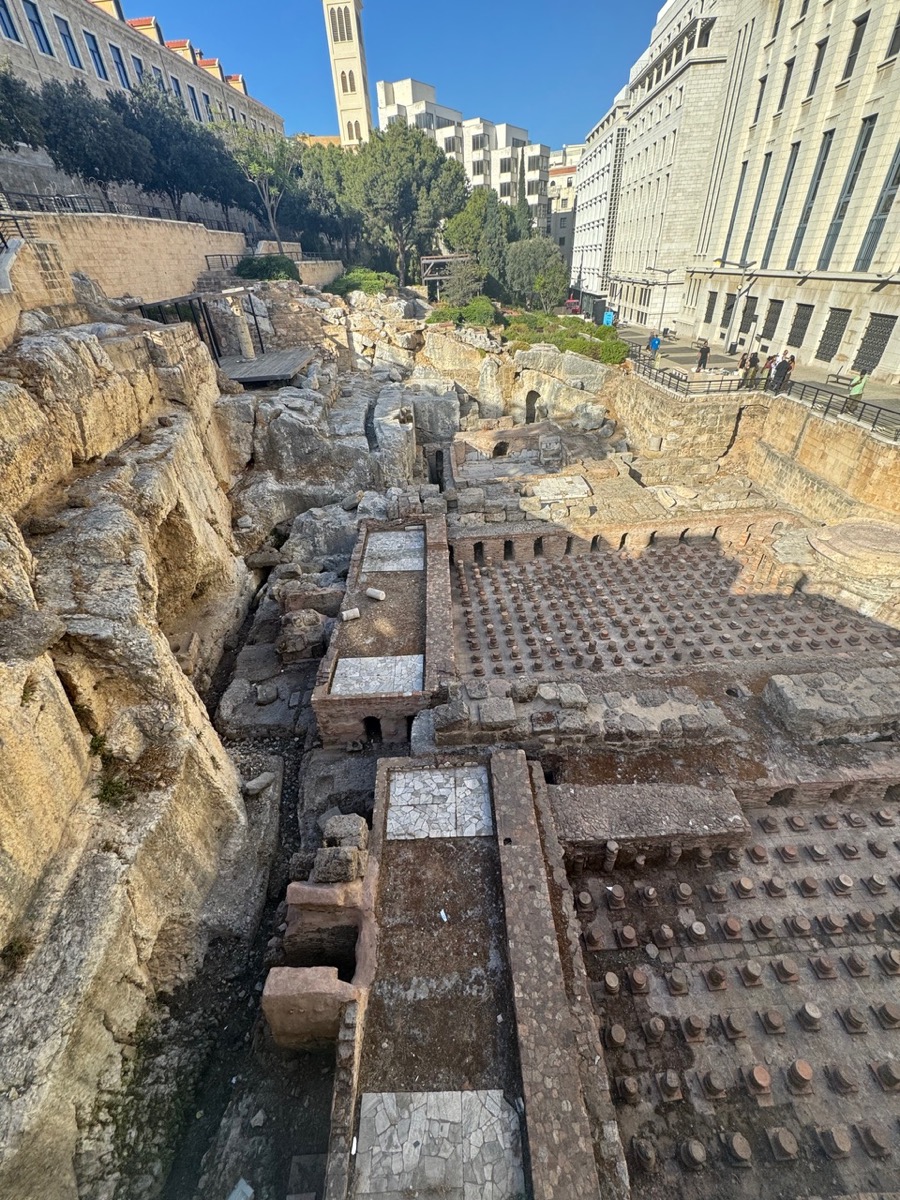
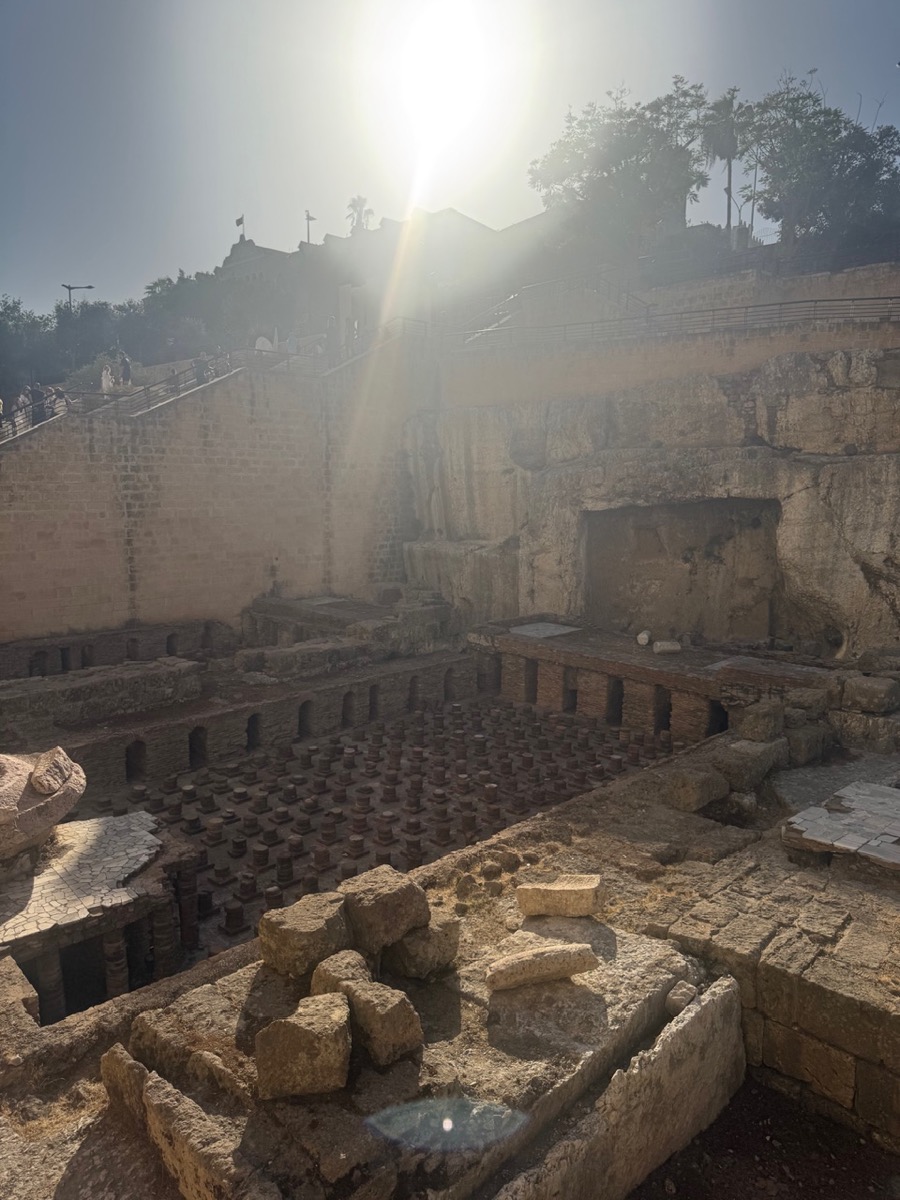
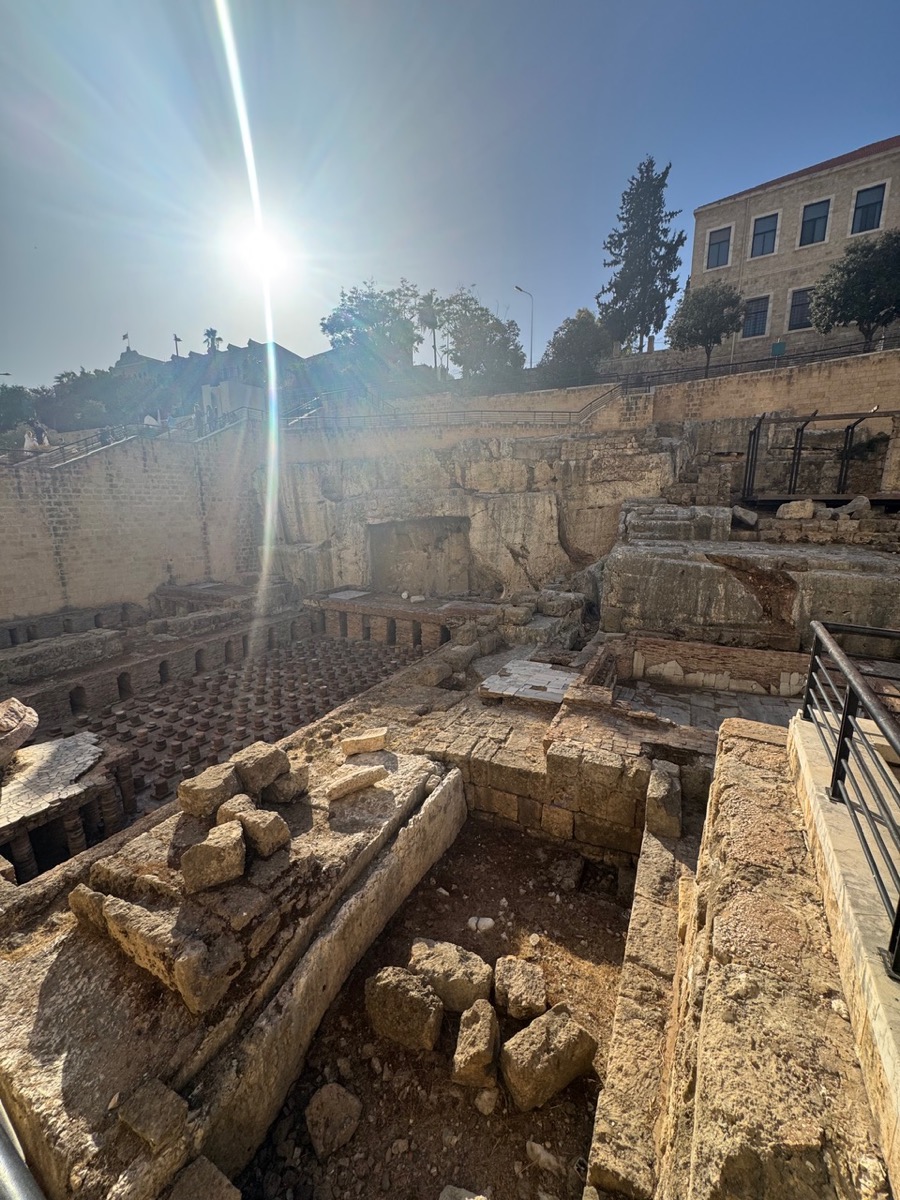
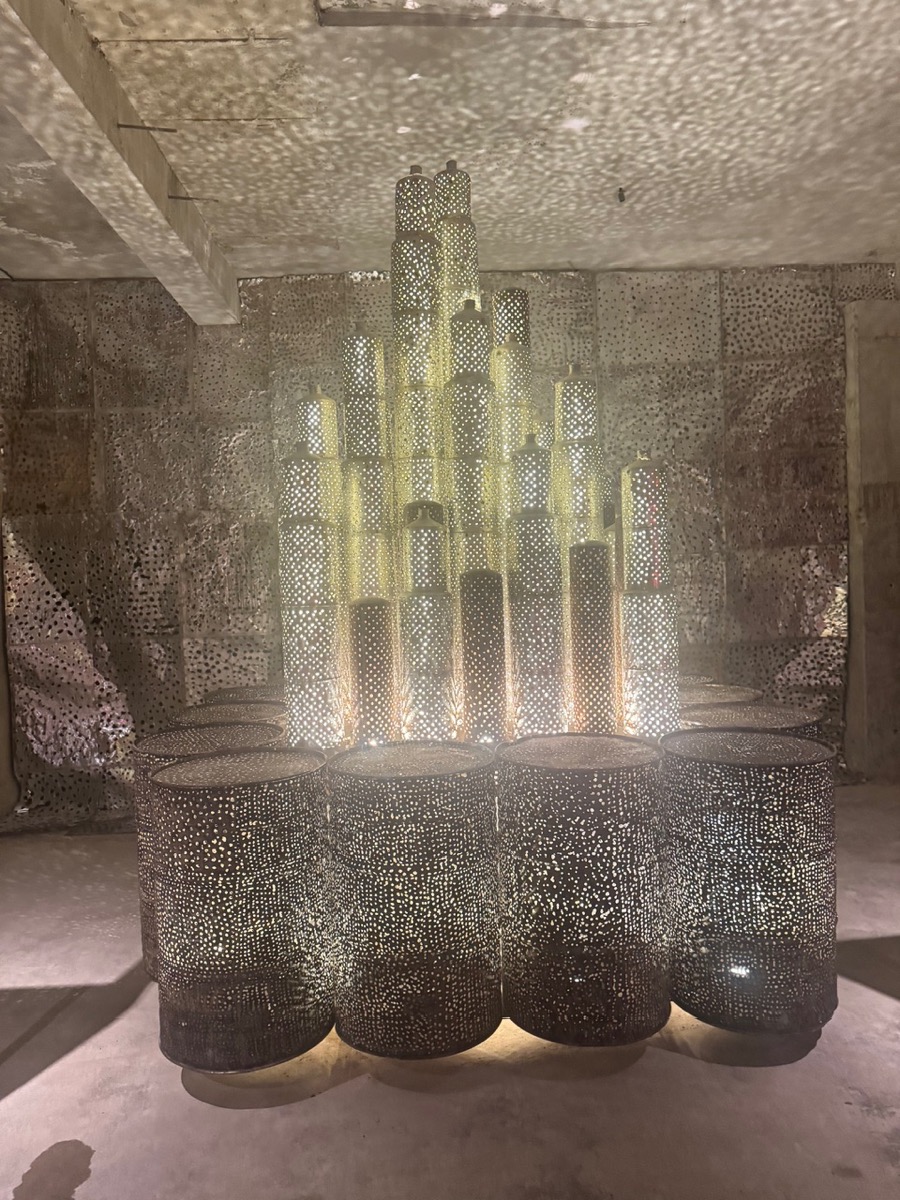
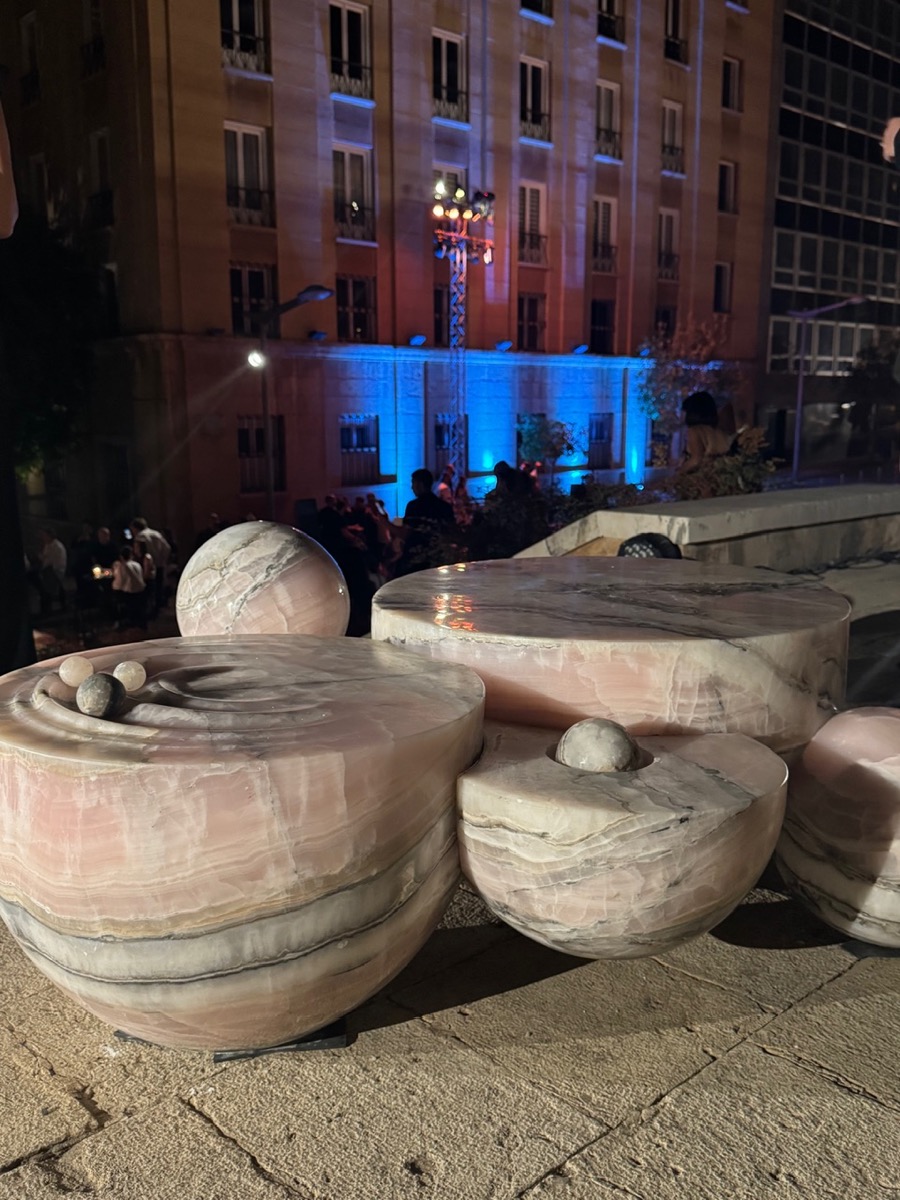
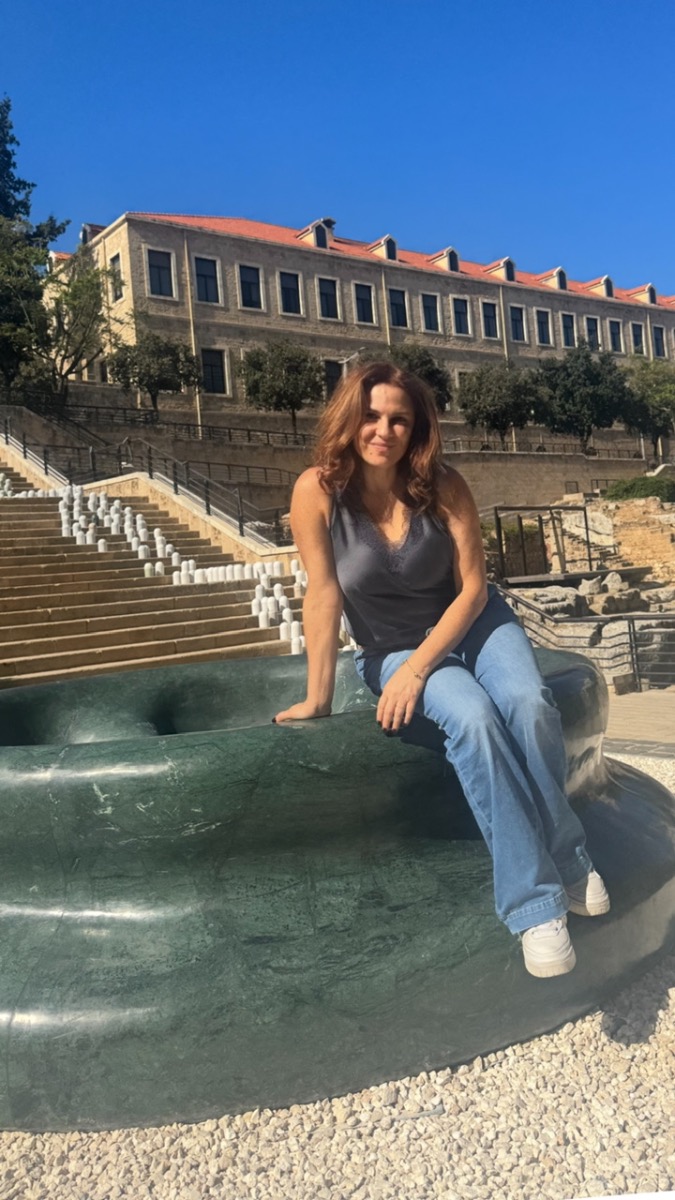
You would think that Day one ended here but no.. We’re still around midday! Next was our Press Tour to Of Water and Stone, an exhibition held at the Roman Baths that was sponsored by Stones by Rania Malli and curated by Nour Osseiran. This was another favourite exhibition as the area where it was held reminded me of my childhood. It was right by where my mom used to work when we were little, just by those stair steps at the Ministry of telecommunications… The designs are beautiful and fun… You have to ask the designers about their story or check the information provided for every piece to fully appreciate it. You will just fall in love with every piece including the idea behind it: The Living Springs, Circle of Echoes with the little pigeons scattered on the floor, A Bird Bath, The Fluvia Bench, Daughters of Berytus, Barrel in Blush and many more…
The designs were poetic and playful. During our visit, Athan echoed through the space, adding an almost sacred layer to the experience.
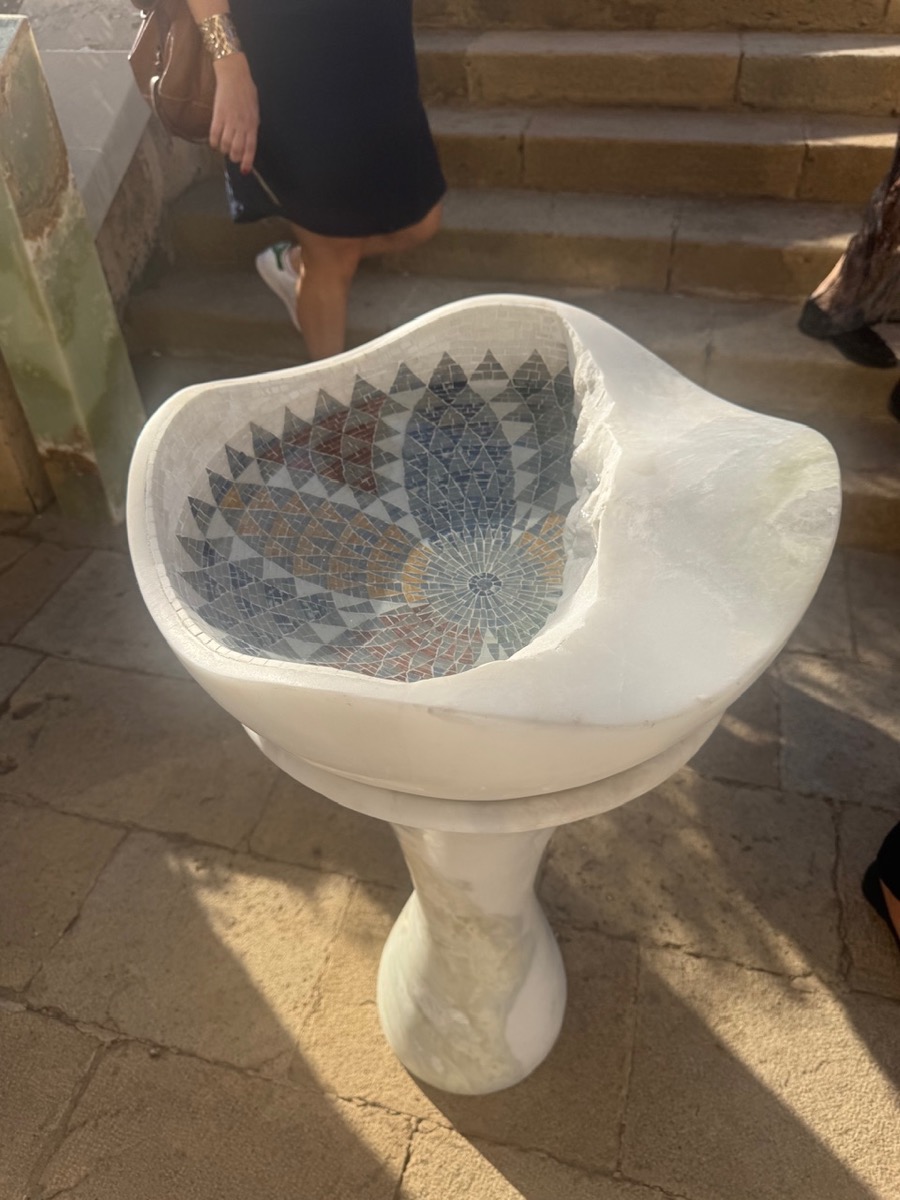
A Bird Bath by Elsa Maria Halabi: The idea is inspired by the Roman Baths. it's duality between mosaic, graphs and the stone itself. A bird came to Elsa's house randomly and went into a bowl of water she had.. It looked super refreshed. This is to show how bathing is a natural instinct; it refreshes us and rejuvenates us. About The event, Elsa told me: “If we zoom out and see all the pieces together, it's the connection between all of them that is creating the masterpiece. The creativity of everyone together is what makes it interesting.”
Daughters of Berytus- by Editions Levantine: The story of four women who walked the Roman Baths in the first century B.C. Each block represents a woman: The Healer, The Bride, The Mother and The Poetess. Each woman has objects that she uses daily in her life to create a moment of ritual or community.. About We Design Beirut, César El Hayeck said to me: “I feel there is a big need for community for us designers and artists. The more we get together the more we can gave bigger events and the more we can celebrate Lebanese crafts and talent. This is a very important moment that we are sharing together as artists. It’s also important to celebrate each other and grow together as a community.”
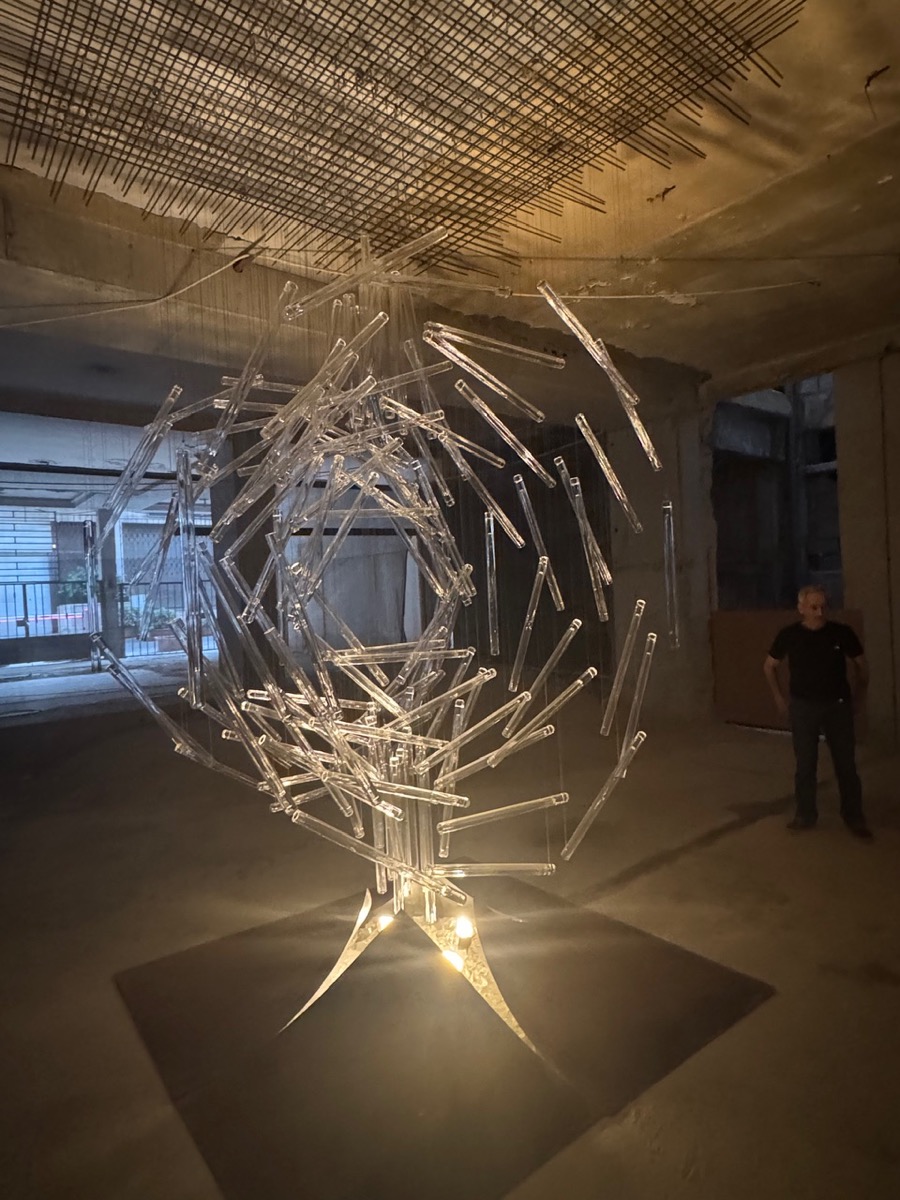
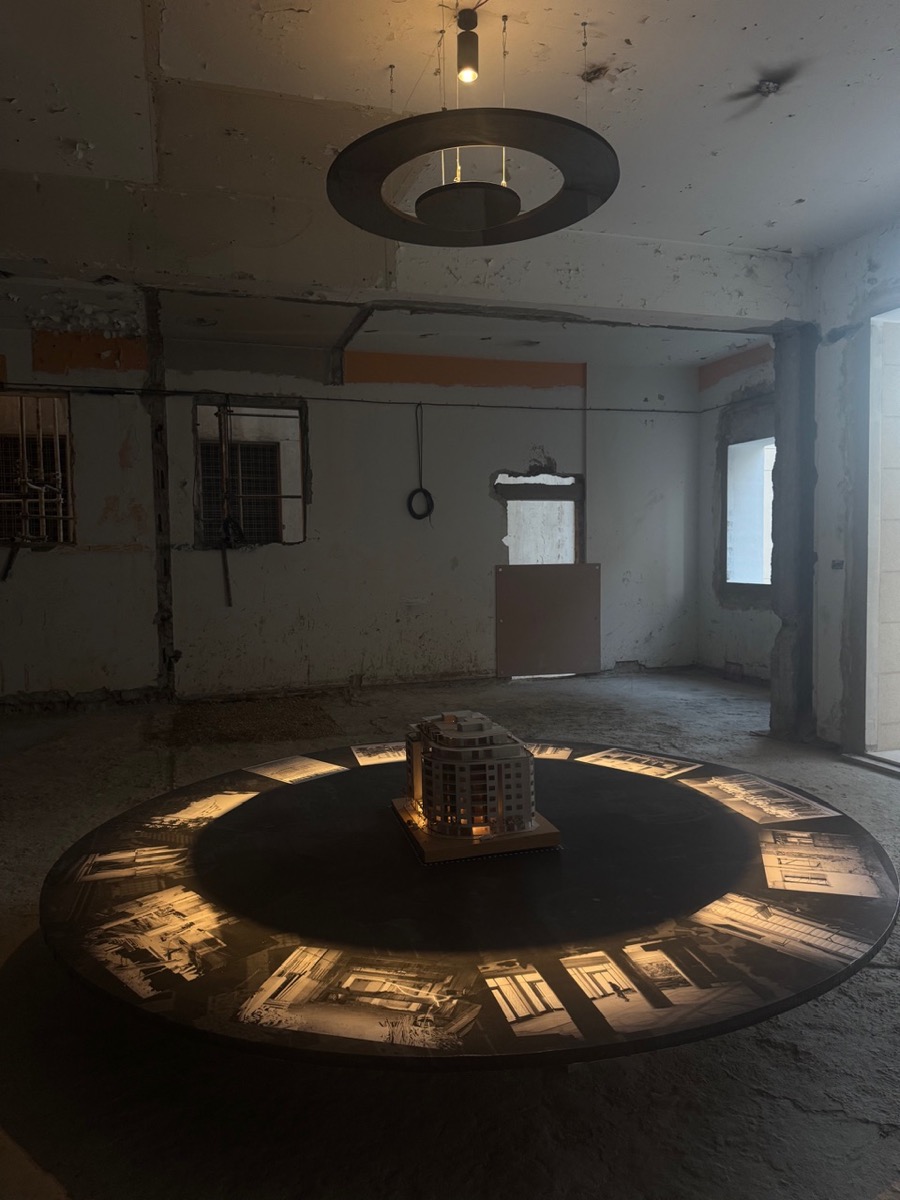
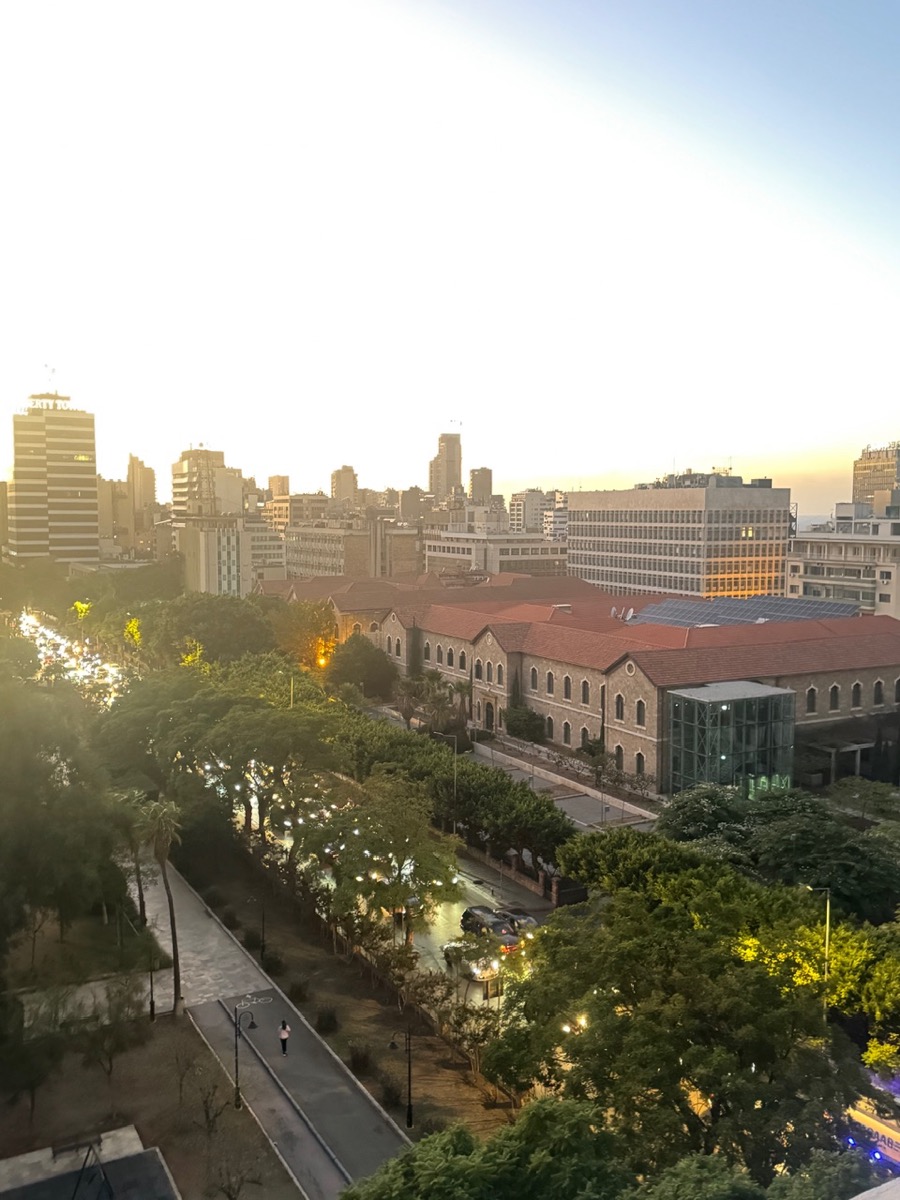
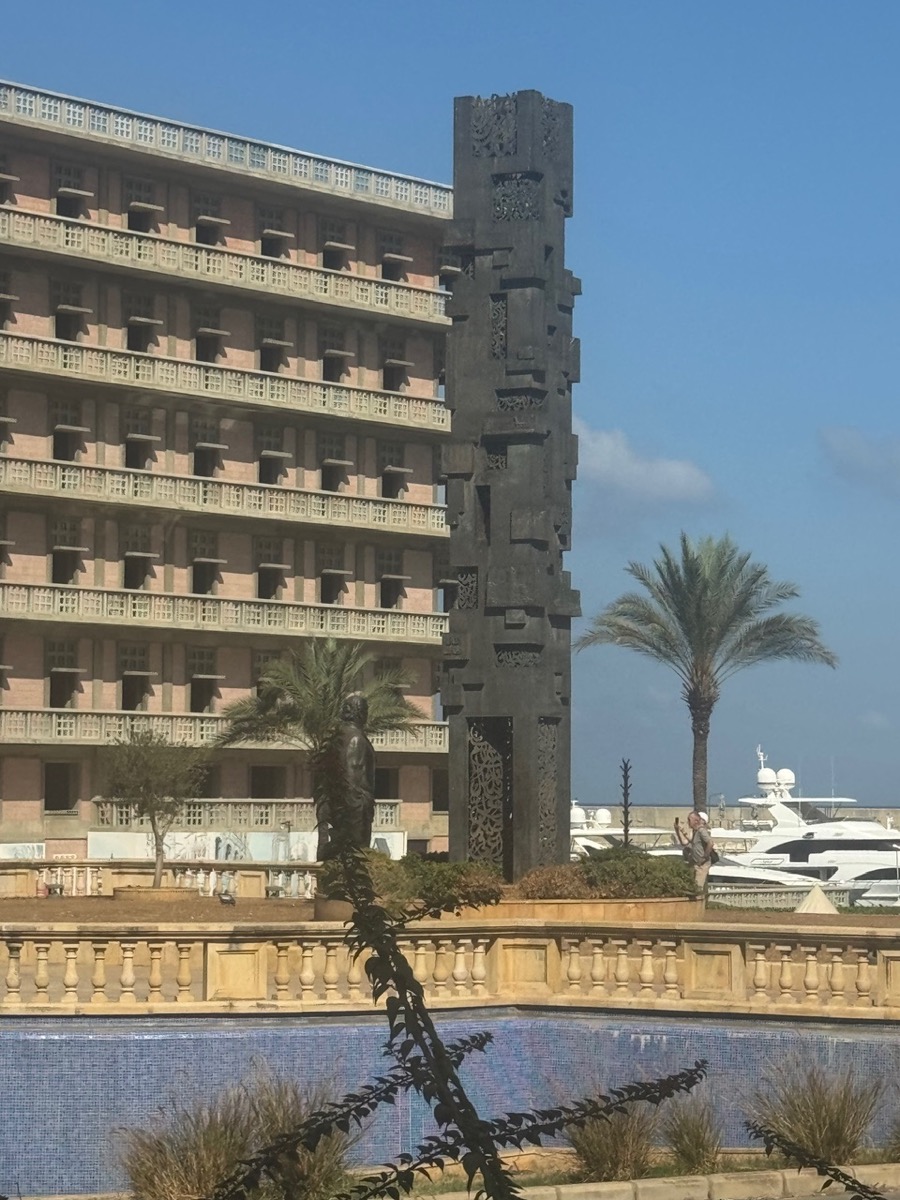
Later that afternoon, we went to check on the iconic Immeuble de l’Union Building hosting 2 exhibitions: “A Journey of Light” by Karim Nader and the lighting company Atelier 33, and "Rising with Purpose”. We took a tour through a lighting experience that is meant to tell the story of the awakening of this building, dating from1952 and saved from being demolished- hoping that Beirut too will awaken soon. The building is not in ruin but also not finished, it’s “in-between". Each floor had a color, a name, and featured different installations from artists from different parts of the world, including Egypt and Japan. The energy lightened up with hope and became a little more joyful as we went up the floors. Then from the terrace, you look down, and almost smell the Lebanese lifestyle, on a school day, in traffic…around a beautiful sunset! And you look at the sky- magically reflecting the soul of Lebanon and the optimism of its people… but before we reached the sky, there was a special Murano installation presented on rubbles on the floor below symbolising awakening. In Lebanon, “The past in not rewritten, it’s illuminated!”
As for Rising with Purpose, it gave emerging designers the opportunity to create what is meaningful and has a purpose.
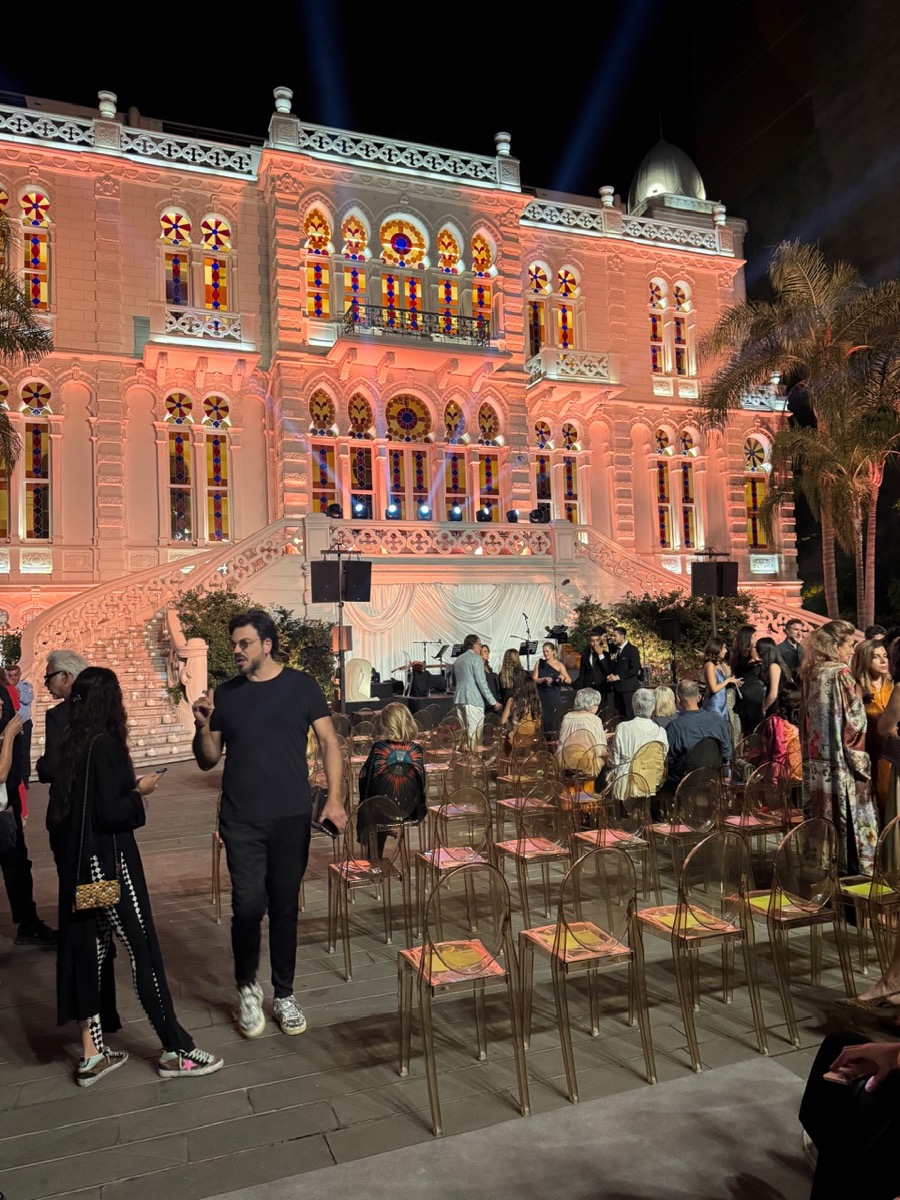
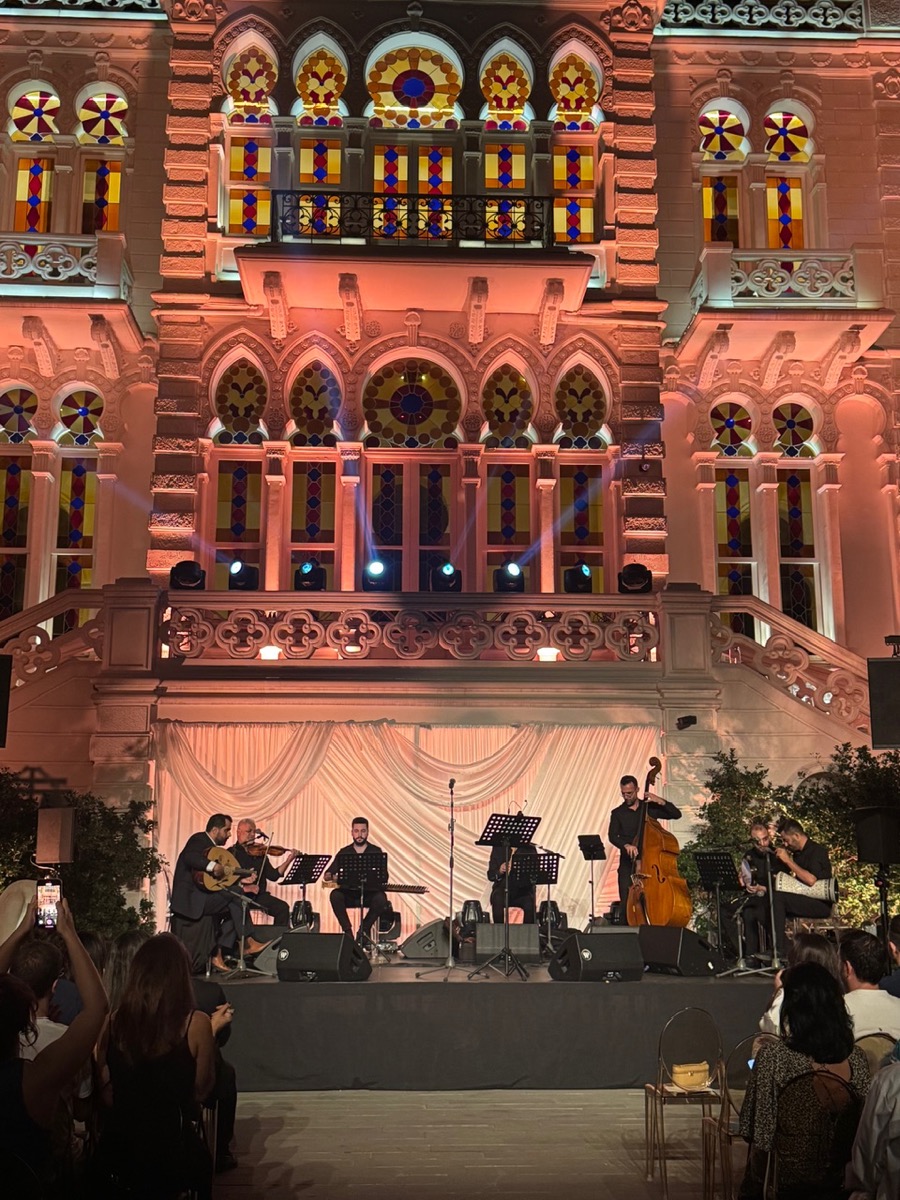
To end the night, we were invited to Sursock Museum for a special performance by the Founder and Music Director of the National Arab Orchestra Michael Ibrahim with guest artist Mirna Mallouhi, featuring a special tribute to commemorate master 3oud maker Nazih Ghadban.
Day one was filled with events, feelings and emotions…I know… It felt like a week has already went by!
Day Two: Design in the Wounds of Memory
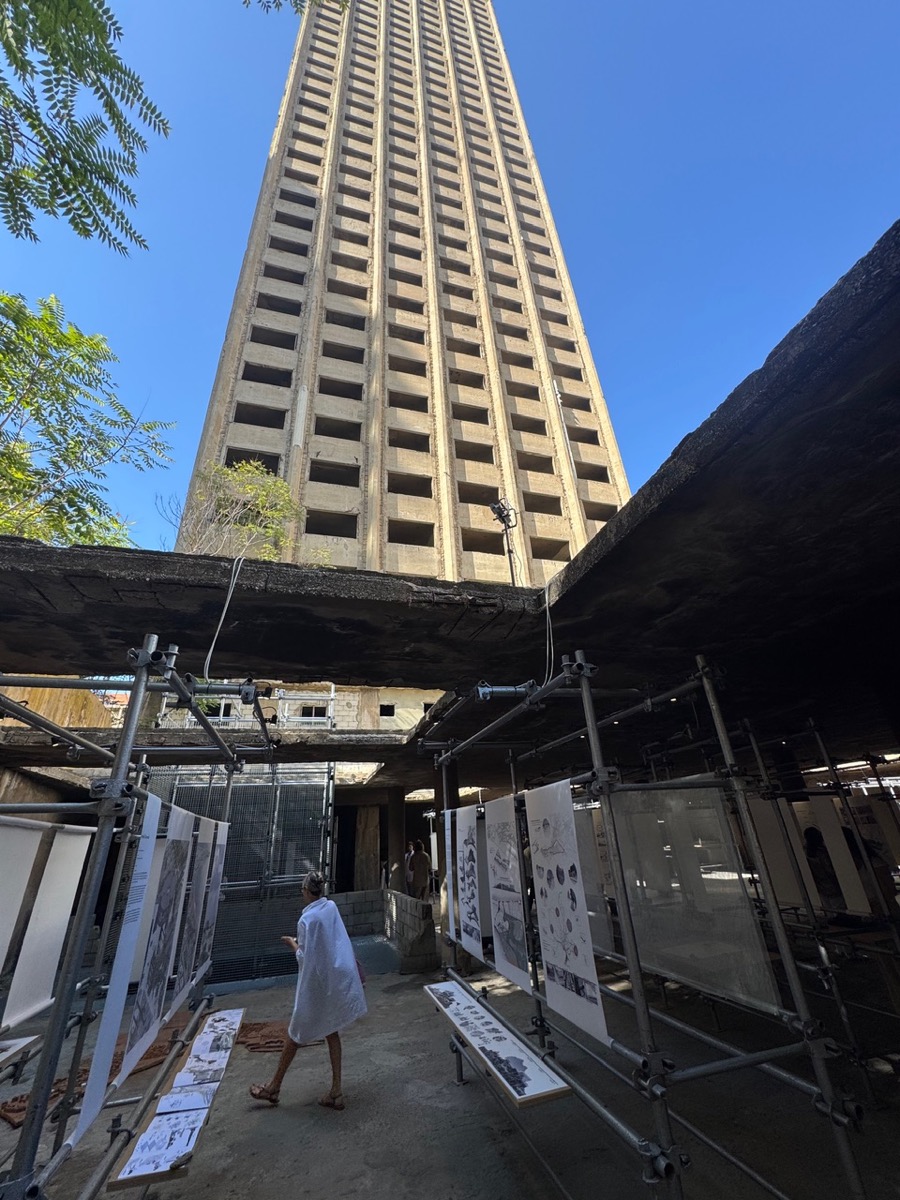
We started the day with Design “in” Conflict at Burj El Murr… Ahhh! This building… I saw this building on every single school day! It was supposed to be the tallest skyscraper in the Middle East. Then war happened and it became instead a traumatic memory of war, killings and death… I don’t feel comfortable at this place, but somehow. with a lot of efforts I am sure- the team was able to open it and make it safe for us to visit for the first time during We Design Beirut. Burj El Murr also hosted an exhibition that gathered student from 9 Lebanese universities: How does design respond to conflict? How do we move, how do we remember, and how do we rebuild. The group focused on Tyre.
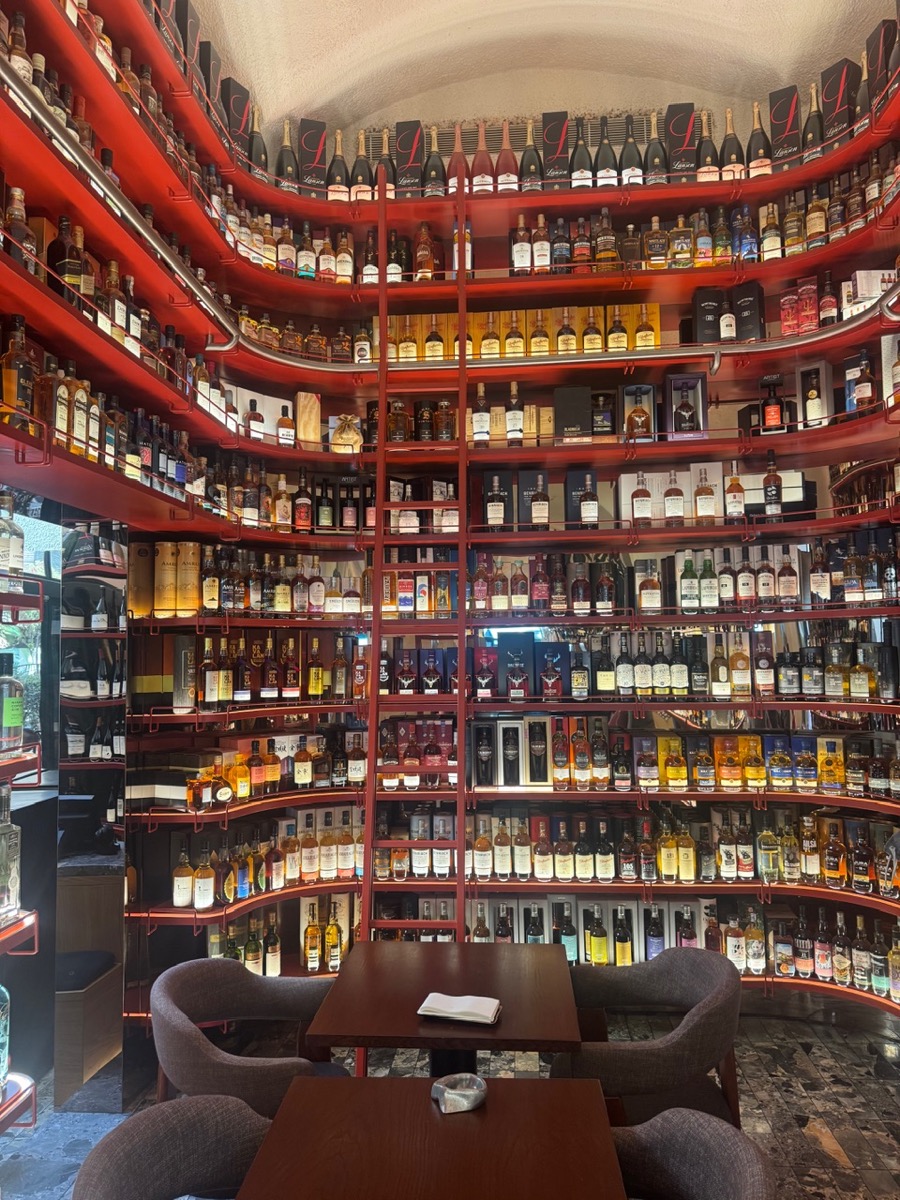
Lunch today was in Saifi, at The Malt Gallery- which was a nice spot to see everyone and chat briefly before our next stop, Villa Audi.
Totems of the Present and the Absent -
"Beirut, where things appear, disappear, reappear and somehow still exist in between”
Curated by Gregory Gatserelia- this exhibition at Villa Audi brought together 51 designers who were invited to create a totem embodying presence and absence, memory and imagination. The pieces were very original, with a meaning, and a story behind each one. This is another exhibition where I could have stayed for hours, to get to know everyone and each story.
Womb of the City
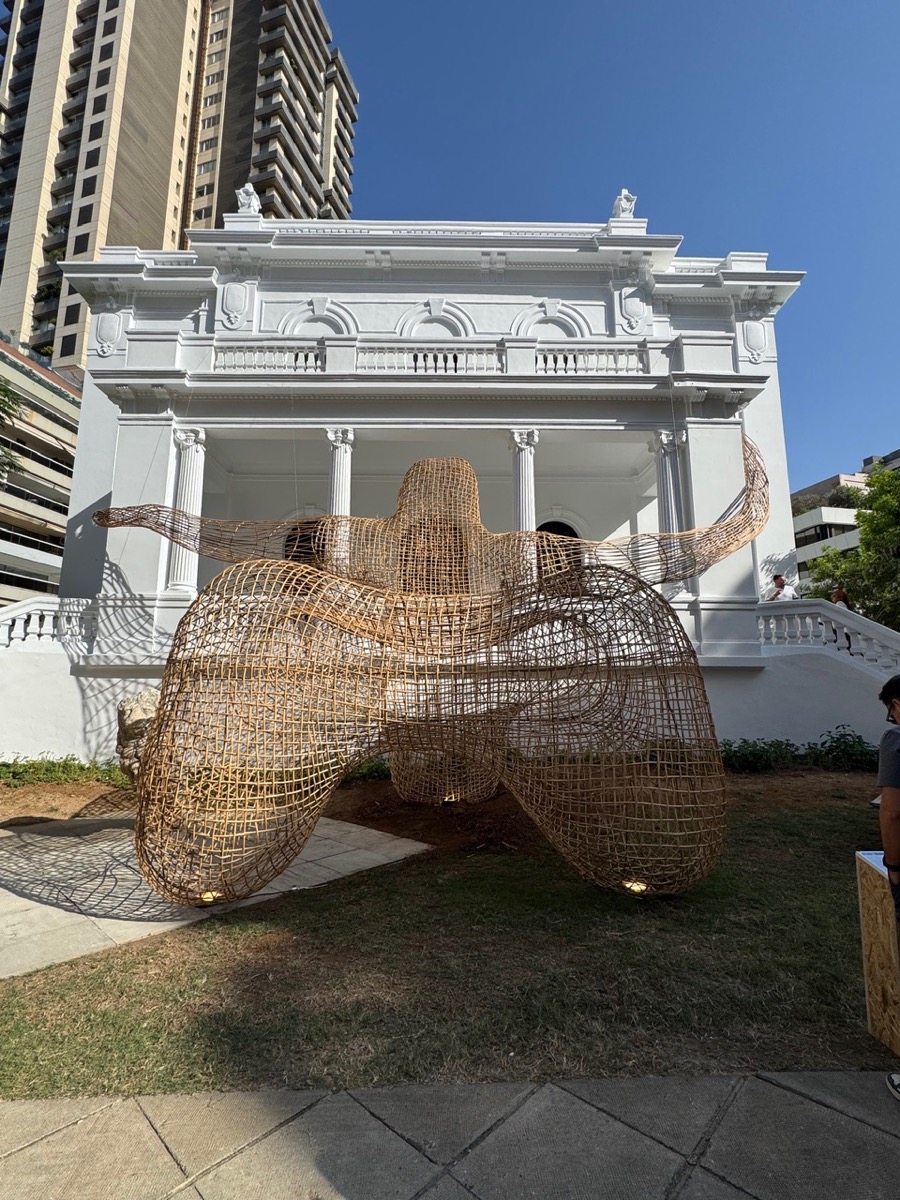
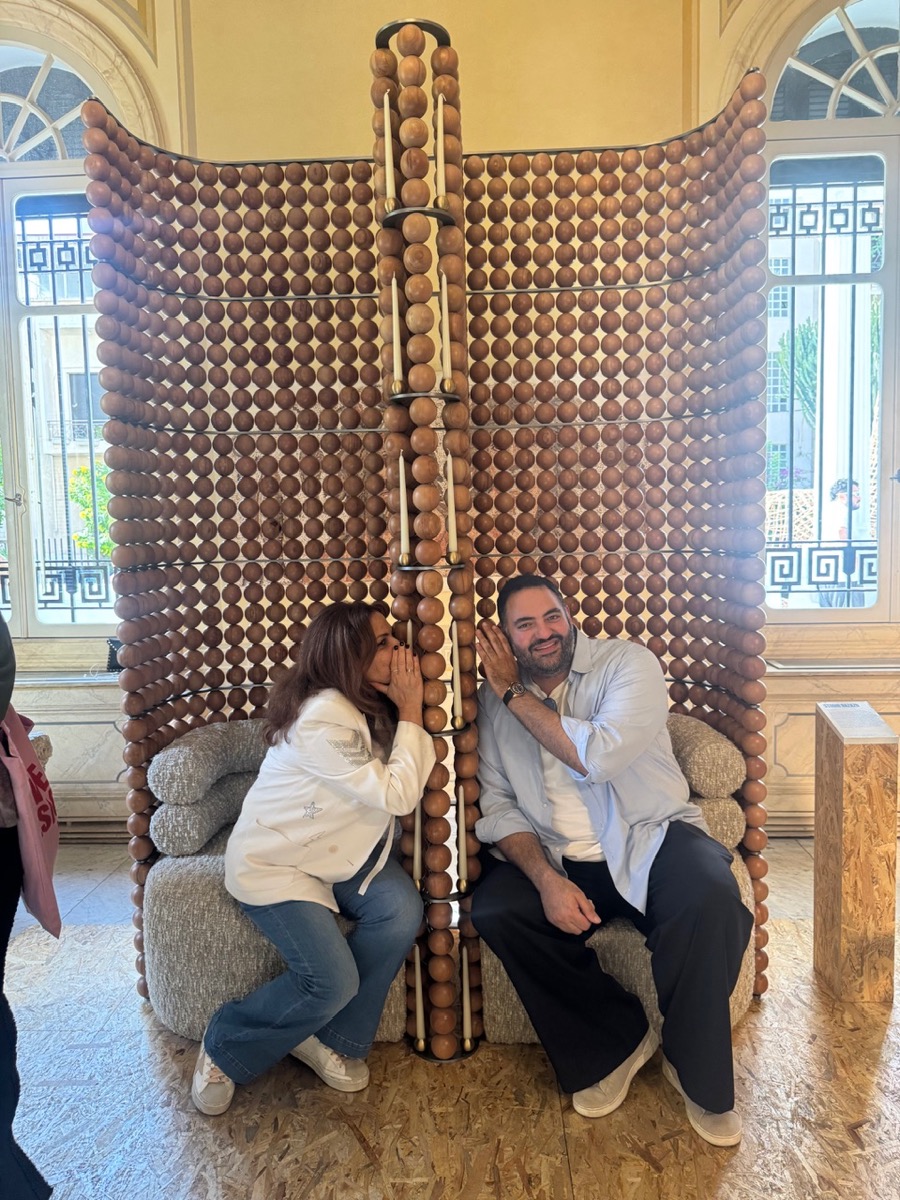
When you enter, there is this large rattan installation- Womb of the City- symbolising Beirut as a womb and the wound, delicate but resilient, broken but ready for rebirth. A lot of things we don’t talk about, like the war, the bomb.. there is a love and hate relationship. It hugs the villa and becomes kind of a monster. The installation extended from the outside to the inside of the villa symbolising the umbilical cord - the wombs become 2 benches, where people can sit and reflect and share their stories. Why they left, why they never came back.. on the second floor, it’s the conversations we never have, a table that absorbs all the stories..
The Promise
I was also personally attracted to another particular one, a totem by Ramy Boutros: The Promise is a tribute to Beirut to bring everyone together and to sit, pause, reflect and make a promise to ourselves and Beirut. What would you promise the city? Commitment, healing, love, forgiveness? It allows us to dream about our future. Famous vows of Gibran Tueini were engraved in the circle and the bench represents our unity, Muslims and Christians, stronger when we are together..
Solace
A confessional booth by Studio Bazazo where intimacy and judgment stand side by side. A moment of reflection then confession- confessions about Beirut and from Beirut.
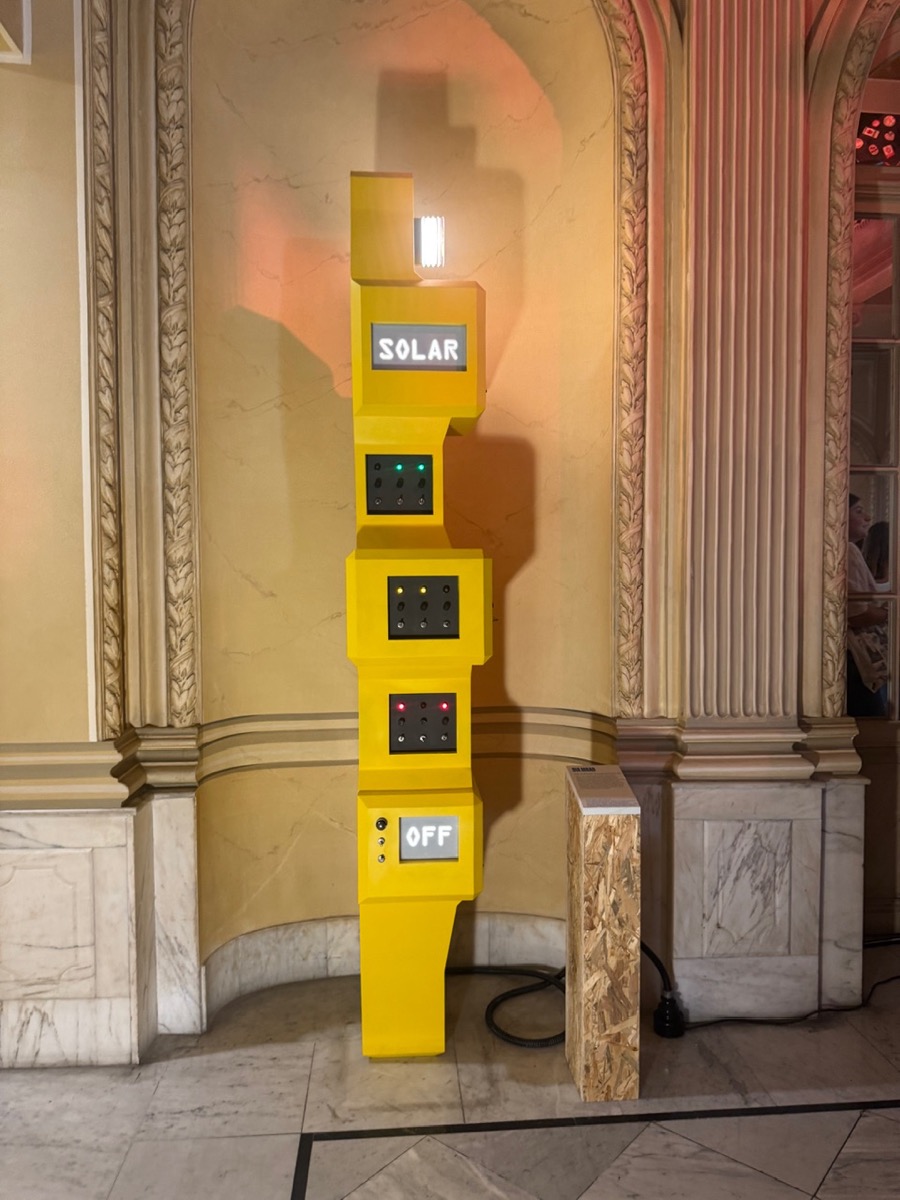
PSI-01 (Power Supply Indicator 01)
A sculptural system by Dia Mrad that reflects Lebanon’s daily negotiation of fragmented electricity infrastructures where each illuminated signal corresponds to a shifting source of power.. Only if you are Lebanese you would understand… Solar, generator, government electricity or none at all!
Still Flickering
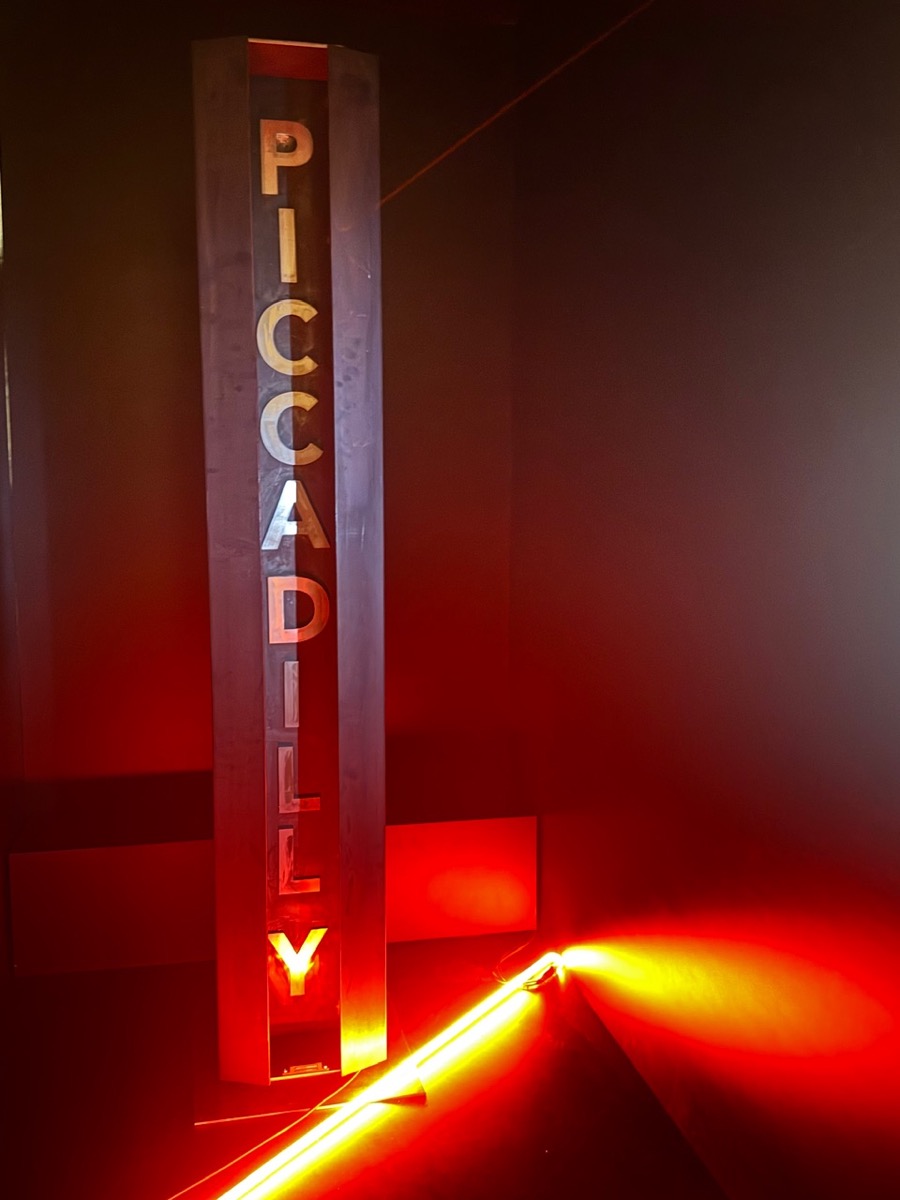
Installation by Samer AlAmeen, a tribute to the fading light of Beirut’s cultural golden age. The Piccadilly Theatre continues to take place in our memory, suspended between presence and absence. Once alive with voices, music, and movement, it now lies in waiting beneath a shadow of dust. A trembling red neon pulsed in the dark, a faint heartbeat refusing to die. This piece is a reminder to take care of what still breathes and to rekindle what time has only dimmed and to revive what absence hasn’t yet erased.
Page Blanche
A multi-media totem by Sara Badr Schmidt featuring a central textile work that included purple threads- the color Phoenicians have invented, and bronze sculptures. For those who left home… What does it mean to belong? What do we carry with us when we leave? This is a tribute to a city shaped y rupture, return, and renewal.
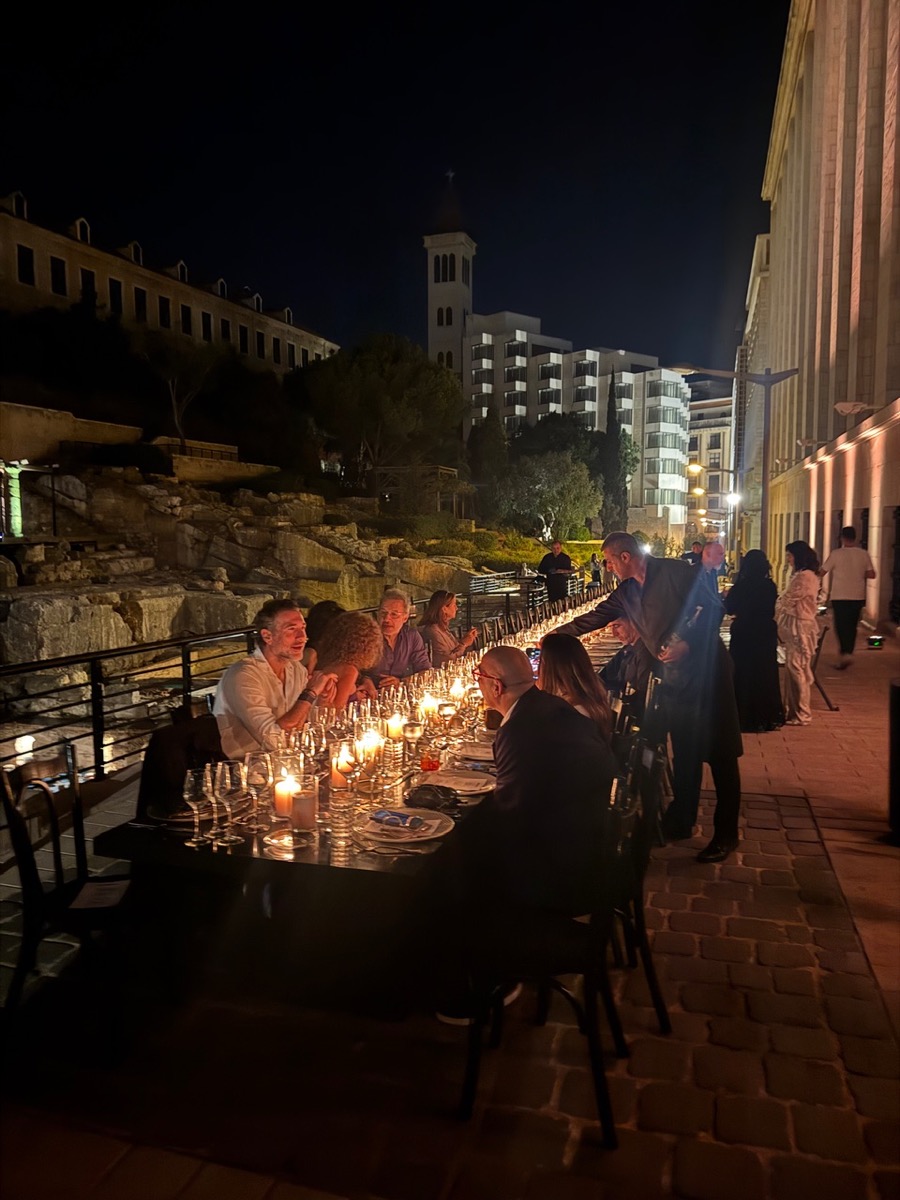
At 9:00 pm, We Design Beirut hosted a seated dinner at the Roman Baths. It was flawless. While having dinner, we got a huge surprise.. All of a sudden we hear the drums and see a group of dancers performing the Lebanese traditional dance - Dabkeh. I myself could not contain the excitement and jumped into the dance, knowing that this will be a memory that will stay with me forever- traditional dabkeh at the Roman Baths in Beirut- my first dabkeh!
Day Three- Roots in the Mountains, Doors in the City
A Modernist with an Arab Soul
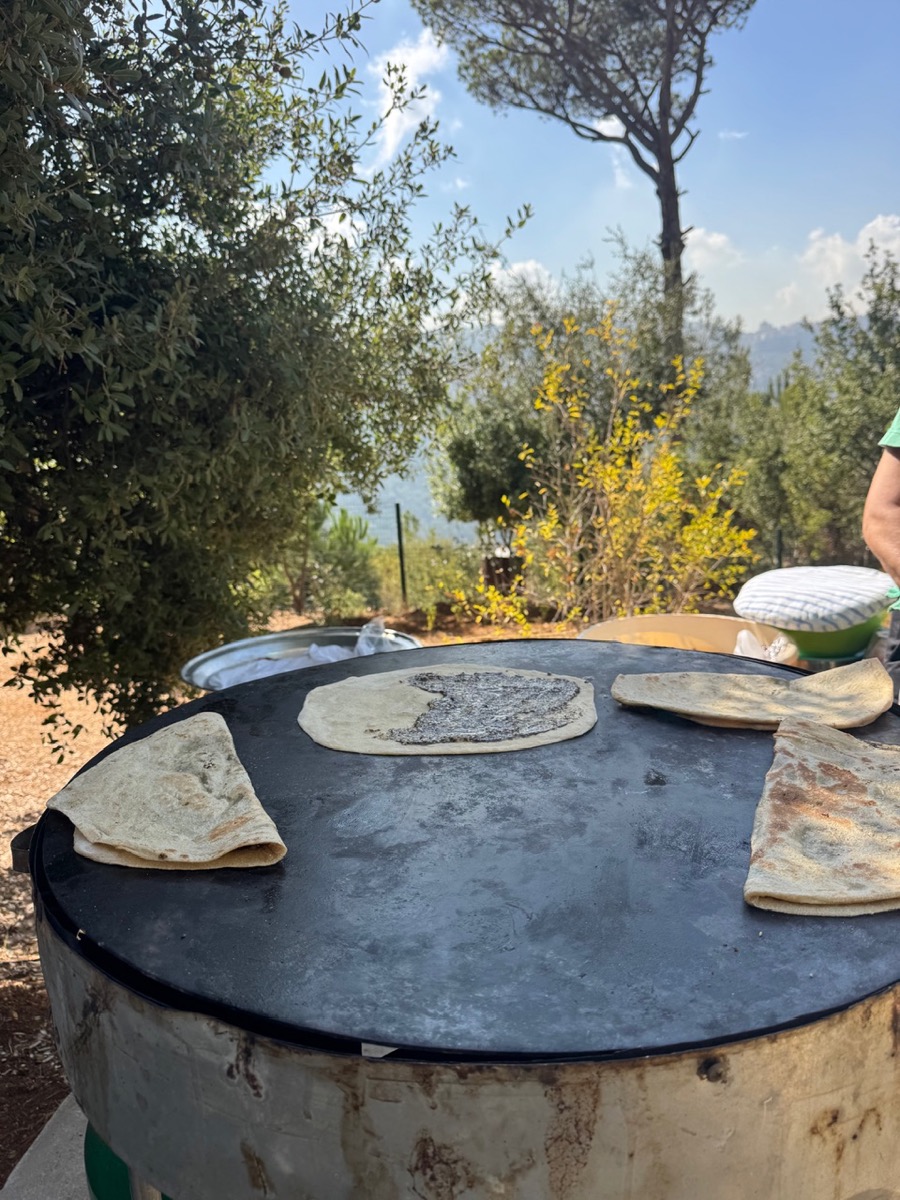
Today we go to the mountains in the Chouf area to visit the Saloua Raouda Choucair Foundation.. We were greeted with coffee, biscuits with anis, and manaeesh on the saj- which if you know me, you know I have a weakness for this!
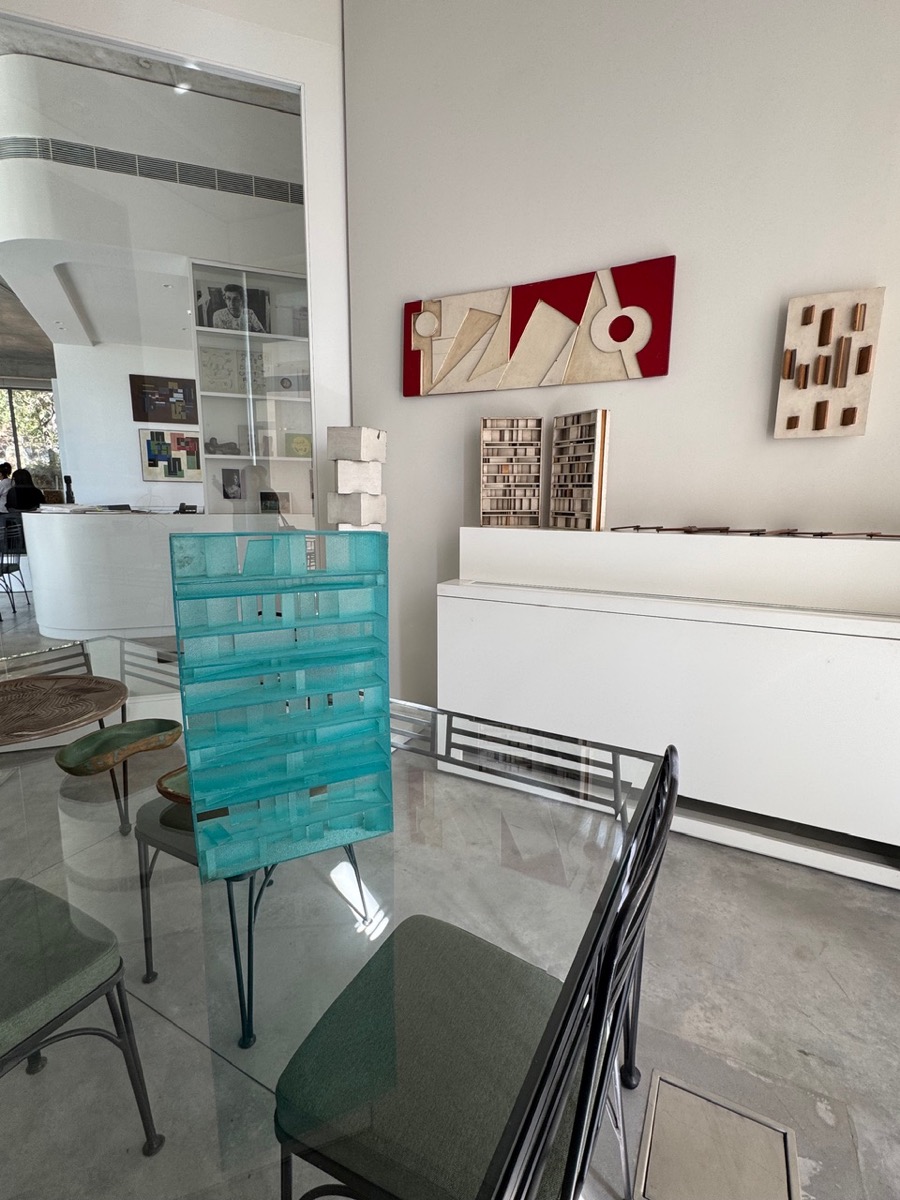
Saloua Raouda Chaoucair is a Lebanese artist with a mathematical mind. She reconciled tradition with the modern and you can see that in her sculptures and paintings. Saloua suffered as a mother, and this was heavy on her daughter when she was a child.. A child who is today learning more and more about her mama, by writing a book.
Saloua wanted to be an Arab modernist- not French, not Italian, not Parisian.
In 1948 she went to Paris, and studied with Fernand Leger. After 1952, she came to Beirut to exhibit, but her work was perceived as very avant-garde. After that she isolated herself between 1952 and 1962 working on material: She wanted to make a painting on the floor which became later a carpet. She worked on enamel, ceramics, furniture, jewellery, plates, clay, sculpting, everything.. Some of her work is at The Metropolitan Museum of Art in New York.
When she was invited to show in Paris at the Salon de Mai, she worked with plexi as it’s not too heavy and pricey to transport. The visit was followed by a panel talk outdoors where we learnt more about her and her work.
Open Houses of Beirut Tour
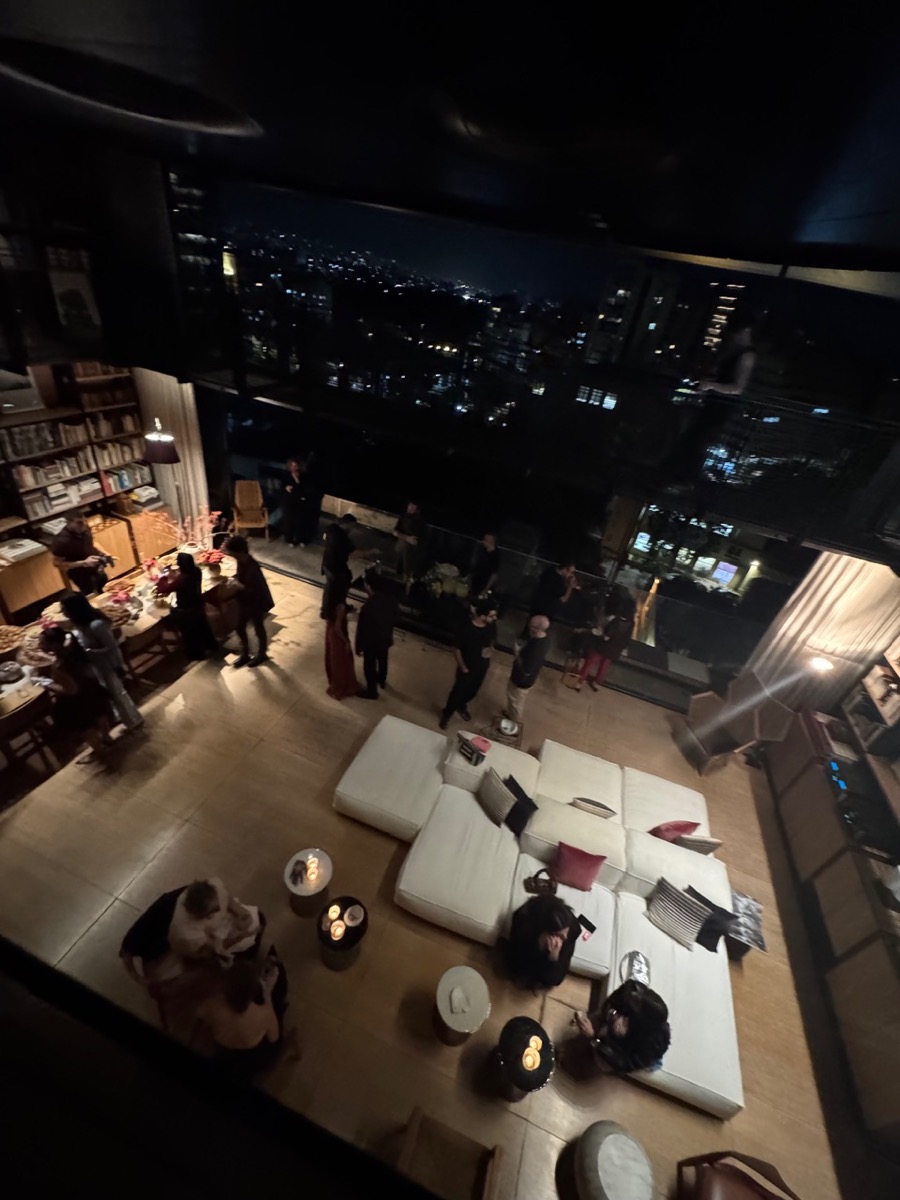
We did the same last year, and this is one of my favourite planned event… We go touring some Lebanese homes that generously host us and open the doors of their own homes to us. This year, we visited Zeina Raphael’s Residence, The Richani’s Residence, The Schoucair Residence and Bernard Khoury’s Residence: 4 homes totally different in style.
We ended the night at Diana Ghandour in Gemmayze where she hosted a party with Mena Casa.
Day Four: A City Seen Again
Beirut from the Top Deck
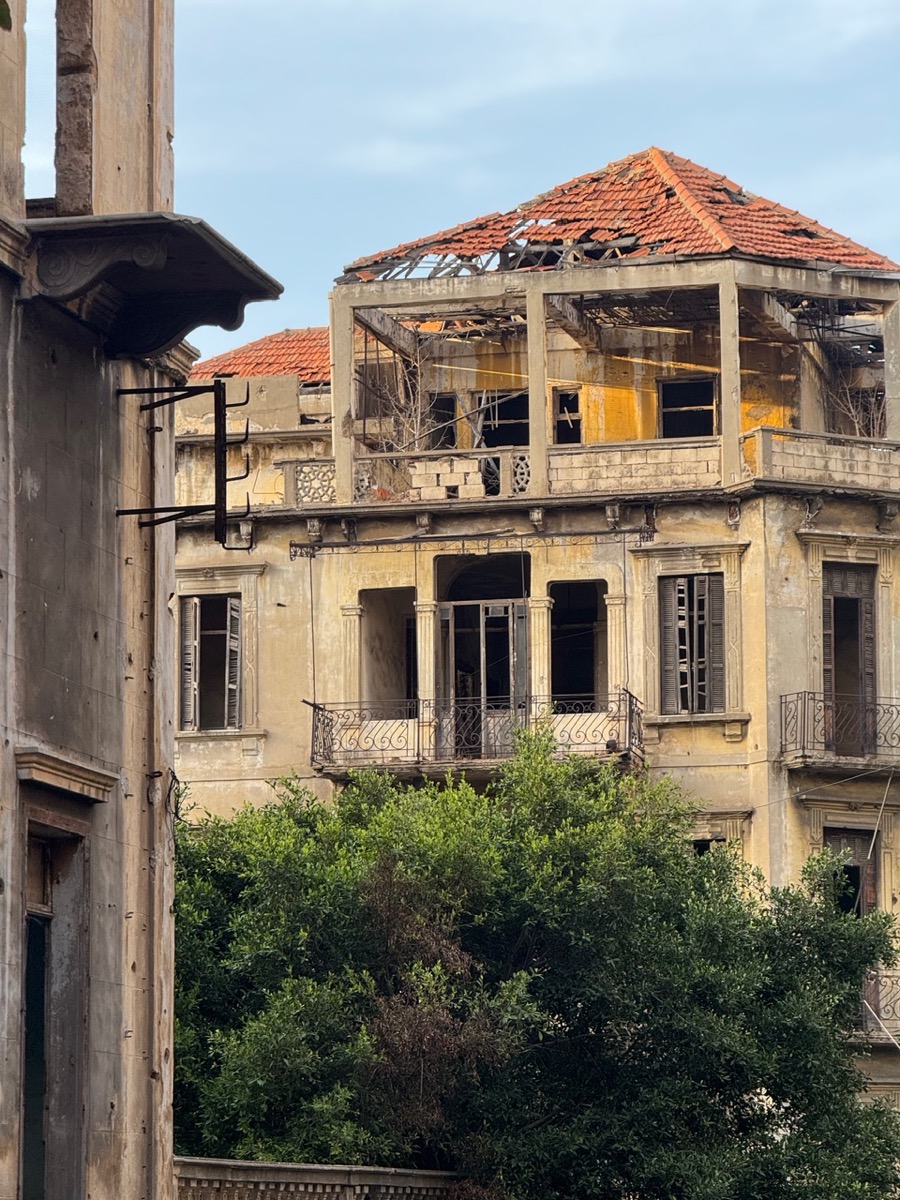
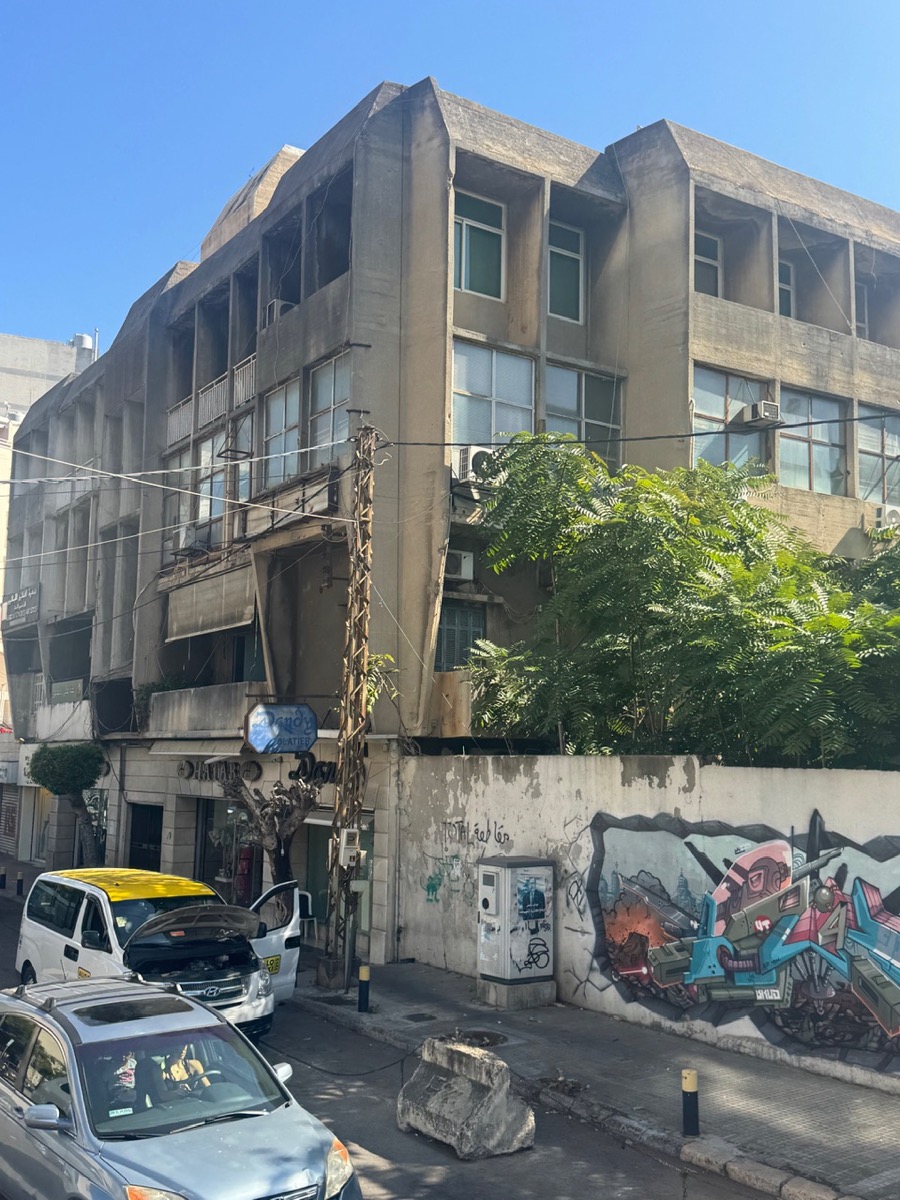
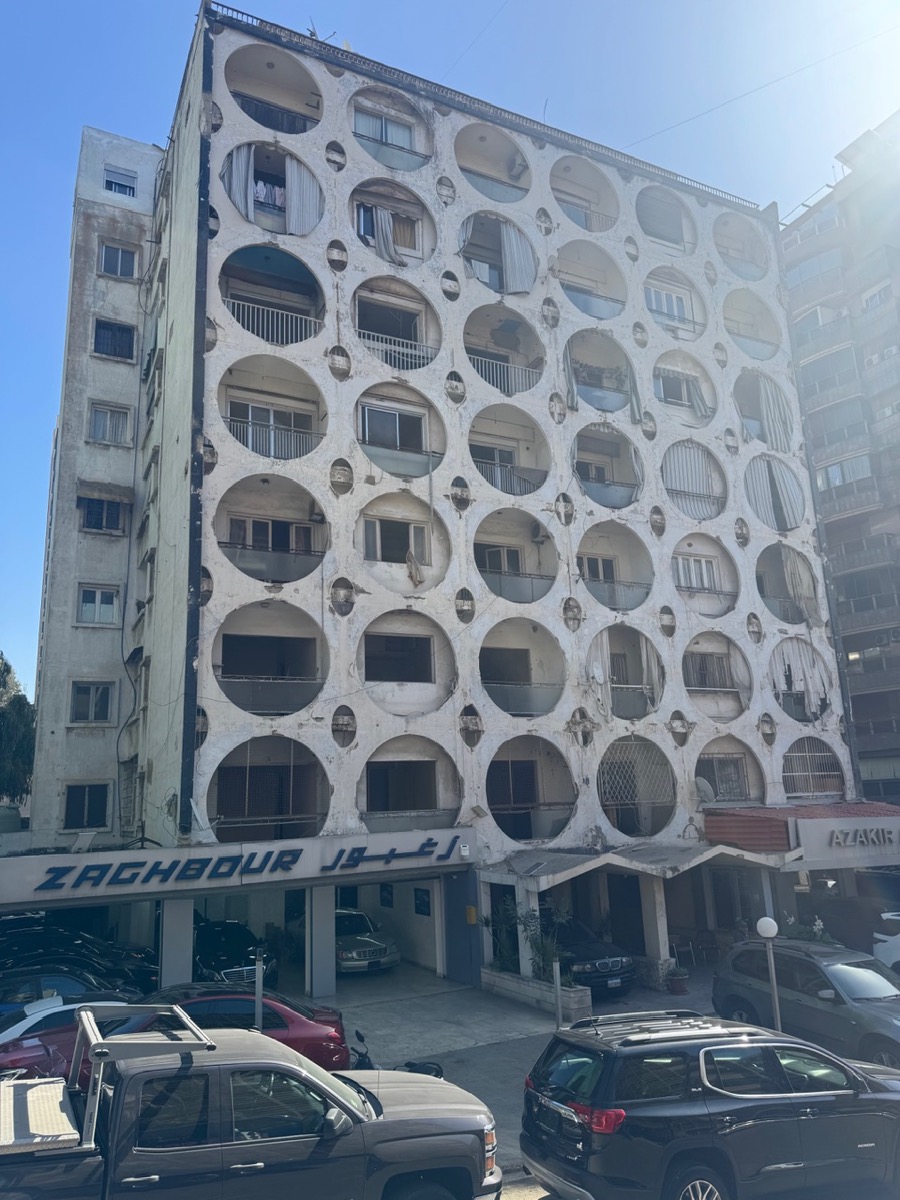
We met in downtime Beirut to take a open bus tour and discover some iconic buildings in Beirut: some were finished and some never saw the light, or barely made it to the opening: St.George Hotel (1932), The Egg (1968), The Holiday In (1974), Le Capitol Cinema and Hotel (1947), Phoenicia Hotel (1961 and 1968)… Buildings I have passed by probably a hundred times but never really noticed them or knew their story. Many of them stuck, can not be demolished, can not be fixed, and can not be renovated.. Not sure what the future of these buildings will ever be! Also, who knew we had a National Library? One that looks brand new and beautiful!
Craftswomen in Conversation
In the afternoon, I went to the Panel Talk: Craftswomenship at Maison de l’Artisan- built in 1963 by Pierre Neema, Joseph Aractingi, Jean Noel Conan and Joseph Nassar. The talk was moderated by Lara Akkari, with panelists Maria Hibri, Maya Ibrahimchah, Pascale Habis, Tamar Hadechian, Tessa Sakhi and Zeina Raphael.
Love Night
We ended the night at AHM for We Design Beirut’s official party- “Love Night”, and the talented Khansa came for a surprise performance.. If you don’t know his name, look him up! He has a unique sense of showing his passion and sensitivity.
Day Five- Tripoli, Where My Heart Knows the Way
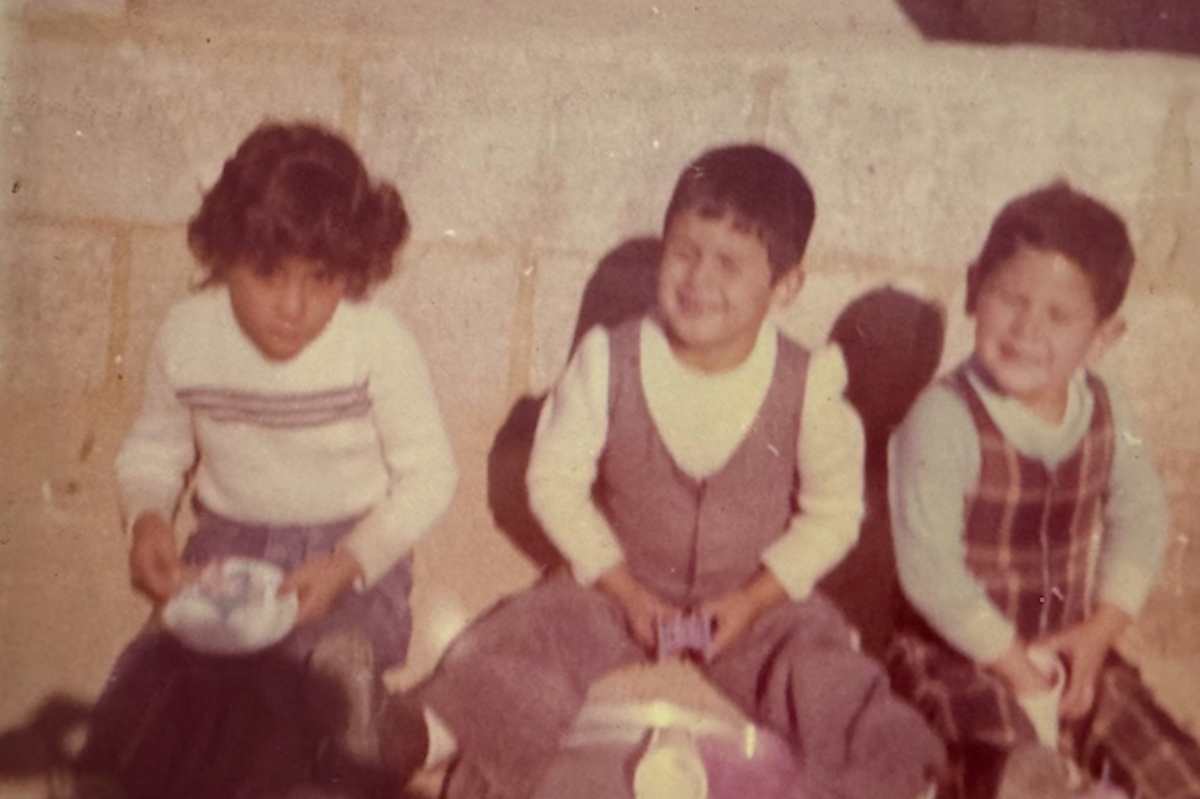
I was looking forward to our trip to Tripoli… My mom, and my dad’s uncles are from there, and it holds a very special place in my heart. Memories resurfaced: family roots, childhood glimpses, and pride, and my mom’s grandma’s house, on the attic, with very old windows and rooftop… I can’t even remember how old I was…
Spiritual Rhythms & Sweet Traditions
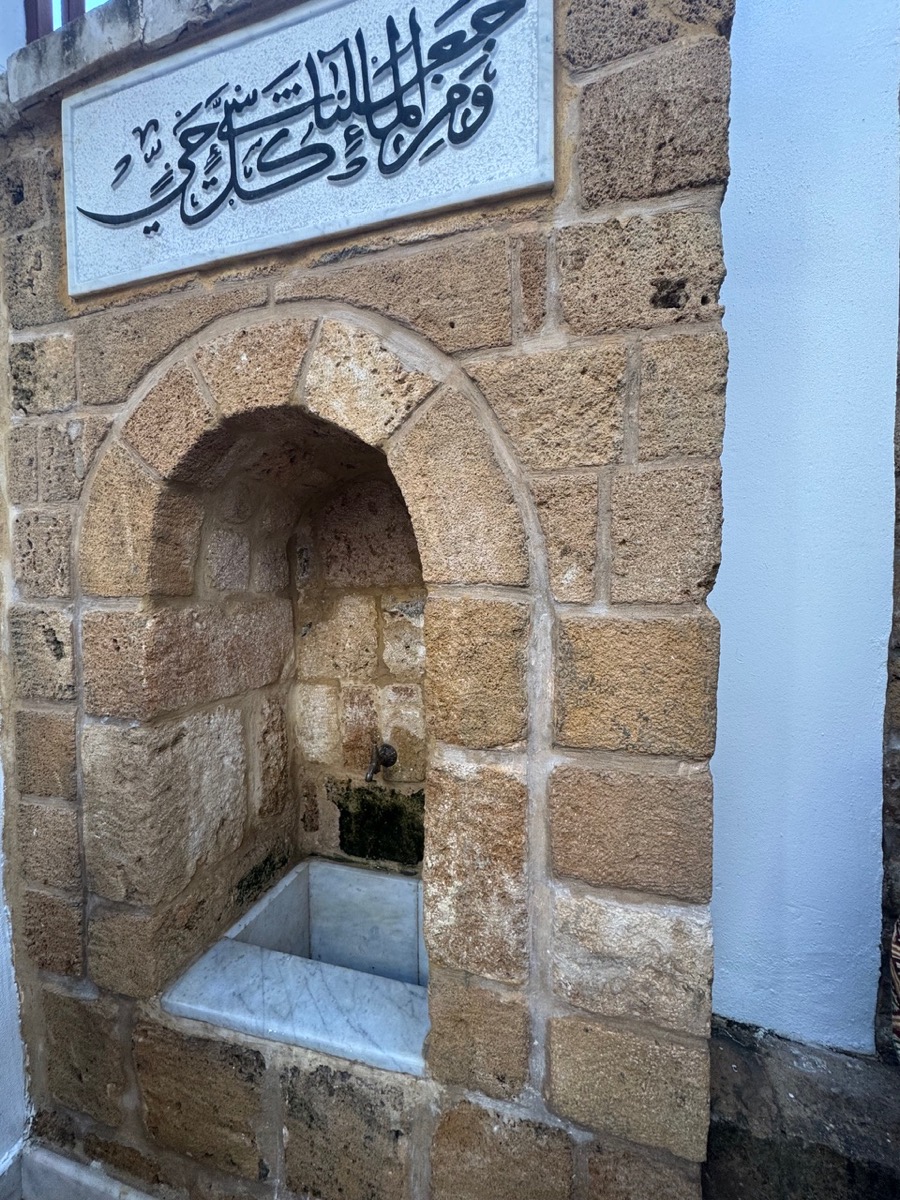
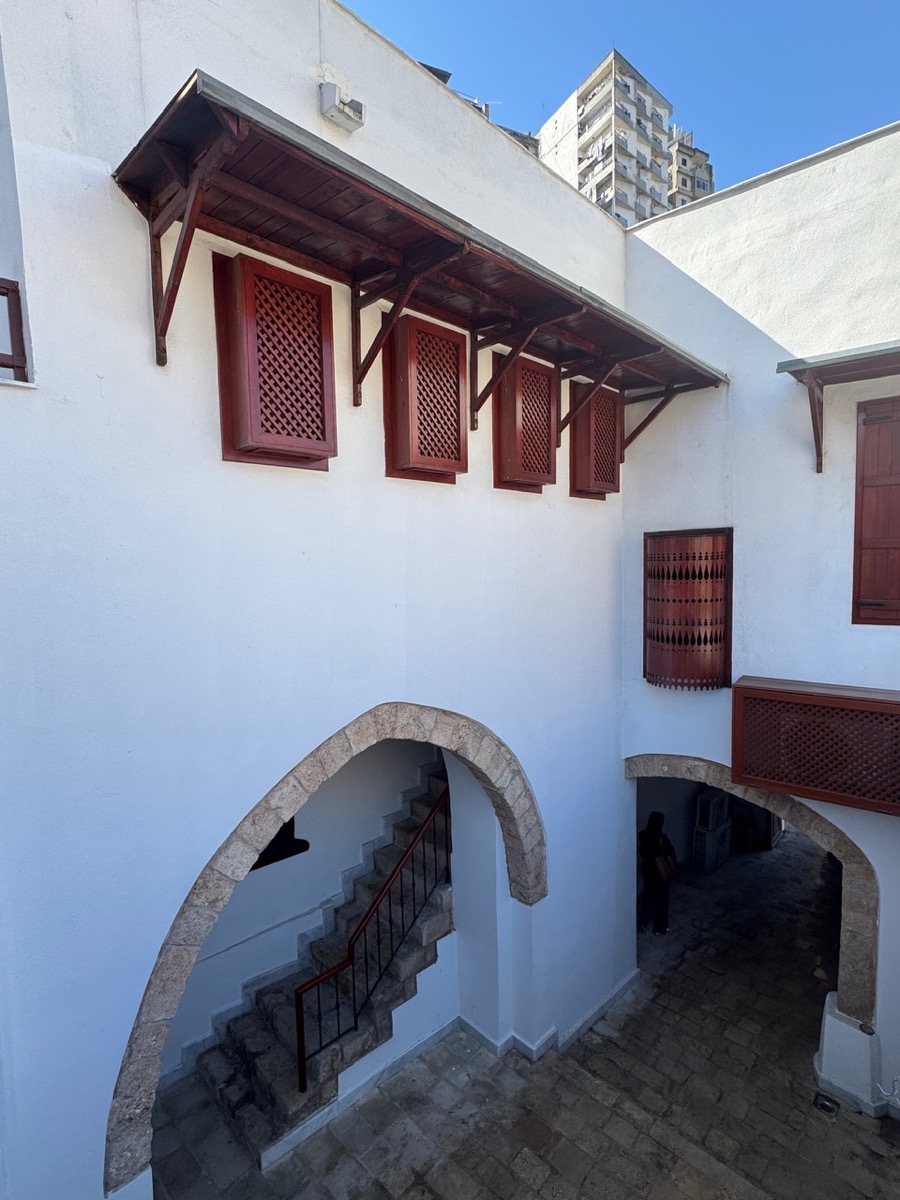
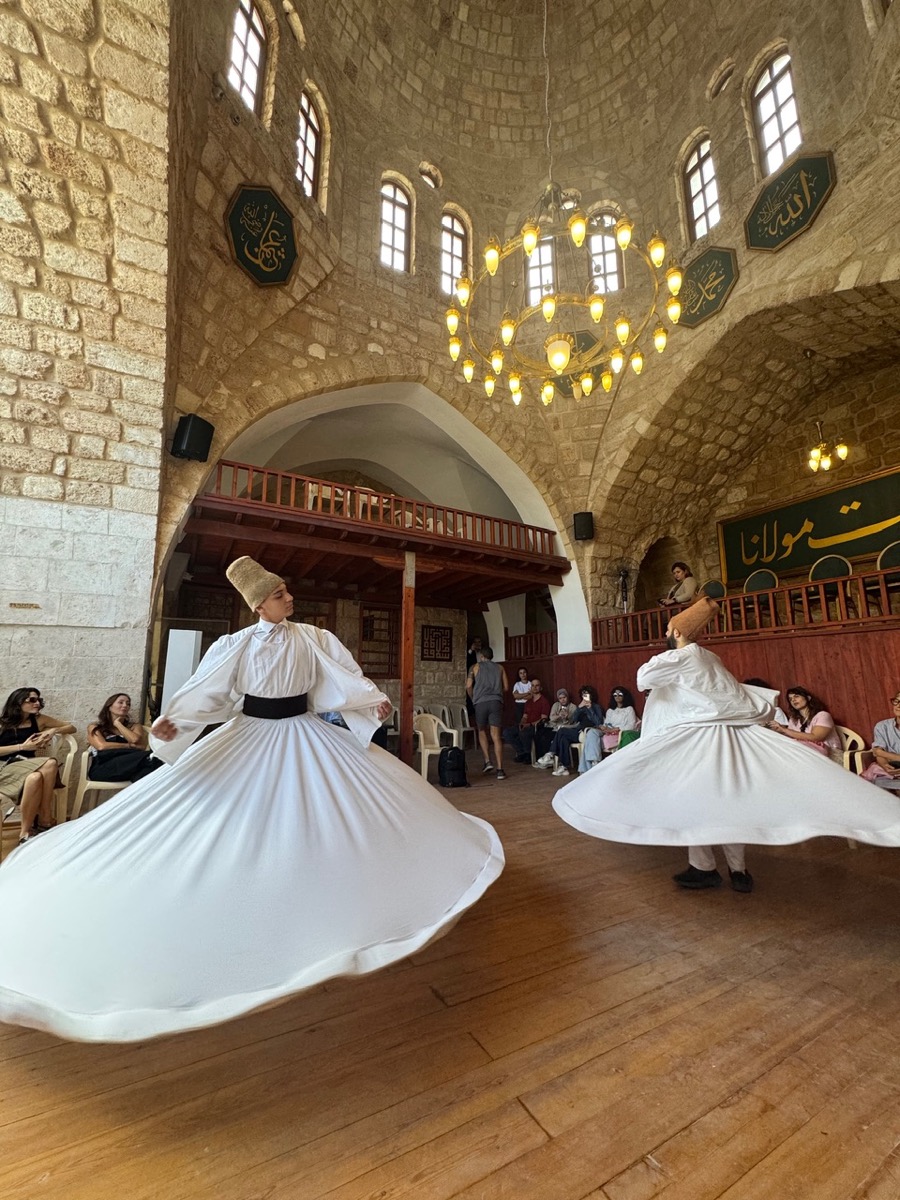
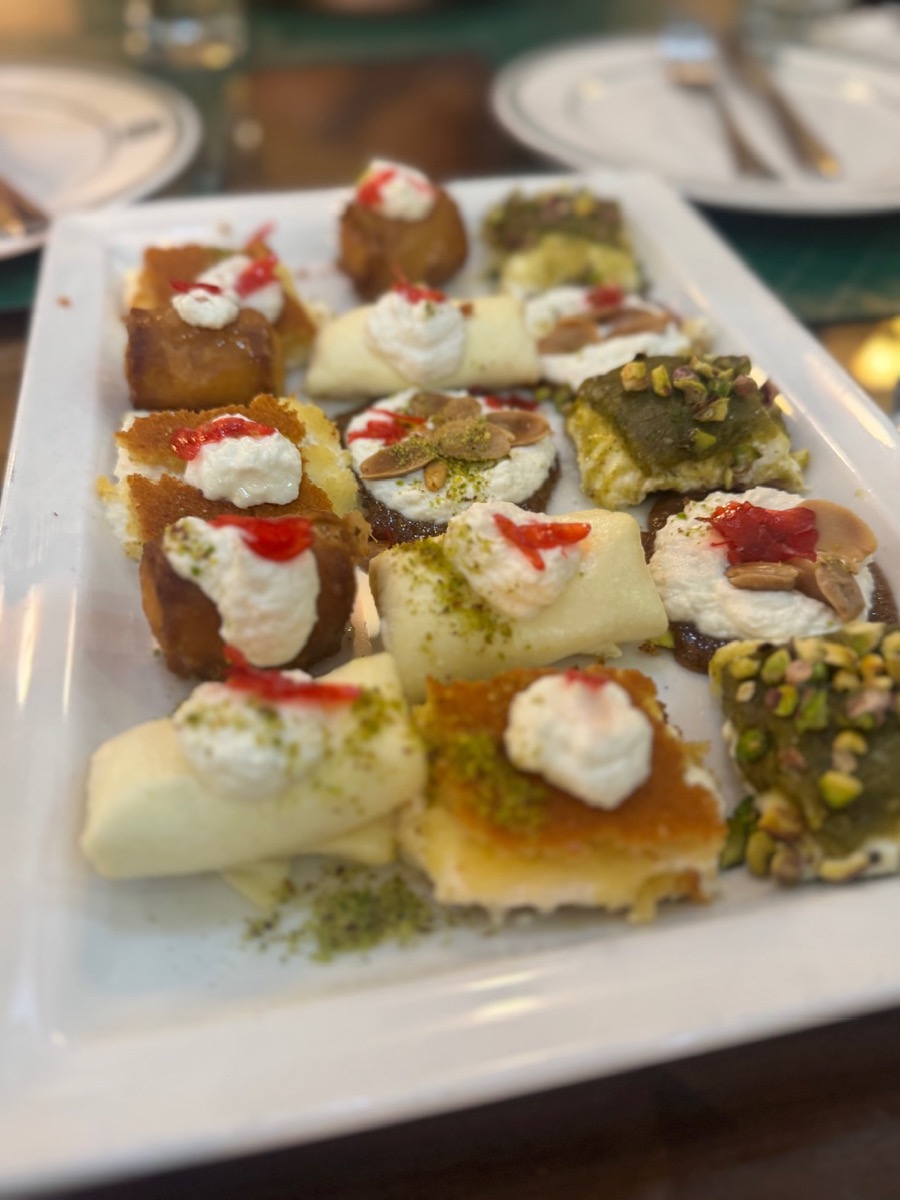
Our first stop was at the Al Takiya Al Mawlawiya. We visited the newly renovated building and learnt about its story and the story of the families who lived there. We were then treated with a Sufi performance before we left. Lunch was at one of my favourite places to eat in Lebanon- Hallab, and trust me, it did not disappoint! All of the yummiest Lebanese food followed of course by Lebanese sweets… I finished quickly and went down to get some sweets back with me to Beirut because my girls were coming and my cousin threatened me not to go back to Beirut without it. It took so long for the sweets to be ready and everyone was waiting on the bus.. I had to do the Walk of Shame with all the bags.
A Modernist Dream, Interrupted
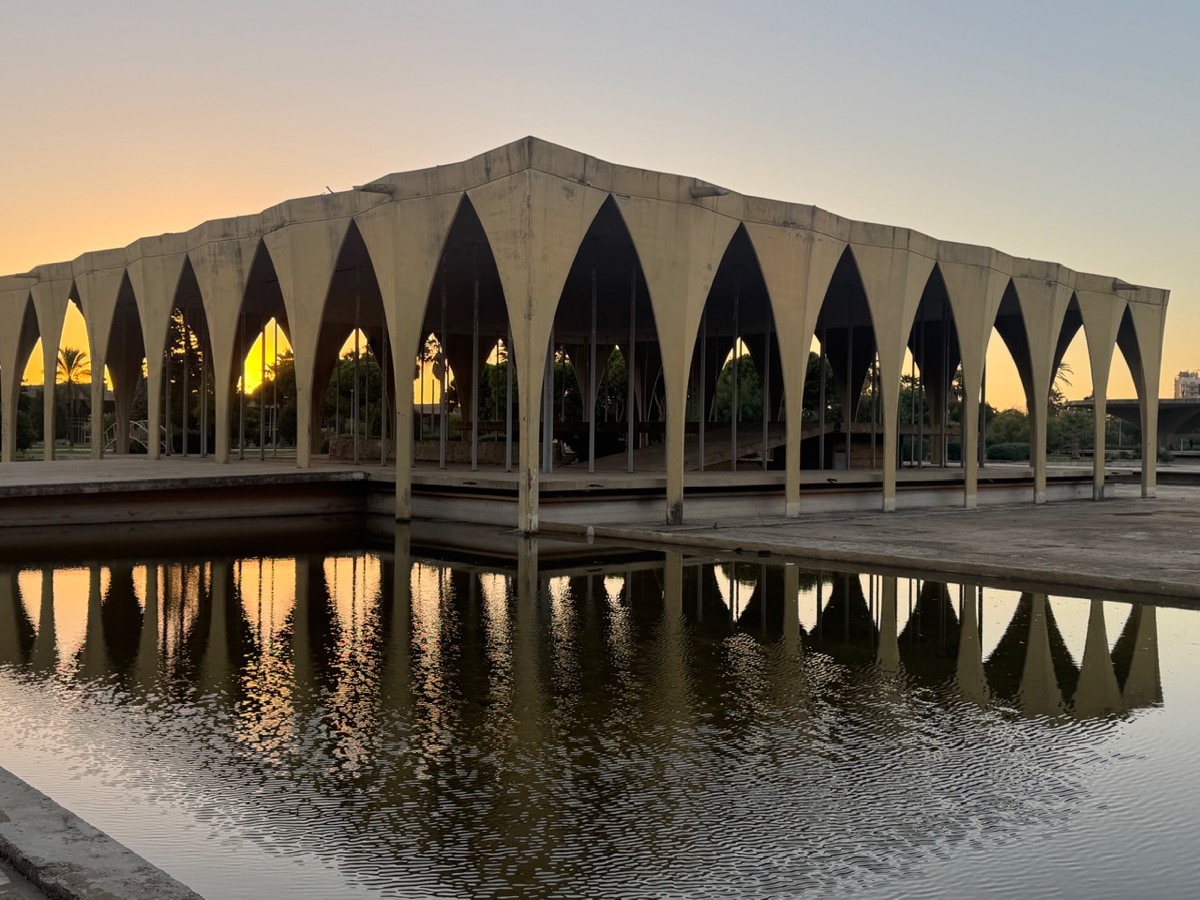
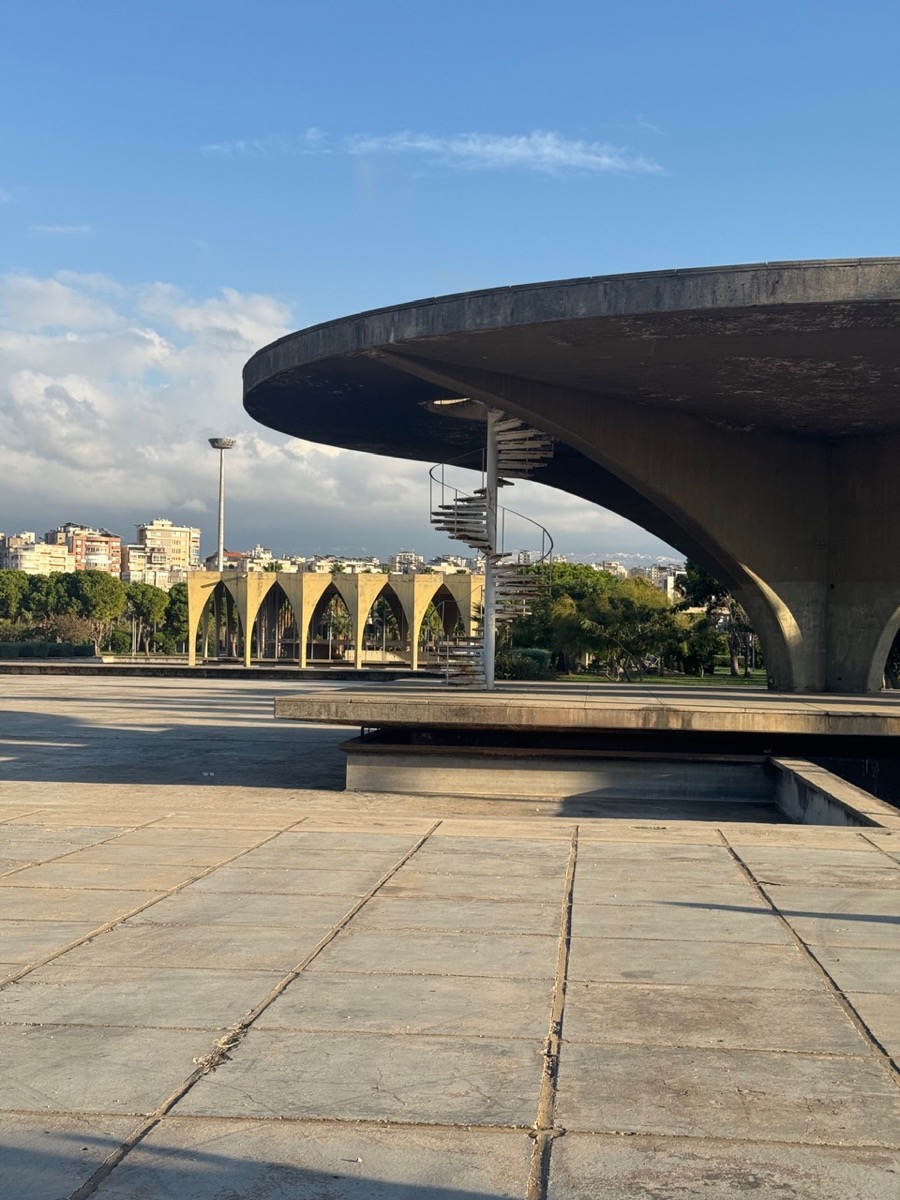
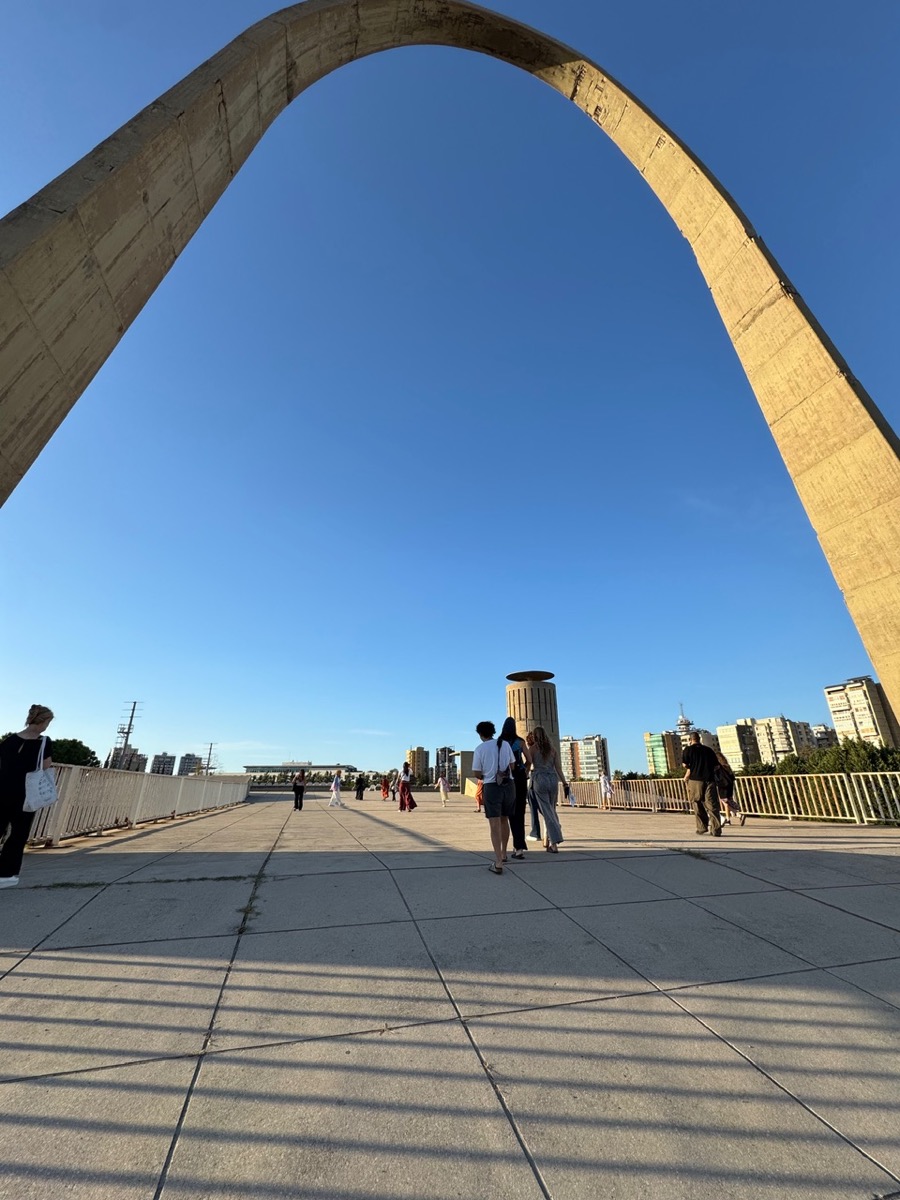
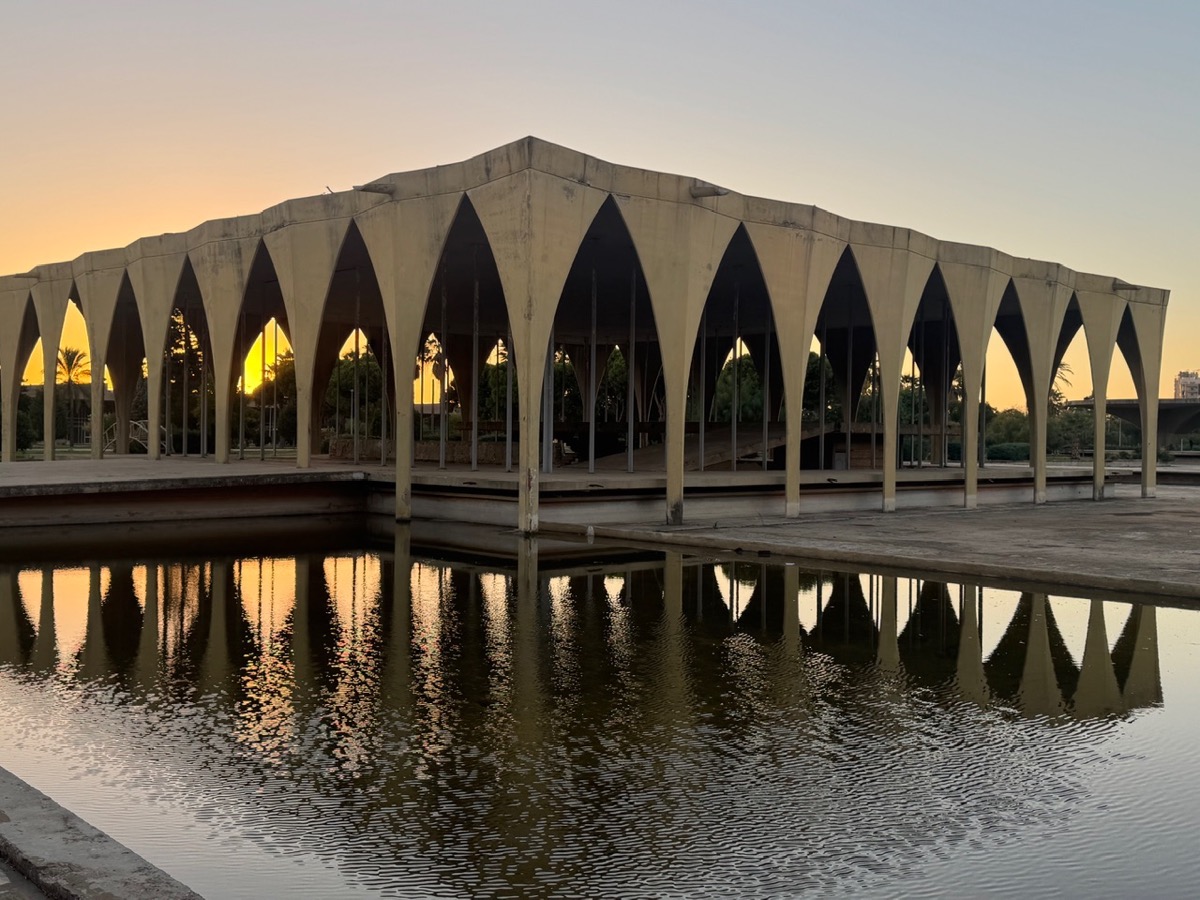
Next was a guided tour at Rachid Karami International Fair by the Niemeyer Heritage Foundation in Tripoli. Another Lebanese sight stuck between the past and present with no clear future in sight! The idea of the permanent international fair in Lebanon emerged in the late 1950’s, but it was not established until 1961. The architect Oscar Niemeyer was commissioned in 1962 to design all the facilities and it was supposed to open in 1967, but due to political and financial complications, the opening was repeatedly delayed until 1975, coinciding with the outbreak of the Lebanese Civil War, which quickly turned the fair into a facility for military occupation for more than 22 years! In 2023, it was included in the UNESCO World Heritage Sites’ list, also as a world heritage site in danger. The Rachid Karami International Fair had plans to include an open-air theatre, an experimental theatre, a space museum (topped by a circular monopole platform serving as a helipad), a manège in the shape of an Indian tent designated for the children’s entertainment, general housing, and much more! At the fairgrounds, Lebanon’s story once again revealed itself: suspended between past and future.
The Farewell
On Day 5, We Design Beirut came to an end.. And what a beautiful way to end it, back at the Roman Baths with a cocktail party by Rania Malli. A party that turned the heart of the city into a living art piece with a magical visual lighting show and the voice of the young talent Shana…
Five Days, A Lifetime of Memory
What a week! No sleep, always on the go in the most beautiful city in the world with the most beautiful souls, a beautiful energy, a love and passion that we all have to this country! To the team of We Design Beirut, congratulations!!! You didn’t just organise an event, you spread magic in the city that everyone could feel. Every detail was curated with intention, care and heart, reflecting who you truly are: a powerful force. You rose above every challenge with grace, strength and soul. This is We Design Beirut and we are endlessly proud.